Here’s What We Cover
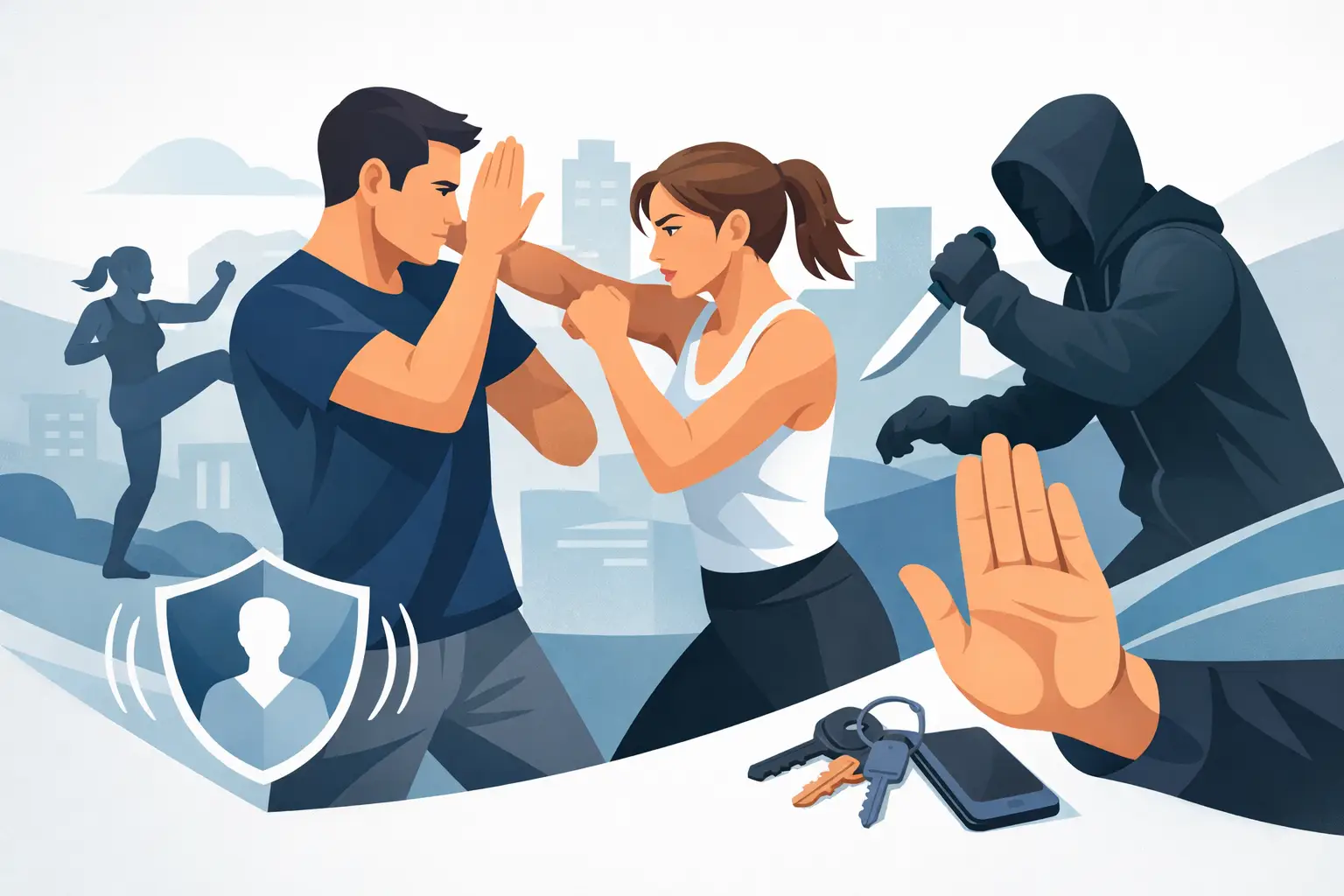
Most people do not decide to learn self defence because they want a new hobby. They do it because something has shifted. A parent is worried about bullying. A teenager wants more confidence. An adult realises that fitness alone is not the same as knowing what to do under pressure. That is where good training matters. Not flashy moves. Not tradition for tradition’s sake. Just clear, practical skills that help you stay safer and more composed in real situations.
Why learn self defence at all?
Self-defence is often misunderstood. People imagine dramatic attacks, complicated counters, or a black belt test of courage. Real self-defence is usually far less glamorous and far more useful. It starts with awareness, posture, decision-making and the ability to stay calm enough to act.
That matters whether you are 13 or 53. A young person may need help dealing with intimidation, boundary-setting and confidence around peers. An adult may be thinking about personal safety when travelling, walking home, or managing confrontation in everyday life. The reasons differ, but the goal is the same – to be less vulnerable and more capable.
There is also a wider benefit that people notice quickly. Training gives structure. It improves focus, discipline and resilience. For teenagers, that can mean better self-control and a healthier outlet for stress. For adults, it often means switching off from work pressures and doing something that feels purposeful rather than repetitive.
What it really means to learn self defence
If you want to learn self defence properly, you need more than a few techniques copied from videos. You need training that prepares you for speed, pressure and unpredictability. Real conflict is messy. People freeze. Distance closes fast. Fine motor skills can disappear when adrenaline kicks in.
That is why a practical system should teach more than striking or blocking. It should cover positioning, balance, timing, close-range reactions and the judgement to know when to disengage. It should also make room for the fact that not every student is the same size, age or fitness level.
This is where many beginners get put off by the wrong environment. If a class expects everyone to be naturally athletic, highly flexible or already confident, plenty of good students will walk away before they have even started. Effective training should meet people where they are and build them up steadily.
The best self-defence training is practical, not theatrical
There is a difference between martial arts that look impressive and martial arts that prepare people for real-world situations. Some training leans heavily on routines, forms or performance. That can still have value, but if your goal is personal safety, realism has to come first.
Practical self-defence focuses on what happens at close range, because that is where many confrontations unfold. There is little time to think and even less space to move. Techniques need to be direct, efficient and repeatable under pressure.
That does not mean training should be reckless or aggressive. Good coaching is controlled and progressive. Students build confidence through repetition, partner work and realistic drilling, not by being thrown in at the deep end. Safety in training is essential. So is honesty about what works and what only works in ideal conditions.
A no-nonsense approach tends to suit beginners well. It removes the pressure to perform and keeps attention on outcomes. Can you stay balanced? Can you protect yourself at close range? Can you recognise danger earlier? Can you respond with purpose instead of panic? Those are the questions that matter.
Learn self defence through awareness first
One of the biggest mistakes people make is assuming self-defence begins when someone grabs you. In reality, it begins much earlier. Awareness is not paranoia. It is simply learning to notice what is happening around you and making better decisions before a situation gets worse.
That includes how you carry yourself, how you manage distance, and how quickly you spot behaviour that feels wrong. It also includes verbal confidence. Sometimes the best skill in a difficult moment is the ability to set a firm boundary, move away and avoid physical conflict altogether.
For younger students, this part of training can be especially valuable. Confidence does not always mean fighting. Often it means standing straighter, speaking clearly and becoming less of an easy target. Parents often notice this change before anything else. A child or teenager who trains consistently tends to move through the world with more certainty.
Why style matters less than how you train
People often ask which martial art is best for self-defence. The honest answer is that it depends on how the style is taught. A strong system with poor coaching will not help much. A practical system taught well can make a huge difference.
The key is whether the training is built around real application. Does it work at close range? Does it account for pressure and unpredictability? Can smaller students use it effectively? Is it trained in a way that develops timing and judgement, not just memorisation?
Shiyong Kung Fu is designed around those practical realities. It takes close-range principles seriously and strips away unnecessary complications. That makes it a strong option for people who want something effective and modern rather than ornamental. At Fusion Kung Fu, the focus is on helping students build usable skill step by step, in a structured and supportive setting.
Who should learn self defence?
The short answer is almost anyone aged 13 and above who wants to feel more capable. You do not need a martial arts background. You do not need to be naturally tough. You do not need to be especially strong, flexible or fast.
Teenagers often benefit because training gives them more than physical skill. It teaches discipline, emotional control and perseverance. Those lessons carry into school, friendships and everyday confidence. Adults often come in for self-defence and stay because they also gain fitness, focus and a clear sense of progress.
There are trade-offs, of course. If someone only wants competition, they may prefer a sport-focused environment. If someone wants acrobatics or traditional ceremony, a different club may suit them better. But if the aim is functional self-defence in a structured class, practical martial arts training is hard to beat.
What beginners should look for in a class
A good beginner class should feel welcoming without feeling soft. You want clear instruction, sensible progression and an atmosphere where people take training seriously. The right club will challenge you, but it will not make you feel out of place for being new.
Look for coaching that explains why techniques work, not just what to do. Look for classes that build confidence through repetition and partner practice. Look for instructors who can teach complete beginners and still keep the standard high.
It also helps if the environment is community-focused. Many people stay in martial arts because they enjoy the people around them as much as the training itself. That matters for teenagers finding their feet and for adults trying something outside their normal routine.
The benefits show up outside the training hall
When people stick with self-defence training, the changes are not limited to class time. Posture improves. Reactions sharpen. Fitness gets better without feeling like a chore. Stress levels often drop because training gives the mind something demanding and constructive to focus on.
There is also a quiet confidence that develops over time. Not bravado. Not aggression. Just a more settled sense that you can handle yourself better than you could before. That shift changes how people walk, speak and respond under pressure.
For parents, this is often what makes martial arts worth it. They may begin by looking for anti-bullying support or a healthier activity away from screens. Then they see stronger habits, better focus and improved self-belief. Those benefits are not instant, but they are real.
If you have been meaning to learn self defence, the best time to start is before you feel ready. Confidence usually comes after training begins, not before. A well-run class gives you the structure to improve steadily, at your own pace, with guidance that keeps things realistic and safe. You do not need to arrive as an expert. You just need to start.
About the Author: Keith Ratcliffe
