Here’s What We Cover
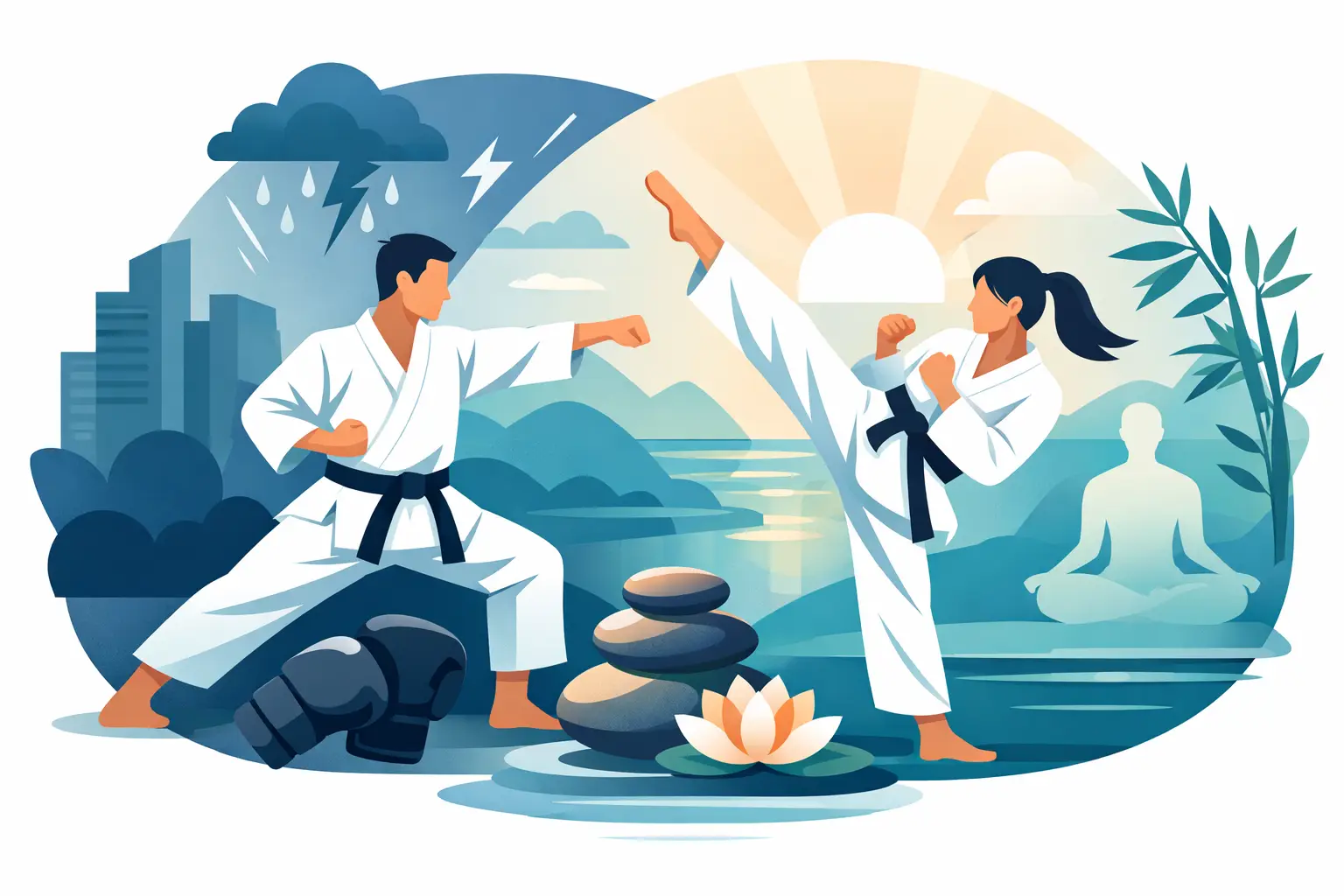
Stress rarely looks dramatic. More often, it shows up as poor sleep, a short temper, tight shoulders, low patience and that constant feeling of being switched on when you would rather not be. That is exactly why martial arts stress relief classes appeal to so many teenagers and adults. They give you a clear way to move, think and reset, instead of carrying the day’s pressure around with you.
For many people, stress relief is sold as something soft and passive. Sit still. Switch off. Breathe deeply. Those things can help, but they are not the right fit for everyone. Some people need an active outlet. They need structure, challenge and focus. Martial arts can provide that, and it does so in a way that builds useful skills at the same time.
Why martial arts stress relief classes work differently
A good class does more than tire you out. It asks for your attention. When you are drilling movement, improving timing and responding to a partner, your mind has less room to replay work problems, school pressure or everyday frustrations. You are fully engaged in what is in front of you.
That matters because stress is not only physical. It is mental noise. Effective martial arts training cuts through that noise by giving you simple, immediate tasks to solve. Footwork. Positioning. Balance. Distance. Technique. The mind gets a break from overthinking because it has something concrete to do.
There is also the physical side. Training helps release tension that often sits in the neck, back and shoulders. It raises the heart rate, improves breathing and gives the body a more productive response to pressure. Over time, many students notice they feel calmer outside class as well, not just during it.
Stress relief is not the same as escaping
There is a difference between healthy stress relief and distraction. Endless scrolling, comfort eating or collapsing in front of the television may feel easy in the moment, but they do not always leave you feeling better afterwards. Martial arts is different because it asks something of you.
That challenge is part of the benefit. You arrive with a busy head, but you leave with a sense that you have done something worthwhile. You have trained. You have improved. You have handled pressure in a controlled environment. That builds confidence, and confidence has a direct effect on stress.
People often feel more stressed when they feel passive or stuck. Training gives you momentum. Even on a difficult day, you can show up, work hard and finish stronger than you started.
The mental benefits of structured training
Not all exercise affects the mind in the same way. Going for a run may help one person and bore another. A gym session can be useful, but it can also become repetitive if there is no real engagement. Martial arts brings in a different element – discipline with purpose.
Structured classes give students a routine they can rely on. That is valuable for adults juggling work and family life, and for teenagers dealing with school pressure, exams and screen-heavy habits. You know when training starts, what is expected and what you are working towards.
That routine can become a strong anchor during stressful periods. It creates consistency when the rest of life feels rushed or unpredictable. It also gives students a healthy standard to meet. Progress does not come from mood or motivation alone. It comes from turning up and putting the work in.
Why practical martial arts suit modern stress
Some martial arts settings lean heavily on tradition, performance or competition. That appeals to some people, but not everyone wants that environment. If your goal is stress relief with real-world value, practical training often makes more sense.
A modern, close-range self-defence system gives students techniques they can understand and apply without needing extreme flexibility, high kicks or athletic showmanship. That lowers the barrier to entry. Beginners are far more likely to stick with training when it feels achievable from day one.
Practical training also tends to feel more relevant. You are not just learning patterns for the sake of it. You are developing timing, awareness, control and efficient movement. That sense of purpose matters. When training feels useful, it becomes easier to commit to it.
Who benefits most from martial arts stress relief classes?
The short answer is that almost anyone can, but the reasons vary. Teenagers often benefit because training gives them an outlet for pressure, frustration and social stress. It also helps with focus, discipline and confidence at an age where all three can be tested daily.
Adults usually come to class for a mix of reasons. Some want to get fitter without the boredom of a standard gym routine. Some want self-defence skills. Others simply need a way to clear their head after work. Martial arts can meet all of those needs at once, which is one reason people stay with it.
It can be especially useful for people who do not see themselves as naturally sporty. You do not need to be the fastest, strongest or most flexible person in the room. Good instruction should help you build skill step by step. Stress often gets worse when people feel judged or left behind, so a supportive class culture matters just as much as the techniques being taught.
What to look for in a class
If you are considering martial arts stress relief classes, the quality of the teaching matters. A class should feel structured, safe and welcoming, but it should also feel serious about progress. You want an environment where beginners are supported without being patronised.
Look for instruction that is clear and practical. Complicated jargon and theatrical demonstrations may look impressive, but they are not always what a beginner needs. The best classes make training accessible while still maintaining standards.
It is also worth paying attention to the atmosphere. Some people thrive in a loud, competitive room. Others need a more measured approach. Neither is automatically right or wrong, but the best fit is the one that helps you train consistently. For stress relief, consistency beats intensity done once and then abandoned.
What your first few weeks might feel like
Many beginners worry they will be unfit, awkward or out of place. That is normal. The first few sessions are usually less about getting everything right and more about getting comfortable with the structure of training.
You may feel mentally tired as much as physically tired at first. That is not a bad sign. It means you are learning, concentrating and using your attention in a new way. For people who spend all day under a different kind of pressure, this shift can be surprisingly refreshing.
Progress tends to come in small wins. Better balance. Sharper focus. More control. Less hesitation. Those changes may seem modest at first, but they add up quickly. And as your confidence grows in class, it often carries over into everyday life.
Martial arts, calm and confidence
One of the biggest misconceptions is that martial arts makes people aggressive. In a well-run class, the opposite is usually true. Students become calmer because they are learning control. They become more confident because they are learning competence.
That combination matters for stress. Anxiety often grows when you feel unprepared or uncertain. Training helps reduce that feeling. You learn how to manage pressure, stay composed and respond with intention instead of panic.
For parents looking at classes for teens, this is especially valuable. A young person who feels more capable and more disciplined is often better equipped to handle school stress, social pressure and difficult situations without overreacting.
A realistic way to start
You do not need to commit to some dramatic life overhaul to feel the benefits. You simply need a class that is well taught, practical and suitable for your level. From there, the goal is to start steadily and let the routine do its job.
At Fusion Kung Fu, that means structured training for ages 13 and above, with a clear focus on effective technique, steady improvement and a welcoming start for beginners. Real stress relief does not come from pretending life is easy. It comes from building the habits, focus and resilience to handle it better.
If stress has been sitting in your shoulders, your sleep or your mood for longer than it should, a good martial arts class can be a very practical place to change that. Not because it makes life quiet overnight, but because it teaches you how to meet pressure with a clearer head and a stronger body.
About the Author: Keith Ratcliffe
