Here’s What We Cover
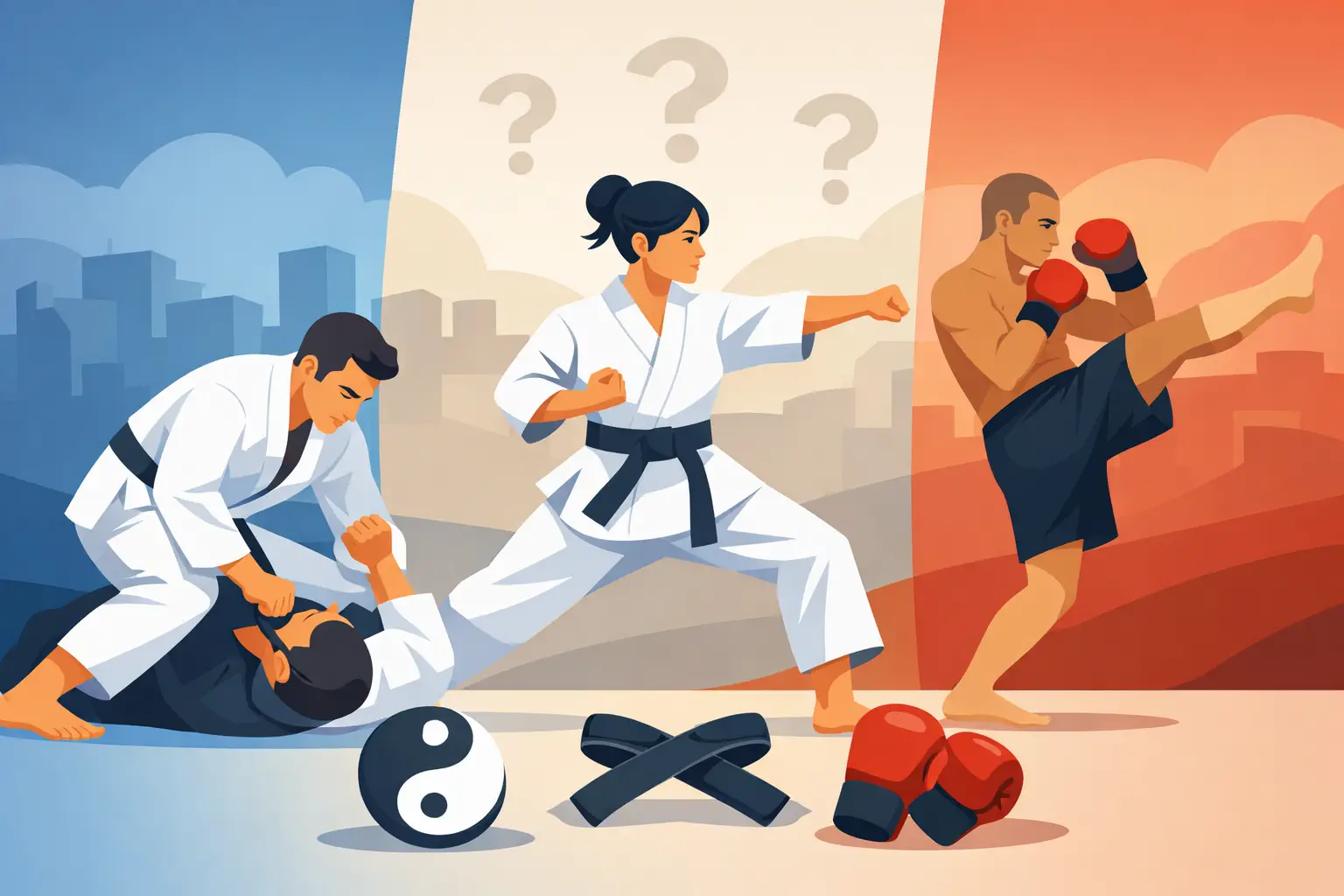
Most adults do not start martial arts because they want to win trophies. They start because they want to feel fitter, sharper, safer, and more confident in everyday life. If you are trying to work out the best martial arts for adults, the right answer is not the style with the loudest reputation. It is the one that matches your goals, your body, and the way you want to train week after week.
That matters more than people think. A martial art can look impressive online and still be a poor fit for a beginner with a full-time job, stiff shoulders, old knee trouble, or no interest in competition. On the other hand, the right class can give you structure, realistic self-defence skills, better fitness, and a clear sense of progress without expecting you to be naturally athletic from day one.
How to judge the best martial arts for adults
Adults usually come in with one of four priorities: self-defence, fitness, confidence, or enjoyment. Many want all four, but one tends to lead. If your main goal is practical self-defence, you need training that deals with timing, pressure, distance, and realistic reactions rather than elaborate routines. If fitness is the main aim, consistency matters more than finding the toughest style in the room.
You also need to be honest about what you will actually stick with. Some people love hard sparring. Others want technical training with structure and control. Neither is wrong. The best martial art is the one that challenges you without making you dread turning up.
A good adult class should also teach in a way that respects the fact that adults learn differently from children. You want clear coaching, steady progression, and a safe environment where beginners are not thrown in at the deep end. Serious training does not need to feel hostile.
Boxing is excellent for fitness and timing
Boxing is often one of the first styles adults consider, and for good reason. It builds fitness quickly, sharpens footwork, improves reactions, and teaches you how to hit with proper mechanics. Even a few months of good boxing training can change how coordinated and switched-on you feel.
For adults who want stress relief and a demanding workout, boxing is hard to beat. It is straightforward, honest, and practical within its own range. You learn how to move, defend, and stay composed under pressure.
The trade-off is that boxing is limited if your goal is wider self-defence. It focuses on punches, not kicks, clinch control, or broader close-range responses. Some adults also find repeated head contact unappealing, although that depends heavily on the club and how training is run.
Brazilian Jiu-Jitsu suits adults who like problem-solving
Brazilian Jiu-Jitsu, often called BJJ, appeals to many adults because it does not rely purely on strength or speed. It is built around leverage, control, escapes, and submissions, with a lot of live practice. For smaller adults, or those who like a technical challenge, that can be a big draw.
BJJ can build real confidence because you spend time working against resisting partners. You learn what pressure feels like and how to stay calm inside it. That is valuable training, especially for people who want something practical rather than performative.
At the same time, BJJ is heavily ground-focused. That is useful in some situations, but not every adult wants a martial art centred on going to the floor. Some also find the close physical contact or slower early progress frustrating. It is effective, but it is not automatically the best fit for everyone.
Muay Thai offers strong all-round striking
If you want a demanding striking art with punches, kicks, knees, elbows, and clinch work, Muay Thai has a lot going for it. It develops toughness, cardio, balance, and a strong sense of range. Adults who enjoy hard training often thrive in it.
It can also feel more complete than boxing because it covers more weapons and more distances. You are not just learning to punch. You are learning how to control space and generate power from different positions.
The downside is obvious. Muay Thai can be physically intense, especially for beginners who have been desk-bound for years. Good coaching makes a huge difference here. In the wrong setting, adults can feel pushed too hard too soon.
Judo is powerful but not for every body
Judo teaches throws, balance breaking, grips, and control. It is a serious martial art with real practical value, especially for understanding posture, weight transfer, and what happens when someone grabs or drives into you.
For adults who enjoy close contact and explosive movement, judo can be hugely rewarding. It also builds resilience and body awareness in a very real way.
But there is no point pretending it suits everybody equally. Throwing and being thrown is demanding. If you are carrying injuries, returning to exercise after years away, or simply want a gentler entry point, judo may feel like a steep start. That does not make it a bad option, only one that depends more on your body and the quality of the instruction.
Karate and Taekwondo can be excellent with the right focus
Traditional striking arts such as Karate and Taekwondo vary a great deal from club to club. At their best, they offer discipline, structure, technical precision, and steady progression. Many adults like the clear syllabus and the sense of earning each step.
They can be very good for confidence, mobility, coordination, and long-term development. For some people, that structure is exactly what keeps them training.
The question is focus. Some clubs lean more towards sport, forms, or tradition than practical self-defence. If that is what you enjoy, fine. If you want training centred on realistic close-range application, you need to look carefully at how classes are taught, not just the style name on the sign.
Kung Fu can be one of the best martial arts for adults when it stays practical
Kung Fu is often misunderstood. Some people assume it is all forms, theatre, or old traditions that do not translate to modern self-defence. Some schools do fit that image. Others do not. The style and the instructor make all the difference.
For adults, practical Kung Fu can be one of the strongest options because it can blend efficiency, structure, controlled progression, and realistic application. A close-range system with sound foundations teaches you how to generate power without relying on size, how to stay balanced under pressure, and how to respond quickly in the kind of distances where real confrontations often happen.
That is especially useful for adults who do not want a sport-first approach. If your goal is functional self-defence, confidence, and long-term training you can build into normal life, practical Kung Fu has real advantages. It can be demanding without depending on acrobatics, flexibility extremes, or brute force.
At Fusion Kung Fu, this practical approach is exactly the point. Training is built around what works in today’s world, with structured teaching that welcomes beginners while still taking results seriously.
What matters more than style alone
People often search for the perfect style when they should be looking for the right school. A great instructor in a good system will almost always beat a famous style taught poorly. Adults need coaching that is clear, patient, and grounded in real application.
Pay attention to how classes are run. Are beginners supported properly? Is there a logical path from basic movements to applied skill? Do you leave sessions feeling challenged but safe? Can smaller or older students train effectively, or does everything rely on aggression and physical dominance?
Culture matters as well. The best adult classes are disciplined, but they are not full of ego. You should feel that standards are high and that people want you to improve. That sort of environment keeps adults training long enough to get real results.
So which martial art should an adult choose?
If your main goal is fitness and sharp hands, boxing is a strong contender. If you like technical grappling and live resistance, BJJ may suit you. If you want hard striking with a full-contact edge, Muay Thai is worth a look. If you enjoy throws and close-contact control, judo has a lot to offer.
But if you want a practical balance of self-defence, confidence, structure, and accessibility, a well-taught close-range Kung Fu system deserves serious attention. For many adults, that blend makes more sense than styles built mainly around sport, spectacle, or tradition for tradition’s sake.
The best martial arts for adults are not about choosing what sounds toughest. They are about choosing training you can trust, training you can sustain, and training that helps you become calmer, stronger, and more capable in real life. Start there, and the right path becomes much easier to see.
About the Author: Keith Ratcliffe
