Here’s What We Cover
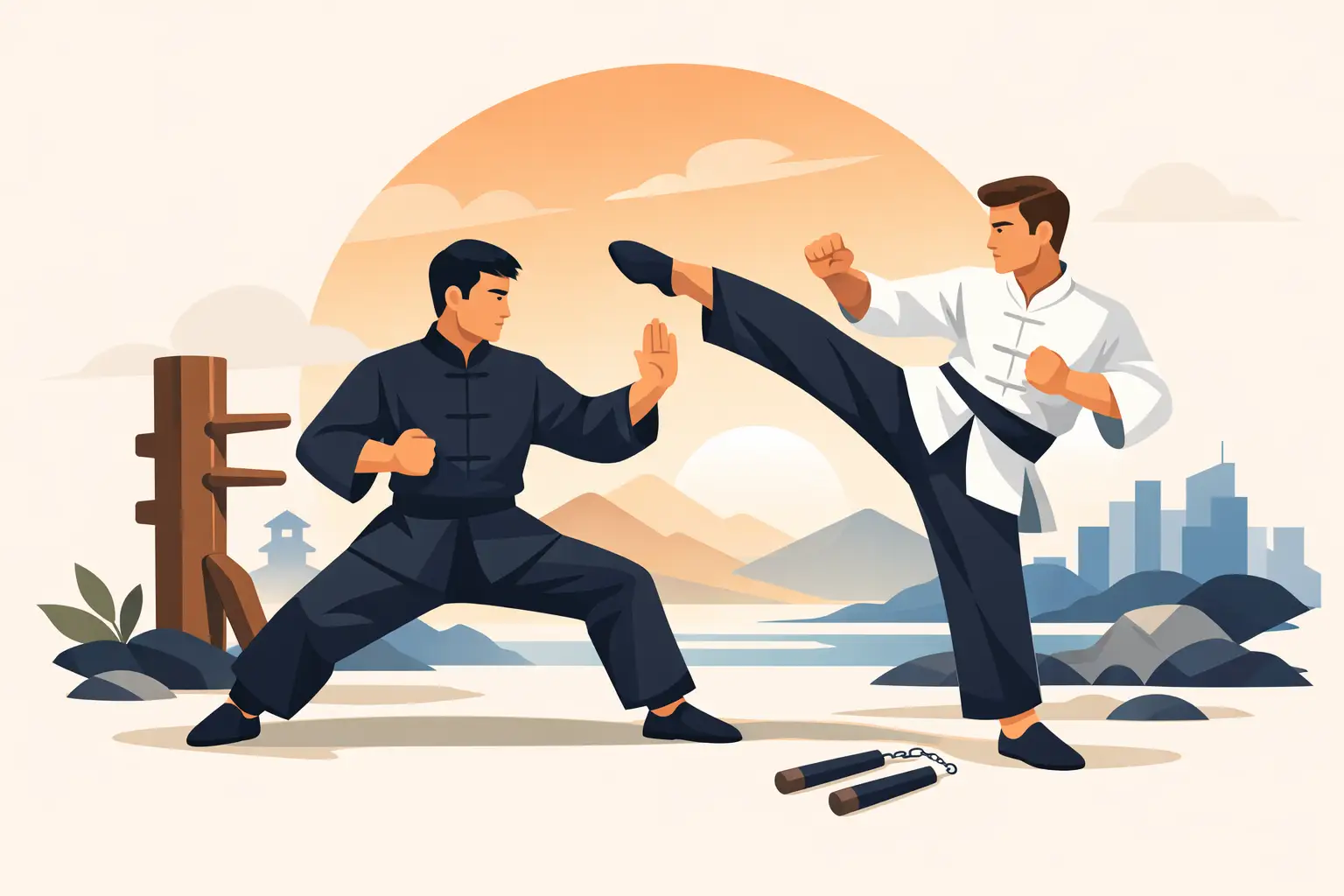
Most people can tell within five minutes whether a martial arts class feels useful or just looks impressive. If the training is full of complicated routines, unrealistic attacks and techniques that rely on perfect timing under no pressure, it may be entertaining – but that is not the same as practical kung fu training.
For most teenagers and adults, practical training means something far simpler. It means learning how to stay calm, protect yourself at close range, improve your fitness and build confidence through structured practice that makes sense in real life. It should be demanding, but it should also be accessible. You should not need to be naturally athletic, flexible or experienced to start.
What practical kung fu training really means
Practical kung fu training is not about collecting flashy movements or memorising long sequences for their own sake. It is about building habits that hold up under pressure. That includes posture, balance, distance control, timing, awareness and the ability to respond decisively when someone is aggressive at close range.
A good practical system strips away what is unnecessary and keeps what works. That does not mean tradition has no value. It means tradition should support training, not get in its way. If a method helps students become sharper, safer and more capable, it earns its place. If it exists only because it has always been done, it deserves questioning.
This is especially important for beginners. Many people delay starting martial arts because they assume they will be out of place, too old, unfit or not coordinated enough. In reality, structured coaching should meet you where you are. Effective kung fu is not reserved for natural fighters. It is built through repetition, discipline and sensible progression.
Why realism matters more than performance
There is a big difference between training for display and training for application. Performance-based martial arts can develop discipline and control, but if your main goal is self-defence, realism has to lead the way.
Real confrontations are messy. They happen quickly, often at close range, and rarely give you room for wide movements or second attempts. That is why practical systems focus on direct action, efficient body mechanics and techniques that do not depend on size or strength. Close-range striking, defensive structure, movement under pressure and controlled partner drills all matter because they reflect the kind of situations people are more likely to face.
This does not mean every session should be rough or intimidating. In fact, the best practical training is carefully coached. Students need pressure, but they also need safety, clarity and time to develop. There is no benefit in throwing beginners into chaos. Confidence comes from learning the right skills in the right order.
The core benefits go beyond self-defence
People often join because they want to feel safer, but they stay because the training improves far more than one area of life. Practical kung fu training develops fitness in a way that feels purposeful. You are not just exercising for the sake of it. You are improving movement, reactions, coordination and conditioning while learning something useful.
It also sharpens focus. Good martial arts training demands attention to detail. You have to listen, apply corrections and stay mentally present. For teenagers dealing with distractions and adults carrying the stress of work and family life, that kind of focus is valuable.
Then there is confidence. Not the loud kind, and not false bravado. Real confidence grows when you know you can handle yourself better than you could a month ago. It shows in posture, decision-making and the way you carry yourself. For younger students, that can support anti-bullying awareness and personal resilience. For adults, it often means feeling less anxious and more in control.
What beginners should expect from practical kung fu training
A beginner-friendly class should feel structured from the start. You should know what you are learning, why it matters and how it connects to the bigger picture. That does not mean every detail needs to be technical. In fact, plain English coaching is often the most effective approach.
Early training usually focuses on stance, guard, movement, striking mechanics and basic defensive responses. These fundamentals are not glamorous, but they are where useful skill begins. Without them, more advanced material has no solid base.
Partner work is also important, because self-defence cannot be learned in theory alone. At the same time, partner drills should be controlled and progressive. A well-run class helps students build timing and confidence without feeling exposed or overwhelmed.
You should also expect consistency. Progress in martial arts is rarely dramatic from one session to the next. It comes from turning small improvements into reliable habits. That is one reason structured weekly training works so well for families, teenagers and adults with busy schedules. It creates routine, and routine creates results.
Practical kung fu training for teenagers and adults
Teenagers and adults often come to training for different reasons, but the benefits overlap more than people expect. Teenagers may need confidence, discipline and better ways to deal with pressure at school or online. Adults may be looking for self-defence, stress relief or a more engaging way to get fit. Both benefit from training that is challenging, respectful and grounded in reality.
For teenagers aged 13 and above, martial arts can provide a strong sense of direction. It teaches accountability and self-control without treating them like children. For adults, especially complete beginners, the key is knowing they can start without having to prove anything. A serious class should be welcoming, not ego-driven.
This matters because many people are put off by the wrong idea of martial arts culture. They expect shouting, posturing or pressure to keep up with experienced students. Good instruction is the opposite. Standards should be high, but support should be there from day one.
The role of close-range training
One of the most overlooked parts of self-defence is what happens when space disappears. Many situations do not begin from a neat distance with both people squared up and ready. They start suddenly, awkwardly and close.
That is why systems built around efficient close-range skills have real value. Training should teach students how to protect their centreline, generate power without needing large movements and stay balanced when the other person is aggressive or unpredictable. This is where a practical approach stands apart from styles that rely heavily on speed, flexibility or long-range techniques.
Shiyong Kung Fu is designed with this kind of realism in mind. Built on Wing Chun foundations and blended with useful elements from other martial arts, it focuses on fast, effective responses for modern self-defence. The aim is not to look traditional for the sake of it. The aim is to train in a way that makes sense now.
How to judge whether a class is right for you
If you are comparing classes, look past the slogans and ask what actually happens in the room. Are beginners coached properly? Do the drills have a clear purpose? Is the teaching focused on realistic application, or mostly on performance and choreography?
You should also pay attention to the atmosphere. A good class is disciplined, but it should not feel hostile. Students should train seriously while still being approachable and supportive. That balance matters, especially if you are new or bringing in a teenager who needs both challenge and reassurance.
Progression is another sign of quality. A strong martial arts club does not simply repeat random techniques each week. It builds students step by step, from beginner level through to more advanced training, with one-to-one support available where needed. That kind of structure helps students improve steadily rather than feeling lost.
For people in Norwich and the surrounding area, that local sense of community matters as well. Training is easier to stick with when the environment is welcoming, the coaching is clear and the purpose is obvious. Fusion Kung Fu is built around exactly that approach – practical, structured and focused on helping ordinary people become more capable over time.
Why the best time to start is before you feel ready
Many people wait until they are fitter, more confident or less busy. That usually means waiting too long. Martial arts training is not something you do once you have already changed. It is one of the things that helps you change.
You do not need to arrive as a finished version of yourself. You just need to be willing to start, listen and keep showing up. With proper coaching, practical kung fu training can improve how you move, how you think under pressure and how you carry yourself in everyday life.
If you want training that is realistic, structured and genuinely useful, choose the kind that respects your time and prepares you for the real world. Fancy movements fade quickly. Solid skill stays with you.
About the Author: Keith Ratcliffe
