Here’s What We Cover
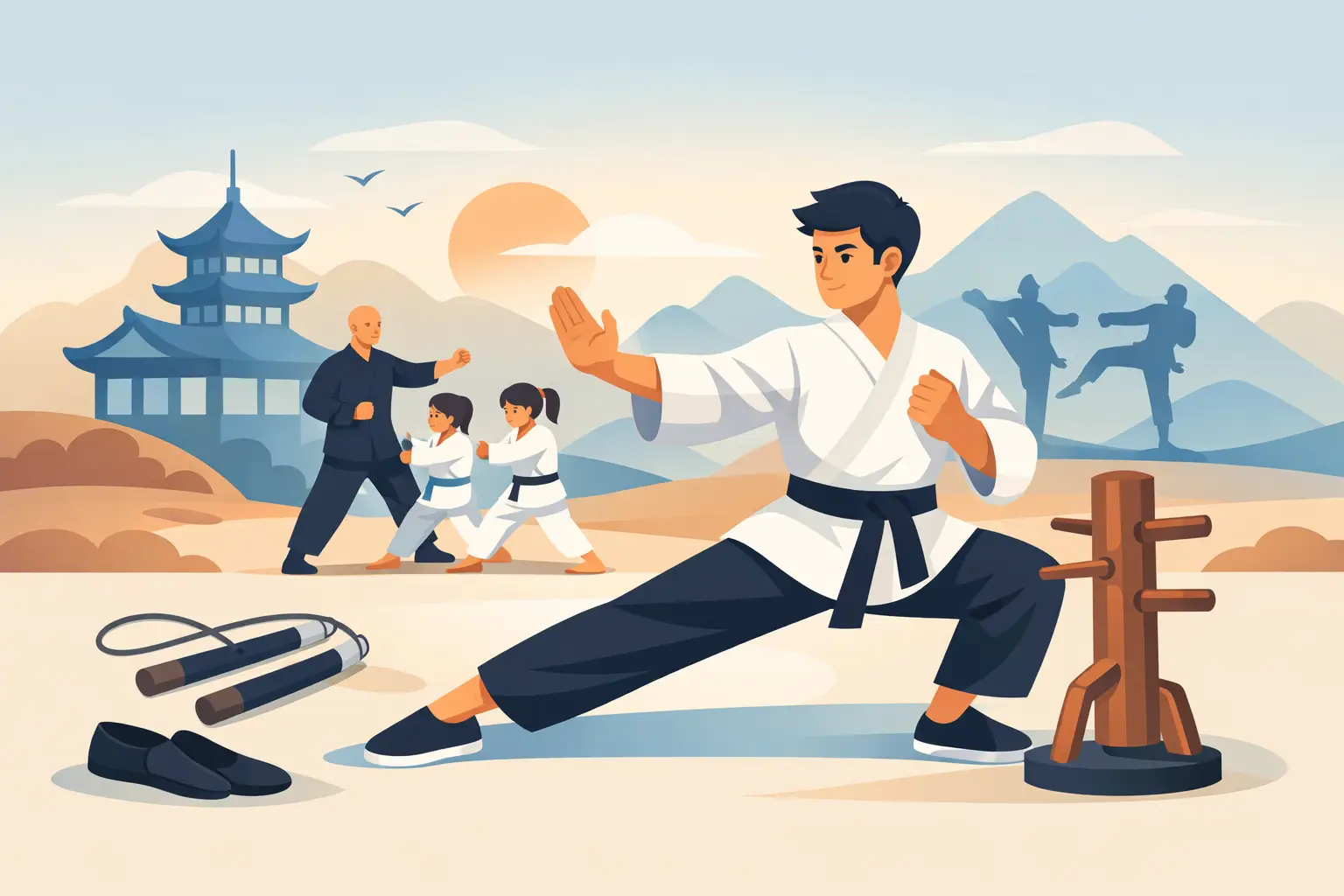
Walking into your first martial arts class can feel like the hardest part. Most beginners are not worried about effort – they are worried about whether they will fit in, keep up, or look out of place. If you have been asking is kung fu good for beginners, the short answer is yes. The better answer is that it depends on how the class is taught, what the style focuses on, and whether the training is built for real people rather than experts only.
For teenagers, adults and parents looking at classes for older children, that matters. A good beginner class should not expect you to be flexible, naturally athletic or already confident. It should give you a clear way to start, make steady progress and learn skills that feel useful in real life.
Is kung fu good for beginners in real life?
Kung fu can be an excellent starting point because it develops more than one thing at once. Done properly, it improves coordination, balance, timing, awareness, discipline and fitness while also teaching practical self-defence. That makes it appealing to people who want more than a workout and more than a hobby.
The catch is that not all kung fu is taught in the same way. Some schools focus heavily on tradition, forms and performance. There is nothing wrong with that if that is what you want. But for a complete beginner who wants confidence, structure and realistic skills, a practical approach usually makes more sense.
That is why teaching style matters as much as style name. Beginners tend to do best when techniques are simple, direct and drilled with purpose. If a class starts with strong foundations and explains why movements work, students progress faster and feel less overwhelmed.
What makes kung fu beginner-friendly?
A beginner-friendly martial art is not one that is easy. It is one that is teachable. There is a difference.
Good kung fu training breaks things down into manageable steps. You learn stance, movement, positioning, striking, defence and distance in a way that builds layer by layer. You are not expected to know everything in week one. You are expected to turn up, listen, train and improve.
This is especially useful for people who have never done combat sports before. You do not need to be the strongest person in the room. Practical kung fu systems often rely on body mechanics, timing and efficiency rather than brute force. For smaller students, older beginners, and those returning to exercise after time away, that can be a big advantage.
There is also a mental side to this. Beginners often gain confidence quickly when training is structured and realistic. You start to stand better, move with more intent and react with more control. Those changes carry into everyday life, whether that means walking home at night, handling stress better or speaking with more confidence.
Why some beginners struggle with kung fu
Kung fu is good for beginners, but not every beginner has the same goal. That is where honesty helps.
If you want instant results with no repetition, martial arts will test your patience. Kung fu rewards consistency. You may spend time refining footwork, posture and short-range technique before everything clicks. That is normal. Strong basics are what make the more advanced skills work later.
Some beginners also arrive with the wrong picture in mind. They expect flying kicks, flashy routines or cinema-style action. Real training is usually far more disciplined than that. It is built on repetition, control and pressure-tested technique. For most people, that is actually a good thing. It means you are learning something usable, not just something that looks impressive.
The other challenge is finding the right environment. A class that throws beginners in at the deep end, ignores individual progress or relies on ego will put people off quickly. A serious club should still feel welcoming. You should be challenged, but you should also be coached.
Is kung fu good for beginners who want self-defence?
If self-defence is your main reason for starting, kung fu can be a strong choice when the training is modern and practical. This matters because self-defence is not about collecting techniques. It is about learning simple responses under pressure, understanding distance, improving awareness and staying calm when things become tense.
A practical close-range system is often well suited to beginners because it does not depend on acrobatics or physical dominance. Instead, it teaches economy of motion, positioning and fast, efficient movement. Those qualities are useful in real confrontations, where there is rarely much space and never much time.
For many beginners, this feels more relevant than sport-based training alone. Competitive martial arts absolutely build skill, toughness and fitness, but not every new student wants to compete. Some simply want to feel safer, more switched on and more capable. Practical kung fu can meet that need very well.
Fitness, focus and confidence for complete beginners
One of the biggest advantages of starting kung fu is that the benefits stack up quickly. Even in the early stages, students usually notice changes in energy, posture and concentration. You are moving with intention, learning under instruction and using both body and mind at the same time.
That makes training especially valuable for teenagers and adults who spend long hours sitting down, working at desks or staring at screens. Classes give you physical challenge, but they also create routine and mental reset. You have to be present. You cannot drift through a lesson.
For parents looking at martial arts for a child aged 13 or over, that structure can be a major reason to start. A well-run class teaches respect, discipline and resilience without turning training into a lecture. Students learn to work hard, control themselves and support others in the room.
Confidence grows in a healthier way too. It is not about acting tough. It is about knowing you can stay calm, listen, respond and keep improving. That sort of confidence tends to last because it is earned.
How to tell if a kung fu class is right for a beginner
The best way to judge a class is by what happens when a new student walks in. Are they welcomed? Are techniques explained clearly? Are they given a structured introduction rather than left to guess? These things tell you far more than a badge on the wall.
A good beginner class should have clear coaching, sensible progression and a focus on safety. It should challenge students without making them feel foolish for not knowing the basics yet. That balance is important. People improve fastest when standards are high and support is real.
It also helps if the system itself is practical. At Fusion Kung Fu, training is built around Shiyong Kung Fu, a functional close-range method designed for modern self-defence rather than unnecessary tradition. That means beginners can focus on what works, develop strong fundamentals and train in a way that feels relevant from the start.
Just as important, classes should be accessible. You should not need previous experience, extreme flexibility or a fighter’s mindset to begin. If you are willing to learn and stick with it, that is enough.
So, is kung fu good for beginners?
Yes – for many people, it is one of the best ways to start martial arts. It gives you practical skills, better fitness, sharper focus and stronger confidence in the same place. It also suits a wide range of students because progress is not based on size, strength or natural athletic talent alone.
Still, the answer is not automatic. Kung fu is good for beginners when the teaching is structured, the atmosphere is supportive and the training is grounded in reality. If a club offers that, beginners tend to settle in quickly and improve more than they expected.
Starting is rarely about being ready. It is about choosing an environment that helps you become ready. If you want training that is disciplined, welcoming and useful in the real world, kung fu is a very strong place to begin – and your first class will tell you more than weeks of thinking about it ever could.
About the Author: Keith Ratcliffe
