Here’s What We Cover
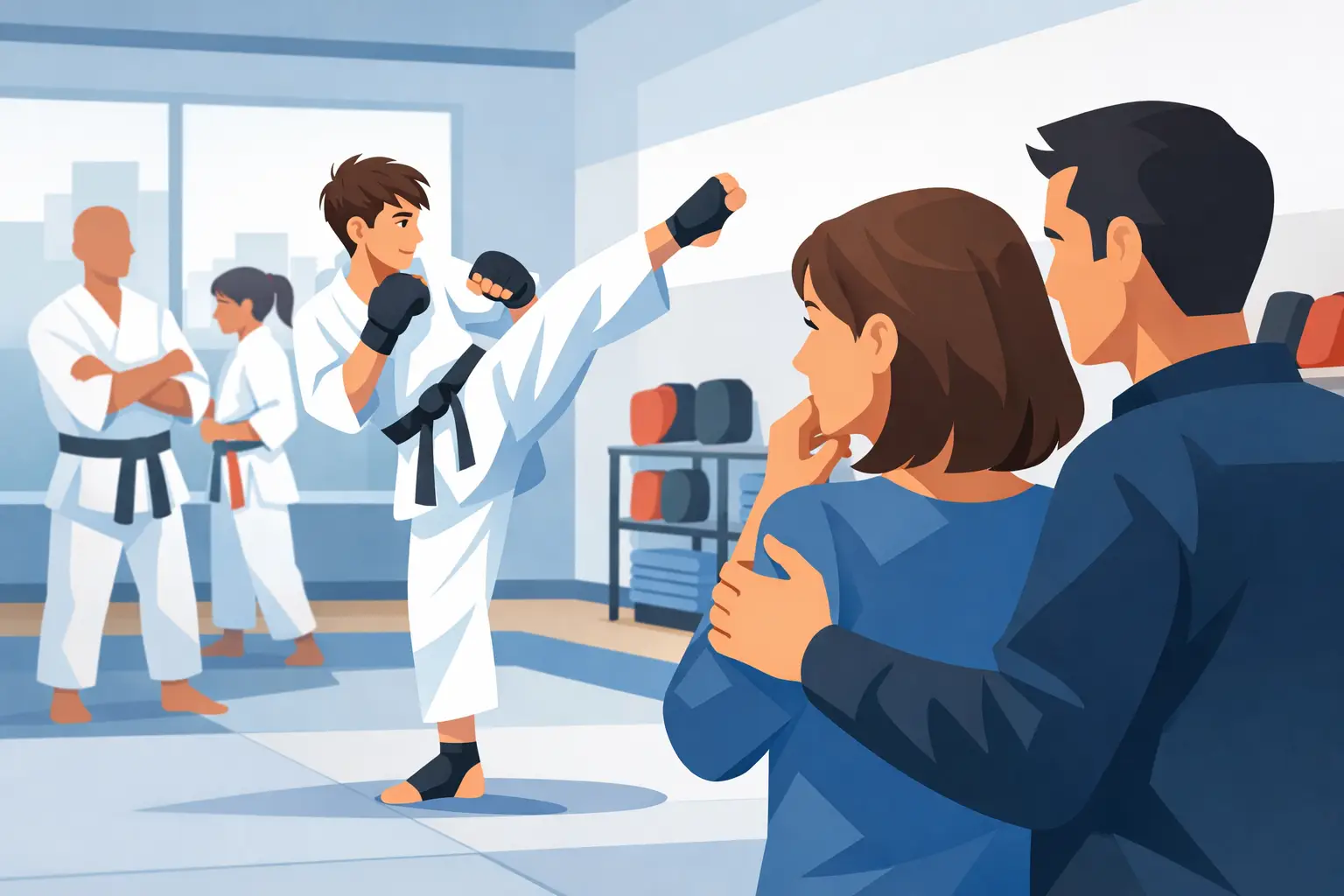
When a teenager starts to lose confidence, spends too much time on screens, or comes home talking about trouble at school, most parents are not looking for a hobby that simply fills an hour. They want something that helps. That is why so many families searching for teen martial arts Norwich are really looking for structure, confidence, fitness and practical self-defence in one place.
For teenagers, the right martial arts class can be a turning point. Not because it promises miracles, but because good training gives them something solid to work on every week. It teaches them how to handle pressure, how to stay calm, how to move with purpose and how to carry themselves better in daily life.
Why teen martial arts in Norwich appeals to families
Teenagers sit in a difficult middle ground. They are too old for children’s activities that feel babyish, but they are often still building the confidence to step into a fully adult environment. That is where structured martial arts training makes sense. It gives them a clear path to improve without needing to be naturally sporty, loud or outgoing.
Parents are often drawn to martial arts for one clear reason at first – self-defence. That matters, and it should. But the longer-term benefits are usually what make the biggest difference. A good class helps a teenager become more disciplined, more resilient and more focused. Those changes tend to show up at home, at school and in how they deal with other people.
There is also the question of modern life. Many teenagers are less active than they should be, and motivation can be hard to build through traditional gym sessions or team sports. Martial arts offers a different kind of challenge. Progress feels earned. Skills build week by week. That steady sense of achievement keeps many teenagers engaged far more effectively than exercise for its own sake.
What makes a good martial arts class for teenagers
Not every class will suit every teenager. Some clubs lean heavily into tradition, performance or competition. There is nothing automatically wrong with that, but parents should be clear about what their child actually needs.
If the goal is practical confidence and usable self-defence, the training needs to reflect real life. That means learning awareness, distance, timing, balance and simple effective techniques under pressure. It should not rely on flashy movement or athletic ability that only a few students have.
The teaching style matters just as much as the syllabus. Teenagers respond best when instructors are firm, fair and consistent. They need standards, but they also need support. A class should feel disciplined without being intimidating. For complete beginners especially, that balance can decide whether they stick with training or give up after a couple of sessions.
Safety is another part of quality. Serious training does not mean reckless training. Good instructors build skill progressively, teach control from the start and create an environment where students can improve without feeling exposed or overwhelmed.
Confidence that is built properly
A lot of activities claim to build confidence, but real confidence does not come from praise alone. It comes from doing difficult things and getting better at them.
That is one of the strongest reasons parents look into teen martial arts in Norwich. Training gives teenagers regular contact with challenge. They learn a technique, struggle with it, improve it and eventually perform it with control. That process matters. It teaches them that progress is not instant, but it is possible.
For some teenagers, confidence grows because they feel safer. For others, it grows because they realise they can cope with pressure. Some simply benefit from being part of a group where effort and respect matter more than popularity. The outcome is often similar – they stand taller, speak more clearly and carry themselves with more assurance.
This is particularly valuable for teenagers dealing with bullying or social anxiety. Martial arts is not about turning young people into fighters looking for confrontation. Good training does the opposite. It teaches them to avoid trouble where possible, recognise risk early and respond with control rather than panic.
Fitness with a purpose
Teenagers are far more likely to stay active when training feels meaningful. Martial arts works well because fitness is built into the class rather than treated as a separate chore.
Students improve stamina, coordination, balance, mobility and overall conditioning while learning a skill. They are not just running for the sake of it. They are moving, reacting, striking, defending and thinking. That combination keeps the mind engaged as well as the body.
For teenagers who do not enjoy traditional sports, this can be a much better fit. There is less emphasis on team selection, less pressure to already be good and more focus on personal improvement. A quieter teenager can still thrive. So can a teenager who is unfit at the start. What matters most is consistency.
There is a trade-off, of course. Martial arts is not a shortcut. It takes time to build skill and fitness properly. But that is also part of its value. Teenagers learn that results come from showing up, listening and putting the work in.
Practical self-defence, not performance
One of the biggest concerns parents have is whether a martial arts class teaches something genuinely useful. That is a fair question.
Some systems place a heavy emphasis on forms, competition rules or traditional rituals. Those can have value, but they are not always the best fit for a teenager whose main goal is practical personal safety. A more direct training method focuses on what works under pressure and what a student can realistically apply.
Shiyong Kung Fu is built around that practical mindset. With foundations in Wing Chun and influences from other martial arts, it focuses on close-range effectiveness, fast reactions and straightforward technique. That makes it especially relevant for modern self-defence, where situations are often sudden, messy and close rather than tidy or theatrical.
The benefit for teenagers is clear. They do not need to be big, strong or naturally aggressive to make progress. They learn how body position, timing and efficient movement can give them an advantage. That approach is more realistic for everyday students than relying on strength or flashy athleticism.
Why age 13 and up can be the right time to start
Thirteen is a strong age to begin more serious martial arts training. Teenagers at this stage are usually ready for clearer instruction, greater accountability and a more mature training environment.
They are also old enough to understand why technique matters, why discipline matters and why self-control matters. That makes classes more productive. Students can train with intent rather than simply burn energy.
Starting in the teenage years also gives plenty of room for long-term development. A student who begins at 13 or 14 can build a very strong foundation over time, especially if they train consistently. They are not trying to catch up with anyone. They are simply building skill at the right stage.
For parents, this can be reassuring. Their teenager is not being thrown into something extreme. They are stepping into a structured system that can grow with them.
What to look for in teen martial arts Norwich classes
If you are comparing local options, it helps to look beyond the headline claims. Ask what the classes are really trying to achieve.
A strong programme should offer clear coaching, a welcoming environment for beginners and a serious but sensible approach to self-defence. It should also explain how students progress. Teenagers do better when expectations are clear and improvement feels measurable.
You should also consider whether the atmosphere fits your child. Some teenagers need a confidence boost. Others need more discipline and focus. The best clubs manage both. They raise standards while helping each student move forward at their own pace.
For Norwich families, convenience matters too. If a class is local, well-run and realistic about what it teaches, it is much easier to build a routine that lasts. That consistency is where the real benefit comes from.
At Fusion Kung Fu, the aim is straightforward: give teenagers practical training that builds confidence, discipline, fitness and effective self-defence in a supportive environment. There is no need for previous experience, and students can start with a free taster session before committing.
A better option than waiting for confidence to appear
Many teenagers do not suddenly become more confident, focused or resilient on their own. They need an environment that brings those qualities out of them.
Martial arts can do that when it is taught with purpose. It gives teenagers a challenge they can grow into, not one they are expected to have already mastered. It gives parents something valuable too – the reassurance that their child is learning how to handle themselves with discipline and control.
If you are considering teen martial arts Norwich options, look for training that is practical, well-structured and designed for real development rather than just keeping students busy. A good class will not change everything overnight, but it can give a teenager something many of them are missing – a stronger sense of direction, one session at a time.
About the Author: Keith Ratcliffe
