Here’s What We Cover
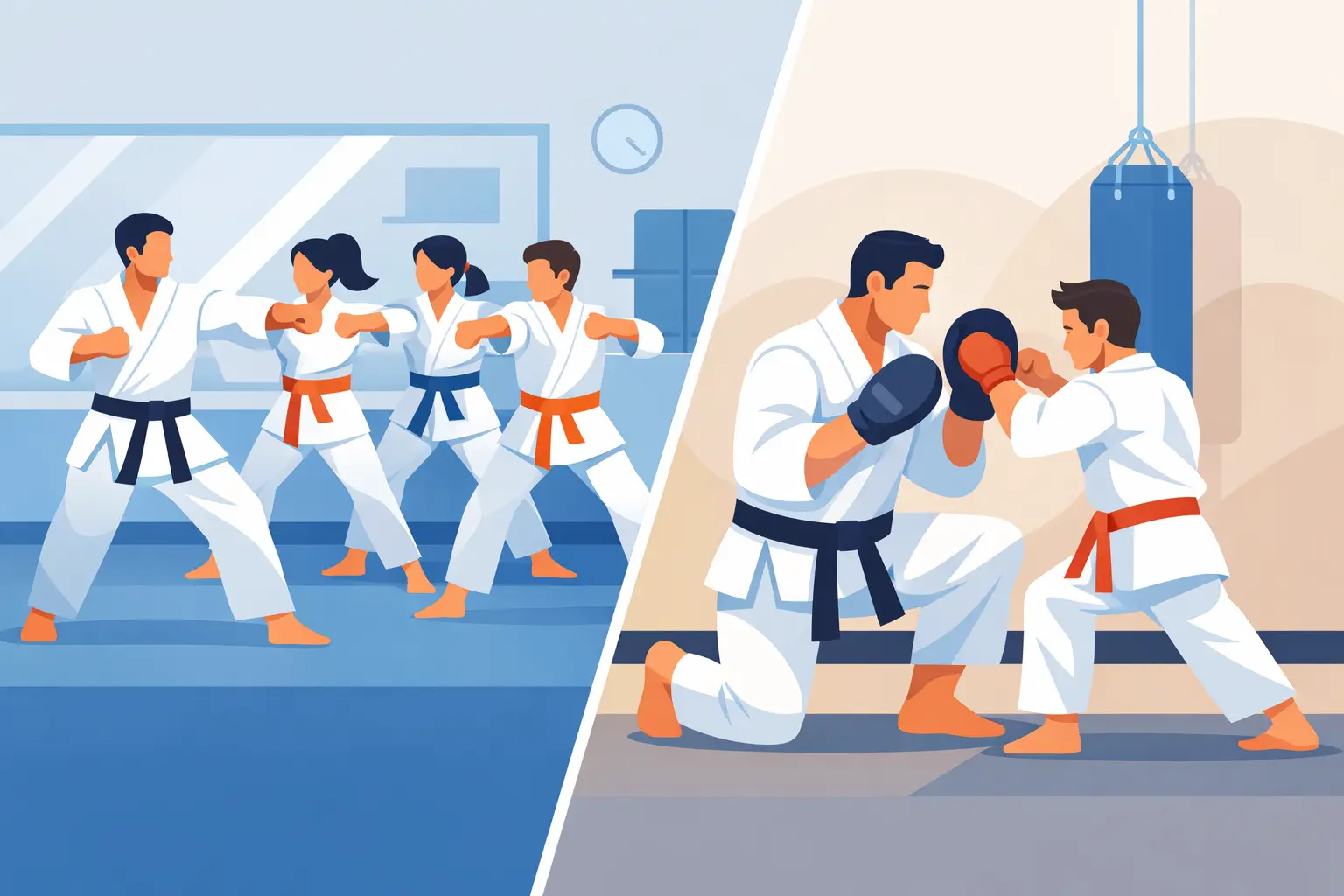
Choosing between group classes vs private martial arts lessons is not simply about which option feels easier at the start. It is about how you learn, what you want from training and what will keep you turning up long enough to make real progress. For most people, the best choice is not the one that promises the fastest result. It is the one that gives you practical skills, confidence and a training routine you can sustain.
At Fusion Kung Fu, students train for real-world self-defence, stronger fitness, clearer focus and personal confidence. Both group and one-to-one sessions can support those goals, but they do so in different ways.
Group Classes vs Private Martial Arts Lessons: The Main Difference
Group classes give you structured training alongside other people at a similar stage of their martial arts journey. You learn techniques, practise drills, build fitness and develop the discipline to work consistently, even when a session feels challenging. There is an energy in a good class that is difficult to recreate alone.
Private martial arts lessons are built around you. The instructor can spend the whole session addressing your movement, your questions, your goals and the areas that need the most work. This can be particularly useful if you are preparing for a grading, returning after time away or want to improve a specific part of your training.
Neither route is automatically better. A nervous beginner may feel more comfortable starting one-to-one, while another may gain confidence faster by seeing that everyone else was new once too. The right decision depends on your personality, availability, budget and reasons for beginning martial arts.
What You Gain From Group Martial Arts Classes
A structured group class does more than teach individual techniques. It teaches you how to stay composed, listen carefully, work with different partners and keep going when you are under pressure. Those are valuable skills for teenagers, adults and anyone who wants their self-defence training to feel useful beyond the training floor.
Consistency becomes part of your week
A regular class time creates accountability. It is much easier to put training off when it is an activity you do only when life is quiet. When you know your class is on each week, it becomes a positive commitment to yourself.
For adults, that routine can be a reliable break from work, screens and daily stress. For young people aged 13 and above, it offers structure, physical activity and a setting where effort matters more than being naturally sporty.
You learn with a range of people
Real situations do not come with one predictable opponent. Training with different classmates helps you adapt to different heights, body types, speeds and levels of confidence. You learn to apply techniques rather than simply memorise them.
This matters in practical Kung Fu. Shiyong Kung Fu is based around efficient, close-range self-defence, drawing from Wing Chun foundations and other effective martial arts methods. The aim is not to perform complicated movements for show. It is to develop awareness, balance, timing and simple responses that can work when someone is larger, stronger or unpredictable.
Community builds confidence
A good martial arts class is serious about standards while still being welcoming. You are surrounded by people who understand the effort involved in learning something new. As your skills improve, you will often find yourself encouraging newer students too.
That sense of belonging can be especially valuable for people who have felt isolated, lacked confidence in sport or want a healthier social outlet. Parents also often see the difference when their teenager is part of a positive environment built on discipline and respect.
Group training gives you realistic practice
Partner drills are where techniques begin to make sense. You learn distance, control and how another person may react. You also learn that good self-defence is not about aggression. It is about awareness, calm decision-making, boundaries and knowing when to disengage.
Private training can include partner work where possible, but regular group sessions provide more varied, ongoing practice. That variety is a major advantage for anyone focused on practical self-defence.
When Private Martial Arts Lessons Make Sense
One-to-one tuition is a focused way to train. It is not a shortcut that removes the need for practice, but it can make your practice more precise.
You want individual attention
In a private lesson, every correction is for you. Your instructor can slow down a technique, explain it in a different way and identify habits that may be holding you back. Perhaps you are overreaching, losing your balance or hesitating at the wrong moment. Small changes can make a meaningful difference.
This is useful for complete beginners who prefer a quieter introduction before joining a class. It can also suit experienced students who want to sharpen specific skills, prepare for their next level or work towards personal targets.
Your schedule is difficult
Shift work, caring commitments and busy family life can make fixed class times harder to manage. Private lessons may offer more flexibility, allowing you to train without missing out completely when your routine is not typical.
That said, flexibility only helps if it leads to regular training. A weekly group class is often the stronger option for people who need external structure to stay committed.
You have a specific objective
You may want help rebuilding confidence after an unpleasant experience, improving fitness before an event or getting ready to return to classes after injury, with appropriate medical guidance. Private sessions allow the training to be shaped around that objective.
They can also be valuable for students who need extra time to understand a movement. There is no embarrassment in asking questions. Good martial arts training is about learning properly, not pretending to understand so that you can keep up.
The Trade-Offs to Consider
Private lessons usually cost more per session because the instructor’s full attention is dedicated to one student. For some people, that investment is worthwhile. For others, a group membership provides more frequent training, greater variety and better long-term value.
There is also the question of pressure. Some people love the focused attention of one-to-one coaching. Others find it intense and learn better when they can observe, practise and progress alongside classmates. Be honest with yourself about the environment in which you are most likely to relax and learn.
Group classes follow a planned syllabus, which is a strength rather than a limitation. You build your skills in the right order, from stance and movement through to practical application. Private lessons can move at your pace, but without consistent practice between sessions, progress may still be slower than expected.
A Combined Approach Can Work Best
You do not always have to choose one option forever. Many students get the most from regular group classes, then book occasional private tuition when they want extra help. A one-to-one lesson can clarify a difficult technique or give you a confidence boost, while group training gives you the repetition and partner experience needed to make those improvements stick.
For a complete beginner, a private session can be a calm first step. Once you understand the basics, joining a class gives you the chance to put them into practice with others. Equally, a regular class member may use private tuition to focus on details that are harder to cover in a shared session.
The important point is that your training should serve your goals, not your ego. You do not need to be flexible, athletic or experienced to start. You need a willingness to learn, train safely and keep improving.
How to Choose the Right Starting Point
Ask yourself what matters most right now. If you want routine, fitness, friendships and realistic partner practice, group classes are likely to be the strongest foundation. If you need flexible timing, individual support or help with a very specific goal, private lessons may be the better place to begin.
Do not let nerves make the decision for you. Most people feel uncertain before their first martial arts session, especially if they have never trained before. A supportive instructor and a clear structure make a far bigger difference than arriving with confidence already in place.
The best next step is to try training for yourself. A free taster session lets you see the atmosphere, meet the instructor and decide whether the class feels right. Start where you are, train with purpose and give yourself the time to become stronger, calmer and more capable.
About the Author: Keith Ratcliffe
