Here’s What We Cover
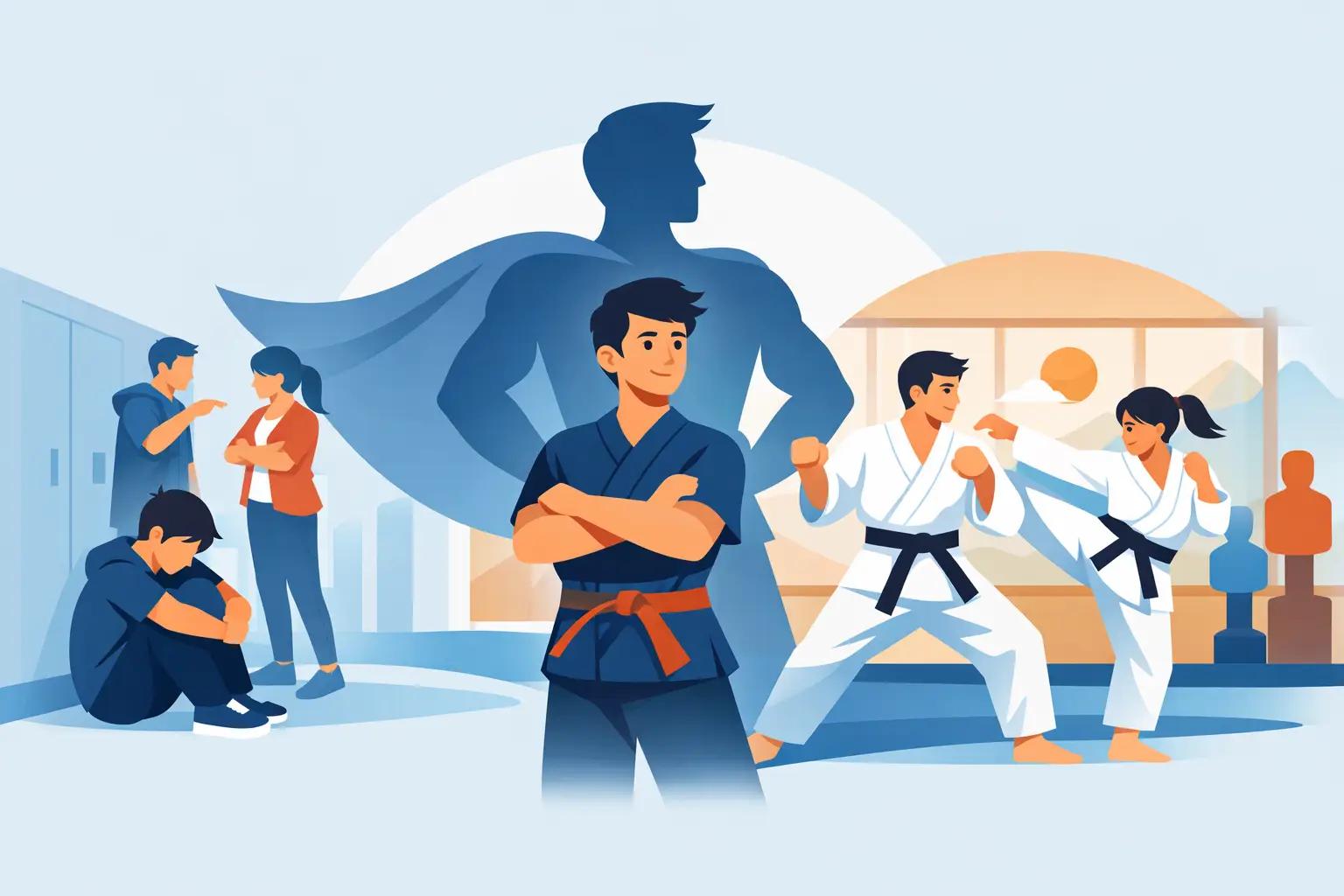
A teenager who is being picked on does not always need to become louder, tougher or more confrontational. They need to feel steadier in themselves. That is where bullying confidence martial arts training can make a real difference: not by teaching young people to fight, but by giving them the posture, awareness and self-belief to handle difficult situations with more control.
For parents, the concern is rarely just one incident at school. It is the gradual effect bullying can have on a young person’s confidence, friendships, sleep, concentration and willingness to speak up. For teenagers, it can feel even more immediate. They may worry about the journey home, lunchtime, group chats or being made to look weak in front of others.
A well-run martial arts class gives them a constructive place to build skills that carry into everyday life. At Fusion Kung Fu, students aged 13 and above train in a structured, supportive environment where respect, discipline and practical self-defence matter more than showing off.
Why confidence matters when bullying happens
Bullies often look for a reaction. That does not mean the person being targeted is responsible for what is happening – they are not. It does mean that calm body language, clear boundaries and the ability to get help can change the way an encounter develops.
Confidence is not about acting aggressive. In fact, false bravado can make a tense situation worse. Genuine confidence looks different: standing upright, making sensible decisions under pressure, speaking clearly and knowing when to leave. It also means understanding that asking a parent, teacher, employer or trusted adult for support is a strong and sensible action.
Martial arts training develops this through repetition. A student walks into class, practises unfamiliar movements, makes mistakes, improves and earns progress through effort. Over time, they learn a valuable lesson: difficult things can be handled one step at a time.
That confidence does not appear after one lesson, and it should not be sold as a quick fix. Every young person responds differently, and the reasons behind bullying can be complex. But regular training can give a teenager a reliable routine and a stronger sense of their own capability.
How bullying confidence martial arts training helps
The most useful self-defence is the kind that avoids a physical confrontation wherever possible. Good training starts before any technique is used. Students learn to pay attention to distance, positioning, exits and the signs that an interaction is becoming unsafe.
In practical terms, this can help a teenager avoid being cornered, move away early and keep their hands in a non-threatening but protective position. They also become more familiar with the feeling of pressure in a controlled setting. That matters because panic can make it harder to think clearly.
Shiyong Kung Fu is built around close-range, practical self-defence. It takes Wing Chun foundations and combines them with useful elements from other martial arts, with the focus kept on what works in modern, real-life situations. There is no need for acrobatics, competition experience or a particular body type. Training is adapted so beginners can build skills safely and progressively.
For a teenager who feels physically smaller, less sporty or unsure of themselves, that is reassuring. Effective self-defence is not simply about strength. Balance, timing, awareness and sensible decision-making all play a part.
The confidence that comes from being prepared
There is a clear difference between wanting trouble and feeling prepared for it. Martial arts should never encourage a young person to seek a fight, prove themselves or answer insults with violence. The goal is to make safer choices.
Knowing they have options can reduce the helpless feeling that bullying often creates. A student may become more able to use a firm voice, create space, leave quickly and report what has happened. If physical contact cannot be avoided, practical training can help them protect themselves long enough to escape and get help.
This is also why responsible coaching matters. Techniques must be taught with control, safety and context. Students need to understand when physical self-defence is justified and why walking away is often the strongest outcome.
Discipline carries beyond the training floor
A martial arts class is not only an hour of exercise. It is a routine with standards. Students listen, practise with partners, show control and keep turning up when something feels challenging.
That structure can be particularly valuable for teenagers dealing with low confidence or the strain of school life. Progress is visible, but it is earned. Learning a new sequence, improving fitness or staying calm during partner drills gives a young person evidence that they are moving forward.
The physical benefits matter too. Regular training can improve coordination, stamina, mobility and general fitness. After a school day spent at a desk or on a screen, focused movement can be a positive release. Many students find that training helps them manage stress and return home feeling clearer and more settled.
Just as importantly, they train alongside people who are there for the same reason: to improve. A good club environment is not about being the toughest person in the room. It is about learning with people who respect each other’s safety and progress.
What parents should look for in an anti-bullying martial arts class
Not every martial arts class has the same purpose. Some focus heavily on sport competition, forms or performance. Those can all have value, but parents concerned about bullying should ask whether a class also teaches practical awareness, controlled self-defence and responsible behaviour.
Look for instructors who are clear that violence is a last resort, not a solution to name-calling or disagreement. Training should be supervised, age-appropriate and based on gradual progress rather than pressure to spar before a student is ready.
It is also worth considering the atmosphere. A teenager who has been singled out at school may not feel comfortable walking into a hard-edged class where confidence is mistaken for shouting. They need coaching that is serious but encouraging, with standards that apply to everyone.
At the same time, avoid expecting martial arts alone to resolve an ongoing bullying situation. If a young person is being targeted, keep records where appropriate and speak to the school, college or relevant organisation. If there is an immediate risk of harm, seek help straight away. Training works best alongside practical support from trusted adults.
Starting without feeling intimidated
Many teenagers put off trying martial arts because they assume everyone else will be fitter, more experienced or naturally confident. Most beginners arrive with those same worries. The point of a beginner class is not to test what someone already knows. It is to give them a place to start.
The first sessions should feel challenging in a positive way. Students learn the basics, meet the instructors and get a feel for the training environment. They do not need to be strong, flexible or experienced before they walk through the door.
A free taster session can be a sensible first step for a teenager who is unsure. It lets them see whether the coaching style and class atmosphere feel right, without pressure. Parents can then make a decision based on what will genuinely support their child, rather than what sounds impressive on paper.
Confidence is built in ordinary moments: turning up, trying again, holding a boundary and realising that you can stay calm when something feels difficult. For a teenager facing bullying or simply wanting to feel stronger in themselves, that is a worthwhile place to begin.
About the Author: Keith Ratcliffe
