Here’s What We Cover
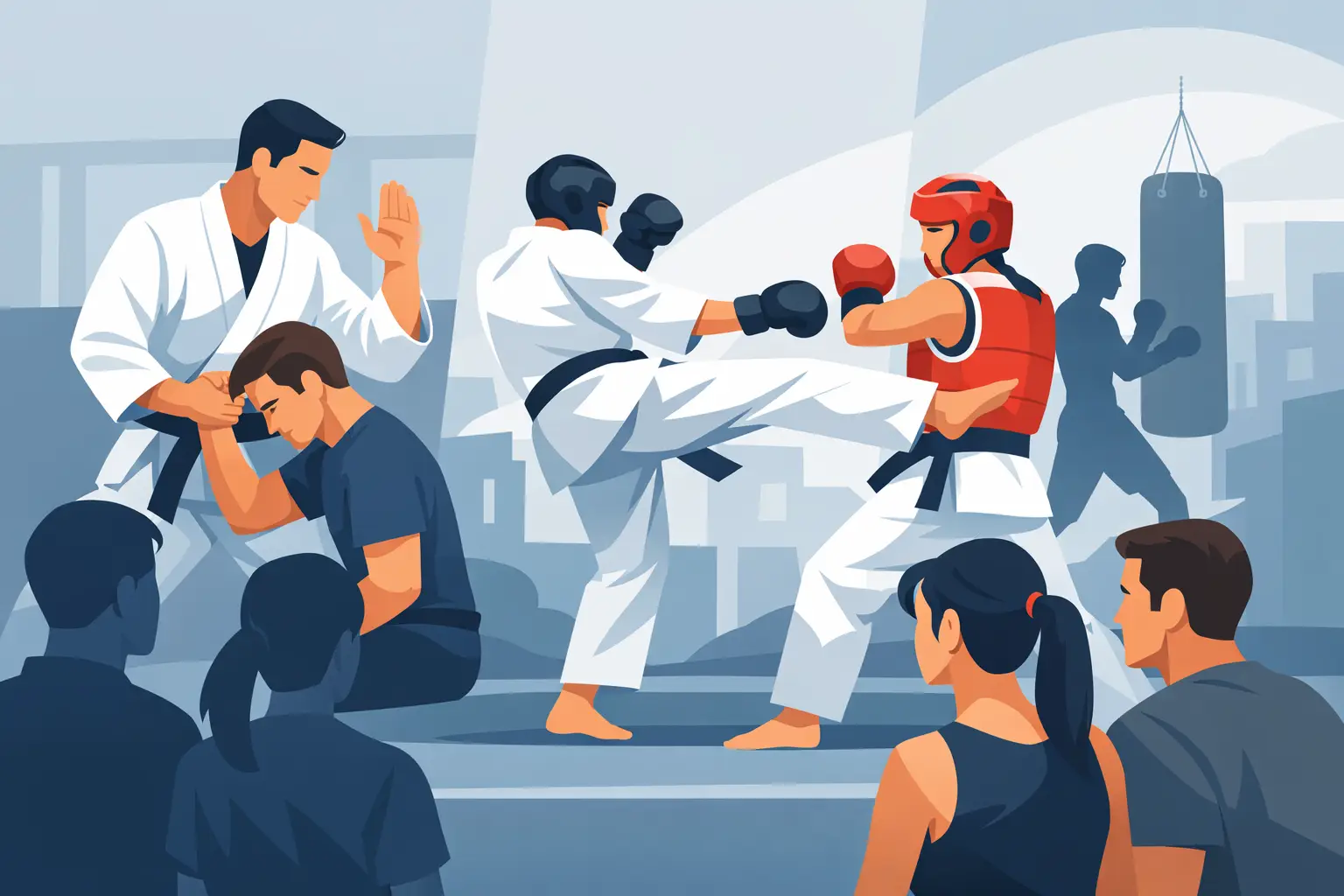
A self-defence technique is only useful if you can remember it when someone is too close, your balance is compromised and your heart rate is up. That is the standard realistic martial arts classes should work towards. Training should prepare you to make sensible decisions, protect yourself and leave a difficult situation safely – not simply perform a sequence perfectly for an audience.
For teenagers and adults, the right class can bring far more than self-defence. It builds fitness, confidence, focus and the discipline to keep turning up. The key is finding training that is practical without being reckless, challenging without being intimidating, and structured enough for a complete beginner to progress with confidence.
What makes martial arts training realistic?
Realistic does not mean spending every lesson fighting as hard as possible. That would be unsafe, unsustainable and a poor way to learn. It means training with an honest understanding of how confrontations happen: suddenly, at close range, often with little room to move and with plenty of stress involved.
A practical class teaches students to recognise risk early and avoid trouble where possible. Awareness, positioning, verbal boundaries and the confidence to walk away are all part of sensible self-protection. Physical techniques matter, but they are not the whole answer.
When physical action is necessary, training should favour simple movements that can be repeated under pressure. Complicated kicks, acrobatic movements and long choreographed responses may look impressive, but they can be difficult to rely on when space is tight or adrenaline takes over. A useful system develops balance, structure, timing and controlled power at the range where many real confrontations begin.
At Fusion Kung Fu, Shiyong Kung Fu is built around this approach. It takes strong Wing Chun foundations and combines them with practical elements from other martial arts, creating direct close-range training for modern self-defence. There is no need to be naturally athletic, large or strong to get started.
Realistic martial arts classes are not about aggression
Some people hear the words “practical self-defence” and imagine a harsh, intimidating room. Good training should be the opposite. Students learn to stay calm, act with control and understand the consequences of their choices.
Confidence is not about looking for a fight or trying to prove yourself. It is knowing that you can handle pressure more effectively, set boundaries clearly and avoid panic if something feels wrong. For a teenager dealing with bullying, that can mean standing taller, speaking more assertively and understanding when to get help. For an adult, it may mean feeling more aware when travelling home, managing stress better or simply being less likely to freeze in an uncomfortable situation.
Controlled partner practice is essential. Students need to work with another person, learn distance and develop reactions, but this must be done with clear rules and proper supervision. Safety equipment and progressive drills have their place. The aim is to build skill and judgement over time, not to send someone home injured after their first session.
Why close-range skills matter
Many people picture self-defence as a dramatic punch or high kick thrown from several steps away. Real situations are rarely that tidy. Someone may grab clothing, push, crowd your space or throw an uncontrolled strike at close range. You may be against a wall, carrying a bag or trying to protect a friend or family member.
Close-range martial arts training helps students become more comfortable when distance disappears. They learn how to keep their balance, protect themselves, create space and use straightforward responses rather than relying on perfect conditions.
That does not make every situation predictable. No class can guarantee an outcome, and the safest option is always to get away when you can. But training gives you better habits: hands up rather than down by your sides, a more stable stance, improved awareness and the ability to respond without overthinking every movement.
Fitness with a purpose
There is nothing wrong with training for sport, competition or traditional forms. They can be rewarding goals in their own right. But if your priority is practical self-defence, fitness should support that purpose.
Realistic training improves coordination, mobility, stamina and functional strength through drills that ask the whole body to work together. You are not just counting repetitions. You are learning to move with control, maintain posture when tired and stay focused when a task becomes demanding.
For adults who have spent years behind a desk, this can be a far more motivating way to get active than another routine at the gym. For teenagers, regular classes offer a positive break from screen-heavy habits and a clear weekly commitment. Progress may start with better balance or improved fitness, then show up in stronger confidence at school, work and home.
The pace should suit the student. A beginner does not need to match the fitness of someone who has trained for years. The right instructor gives clear foundations, offers sensible adjustments and challenges each person to improve from their own starting point.
What beginners should look for
Choosing a martial arts class is a personal decision, and it is worth watching how a club trains before committing. A welcoming environment matters, but so does the quality and purpose of what is being taught.
Look for instructors who can explain why a technique works, not just demonstrate it quickly. Beginners should be taught the basics properly: stance, movement, guard, distance, safe partner work and simple combinations. A class should have structure, with a clear path from first lesson through to more advanced training.
It also helps to ask what the club means by self-defence. If every answer focuses on trophies, elaborate forms or flashy demonstrations, that may be ideal for someone seeking sport or performance. If your goal is real-world confidence, look for training that includes awareness, avoidance, controlled pressure drills and straightforward techniques.
The atmosphere is equally important. You should expect discipline and respect, but you should not feel embarrassed for being new. A strong club has experienced students who set a good example, instructors who correct without belittling people and a culture where everyone understands that progress is earned steadily.
Training under pressure, step by step
Pressure is part of a realistic class, but it has to be introduced at the right time. Throwing a new student straight into a fast, chaotic drill teaches very little beyond anxiety. Starting with a clear movement, then adding a partner, resistance, speed and decision-making gives the body time to learn.
This gradual approach matters because stress changes how people move. Fine motor skills can disappear, breathing becomes shallow and even simple choices can feel difficult. Repeating practical techniques in increasingly demanding but controlled scenarios helps students build familiarity without pretending that a class can recreate every real-life situation.
There is a trade-off here. Training that is too gentle can create false confidence. Training that is too intense too soon can make people quit or get hurt. The best classes strike the balance: serious enough to be useful, safe enough to keep students learning for the long term.
The personal benefits go beyond self-defence
A student may first join because they want to feel safer, get fitter or support their child through a difficult time. Over months of regular training, the wider benefits become clear. They learn patience when a technique does not work immediately. They build resilience by returning after a hard session. They become more comfortable receiving feedback and more disciplined about their goals.
For families, these lessons are valuable. Teenagers need spaces where respect is expected, effort is recognised and confidence is built through genuine achievement rather than empty praise. Adults need a constructive outlet that challenges both mind and body after a demanding week.
Martial arts will not remove every pressure from life. It can, however, give people a dependable routine, a supportive community and the knowledge that they are becoming more capable one session at a time.
If you are considering training in Norwich, a free taster session is a sensible way to see whether the class feels right. Wear comfortable clothing, arrive ready to learn and do not worry about experience. The most useful first step is simply stepping onto the mat and giving yourself the chance to improve.
About the Author: Keith Ratcliffe
