Here’s What We Cover
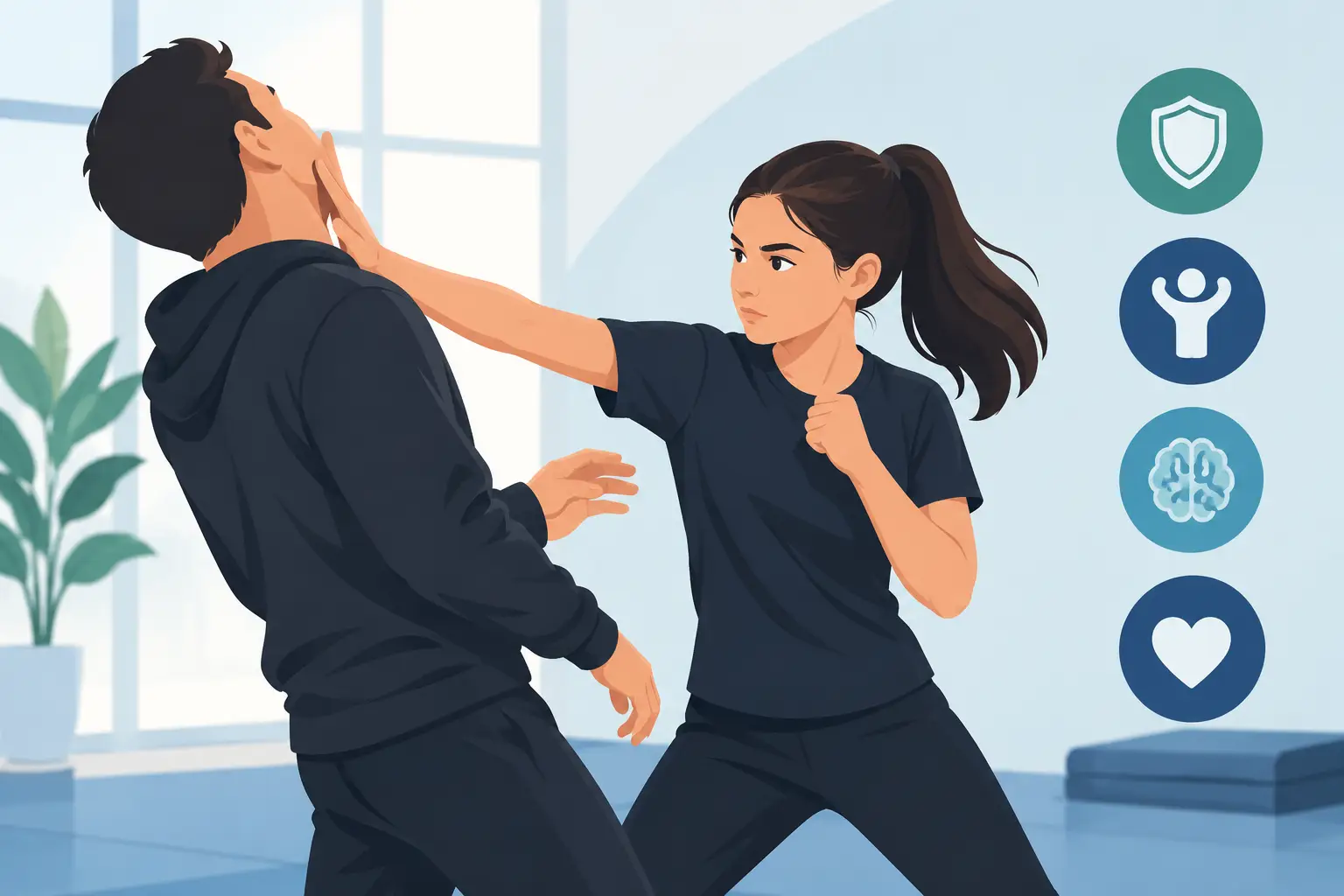
A teenager who has practised a simple escape, kept their balance while being crowded, and learned to use a clear voice carries themselves differently. The best teen self defence training results are not about looking tough or winning fights. They are about becoming more alert, more controlled and better prepared to make safe decisions when a situation starts to feel wrong.
For parents, that distinction matters. A good martial arts class should never encourage a young person to seek confrontation. It should give them practical skills, healthy confidence and the discipline to avoid trouble where possible.
What do real teen self defence training results look like?
Results are often visible before a student performs a single technique well. A teenager may stand taller, speak more clearly and become less likely to panic when put under mild, supervised pressure in class. They begin to understand that confidence is not pretending nothing worries them. It is knowing they have options.
In practical training, those options start with awareness. Students learn to notice space, distance, exits and changes in somebody’s behaviour. They learn that the safest response can be moving away, getting to a populated area, calling for help or involving a trusted adult. Physical self-defence is there for the moment when leaving is not immediately possible, not as a first answer to every disagreement.
This is especially useful for teenagers navigating school corridors, public transport, social situations and the growing independence that comes with getting older. They do not need fear-based training. They need calm, realistic coaching that helps them recognise risk without becoming anxious about it.
Confidence built through practice, not empty promises
Many teenagers have been told to “be confident”, but that advice can feel hollow when they are worried about fitting in, being judged or dealing with bullying. Training gives confidence a foundation. Progress comes through repeated practice: learning a stance, improving coordination, working with a partner and discovering that effort produces change.
At first, a new student may feel awkward throwing a strike or speaking loudly in front of a group. That is normal. Over time, structured repetition makes unfamiliar movements more natural. The teenager who once held back may begin to commit to a pad drill, take feedback well and help a newer student understand the exercise.
That confidence can carry into everyday life. It may show up as better posture, greater willingness to answer in class or a firmer boundary with someone behaving badly. It does not mean every shy teenager suddenly becomes outgoing. Personalities differ, and that is fine. The aim is for each student to feel more capable in their own way.
Confidence is not aggression
One of the most valuable lessons in martial arts is that control is strength. A teenager who feels they must prove themselves is more vulnerable to poor decisions than one who can stay composed.
Effective self-defence training teaches students to manage their reactions. They practise using their voice, creating space and leaving safely. If physical action is needed, it should be proportionate to the threat and focused on getting away. This is a more useful outcome than simply teaching a collection of impressive-looking moves.
Practical skills for close-range situations
Real situations are rarely neat. There may be little room to move, someone may grab clothing or block a path, and adrenaline can make fine motor skills unreliable. That is why training should be straightforward, pressure-tested at an appropriate level and based on movements a teenager can remember.
Shiyong Kung Fu is built around close-range practicality, with Wing Chun foundations and useful elements drawn from other martial arts. Rather than relying on high kicks, acrobatics or complicated sequences, students work on balance, positioning, striking targets safely and breaking free from common holds.
The goal is not to make students believe they are invincible. Size, strength and the number of people involved can all change a situation quickly. Training cannot remove every risk. What it can do is improve a teenager’s chance of reacting decisively, making space and getting to safety.
A sensible programme also introduces pressure gradually. Beginners need time to learn safely and build confidence. As their ability improves, controlled partner work helps them understand timing, distance and how to stay calm while someone is moving towards them. This makes the learning more meaningful than practising alone in the air.
Fitness that has a purpose
Teenagers do not always enjoy exercise for exercise’s sake. A martial arts class gives fitness a practical reason. Footwork improves stamina, pad work develops coordination, and repeated drills build strength and endurance without requiring students to be naturally sporty.
Regular training can also offer a useful break from screen-heavy routines. It asks students to focus on what their body is doing, listen carefully and work with other people in a respectful setting. After a school day spent sitting down, that physical and mental reset can make a real difference.
Progress looks different for everyone. One student may gain speed and stamina quickly, while another may need longer to feel comfortable with coordination or partner drills. A good instructor does not compare teenagers against each other. They set clear standards, give practical feedback and recognise steady improvement.
A better response to bullying and peer pressure
Martial arts can support anti-bullying awareness, but it should never be sold as a magic solution. Bullying is not always physical, and a teenager facing repeated intimidation needs support from parents, school staff and other trusted adults. Training is one part of a wider support system.
What it can provide is a stronger sense of boundaries. Students learn that they do not have to accept unwanted grabbing, intimidation or threats as normal. They also learn when to report concerns, how to describe what happened clearly and why retaliation can make an already difficult situation worse.
The social side of training matters too. Being part of a class where effort, respect and discipline are expected can be a positive contrast to negative peer pressure. Teenagers see that they can earn respect through consistency, not through acting hard or putting somebody else down.
How long does it take to see results?
Some results can appear within the first few sessions. A teenager may leave feeling energised, more focused or pleased that they tried something new. Physical skills take longer. Balance, timing, distance and calm decision-making are developed through regular attendance, not one-off lessons.
Parents should be cautious of any club promising instant transformation. Useful self-defence needs repetition, sensible coaching and time to become reliable under pressure. A teenager who trains consistently for several months is likely to notice meaningful improvements in fitness, confidence and discipline, but the pace will depend on attendance, effort and the individual student.
The environment makes a difference as well. Teenagers need a class that is challenging without being intimidating. They should be able to ask questions, make mistakes safely and work towards clear goals. Serious training and a welcoming atmosphere are not opposites – they are what allow students to keep showing up and progressing.
Choosing training that serves the teenager
When looking at a class, parents should consider more than the style name or the colour of the uniform. Watch how instructors speak to students. Is safety taken seriously? Are techniques explained in a way teenagers can understand? Does the class reward focus and respect as much as physical ability?
The best teen self defence training results come from a programme that is realistic, structured and consistent. At Fusion Kung Fu, students aged 13 and above are taught practical skills in an encouraging setting, with training designed for real-world awareness rather than performance.
A free taster session can be a sensible first step for a teenager who is unsure. They do not need to arrive confident, fit or experienced. They only need to be willing to learn. With regular effort, the result is not just a better technique – it is a young person who knows how to stay composed, set boundaries and keep moving forward.
About the Author: Keith Ratcliffe
