Here’s What We Cover
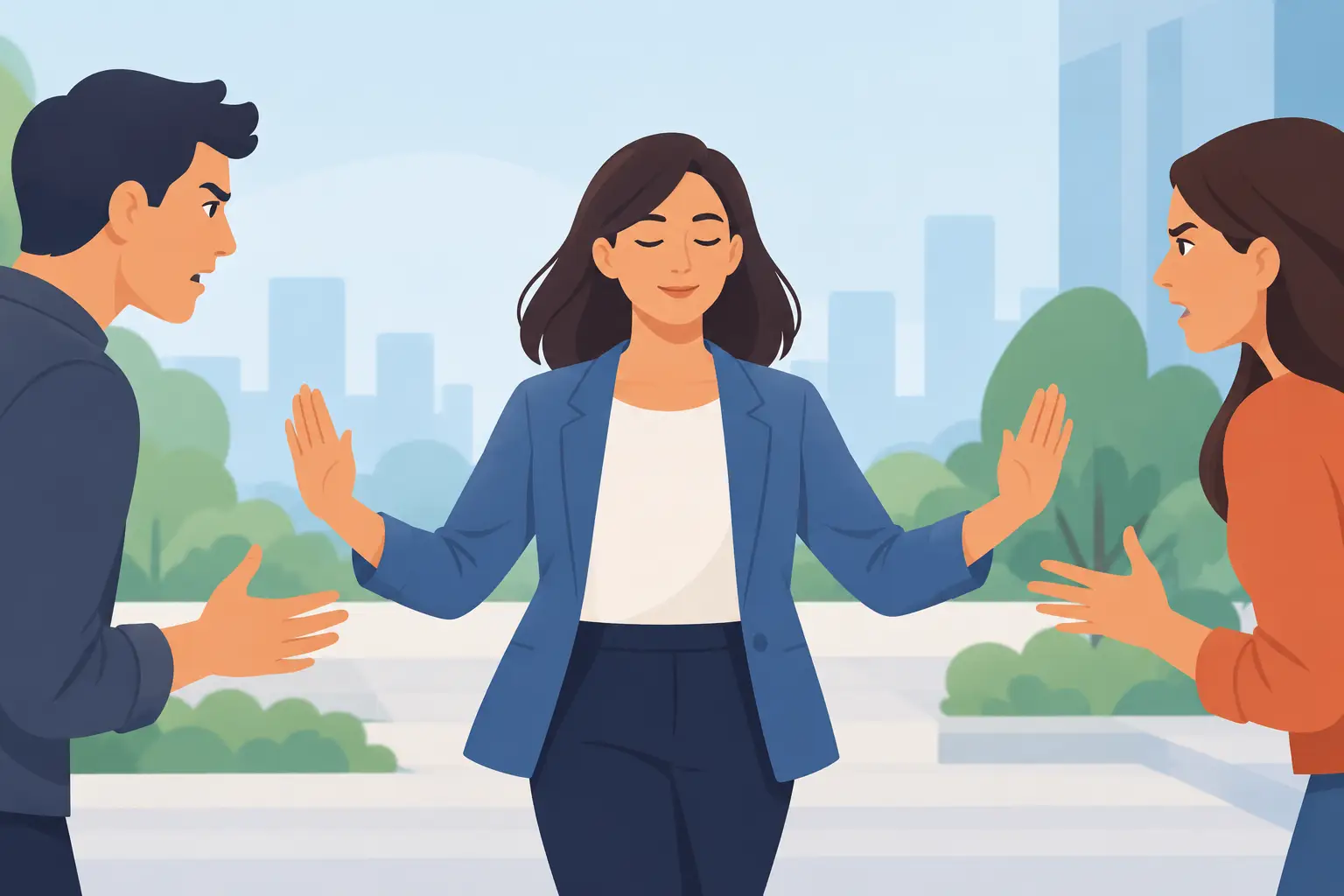
A confrontation rarely starts with a clear warning. It may begin with someone crowding your space, a comment that feels wrong, or a situation that suddenly becomes tense. This conflict avoidance guide is about recognising those moments early and making sensible choices that keep you, your family and those around you safer.
Real self-defence is not about proving who is tougher. It is about awareness, control and knowing when to remove yourself from a situation before it turns physical. For teenagers, adults and parents, those skills are useful at school, on nights out, while travelling, at work and in everyday public spaces.
Why avoiding conflict is a strength
Some people mistake conflict avoidance for weakness. It is not. Choosing not to engage with an aggressive person takes discipline, especially when pride, embarrassment or pressure from friends makes you want to respond.
The aim is not to win an argument. The aim is to get home safely. A physical fight is unpredictable, even for people with training. There may be more than one person involved, a hard surface nearby, alcohol, weapons or consequences that last far beyond the moment itself.
Good martial arts training builds confidence without encouraging confrontation. When you feel more capable, you are less likely to panic, freeze or feel you need to show off. You can speak calmly, make space and leave with purpose.
Conflict avoidance guide: spot the warning signs
Most difficult situations give signals before they become serious. Learning to read behaviour does not mean becoming fearful or suspicious of everyone. It means paying attention when something does not feel right.
Look for changes in distance, tone and body language. Someone who moves very close, blocks your path, stares aggressively, clenches their fists or keeps challenging you may be testing how you will react. Groups can also create pressure by surrounding someone, laughing, filming or encouraging a confrontation.
Trust your instincts, but act on them early. If an area feels isolated, a person is behaving unpredictably, or an argument nearby is getting louder, create distance before you are directly involved. Move towards light, people, staff, security or an open business where help is available.
For parents, this is a useful conversation to have with teenagers. They do not need to be frightened by the world, but they should understand that walking away early is far easier than trying to escape after tempers rise.
Keep your awareness switched on
Being aware does not mean walking around looking nervous. It means lifting your head, noticing who is nearby and avoiding distractions when you enter a car park, wait for transport or walk through unfamiliar places.
Mobile phones are useful, but they can also narrow your attention. If you are messaging, using headphones at full volume or scrolling while walking, you may miss changes around you. A quick check of your surroundings can give you more time to make a good decision.
Plan ahead where possible. Know how you are getting home, keep your mobile phone charged and arrange a meeting point if you are out with friends. These small habits are not dramatic, but they reduce the chance of becoming stuck in a difficult situation.
Use words to lower the temperature
If someone is angry, your first job is to avoid adding fuel. Keep your voice steady and use simple language. You do not need a clever comeback or a long explanation.
Phrases such as “I don’t want any trouble”, “You’re right, I’m leaving it there” or “Sorry, I need to go” can create an exit without agreeing with every accusation. The words matter, but the delivery matters just as much. A calm tone, open hands and a non-threatening stance can show that you are not looking for a fight.
Avoid insults, sarcasm, threats and challenges. Even a small comment made to save face can turn a manageable disagreement into a dangerous one. This is particularly relevant for young people, where an audience can make it harder to back down. The strongest choice may be to leave while others are watching.
There are situations where talking is not the answer. If someone is intoxicated, highly aggressive or not responding to reasonable words, do not keep trying to negotiate at close range. Increase the distance, look for help and leave as soon as it is safe to do so.
Position yourself to leave
You do not need martial arts experience to improve your position. If someone is making you uncomfortable, avoid standing trapped against a wall, vehicle, doorway or table. Keep a clear route away from them where possible.
Stand at an angle rather than squarely face-to-face. This can feel less confrontational and helps you move more easily. Keep your hands visible around chest height in a natural, calming gesture, as though you are asking for space. This can support your words while also placing your hands in a position to protect yourself if needed.
Distance gives you time. The closer someone is, the less time you have to react and the more difficult it can be to leave. If they continue to step forward, step back or move sideways towards a safer area. You are not being rude by protecting your space.
If you are with friends, do not assume everyone will notice the problem. Say clearly that you want to leave. A simple “Come with me, now” can be more effective than hoping someone picks up on your discomfort.
Know when to get help
Conflict avoidance does not mean dealing with everything alone. In a shop, pub, venue, workplace or on public transport, involve staff early. Tell them what is happening and ask for support getting away safely. If you feel at immediate risk, call 999.
If someone follows you, do not lead them home. Go somewhere public, contact someone you trust and seek help. If you are in a vehicle and believe you are being followed, drive to a police station or a busy, well-lit place rather than stopping somewhere isolated.
For ongoing issues such as bullying, harassment or intimidation, keep a record of what has happened. Save messages, note dates and tell the appropriate person, whether that is a parent, teacher, employer or police officer. Repeated behaviour should not be dismissed simply because each incident appears small on its own.
Support young people without blaming them
Parents naturally want to protect their children, but the most useful conversations are calm and practical. Ask what happened, listen properly and avoid making them feel they should have handled it better. A teenager who worries about being judged may stop sharing concerns.
Help them practise simple responses, such as walking towards friends, telling a teacher, refusing to meet someone alone or leaving a group chat that is turning hostile. Confidence grows when young people know they have options and support behind them.
Train for confidence, not confrontation
A practical martial arts class can give people a safe place to work on awareness, posture, movement, controlled responses and decision-making under pressure. Training should teach respect for the risks of violence, not encourage people to seek it out.
At Fusion Kung Fu, students aged 13 and above train in practical close-range self-defence while developing fitness, focus and discipline. The purpose is not theatrical moves or bravado. It is helping people become calmer, more capable and better prepared to make good choices when pressure appears.
No system can guarantee safety, and there is no single response that fits every situation. Your age, location, the number of people involved and whether someone has a weapon all change what is sensible. Leaving, getting help and creating distance will often be the best answer.
The real value of confidence is not that it makes you look for a fight. It means you can keep your head, protect your boundaries and walk away knowing that getting safely home was the victory that mattered.
About the Author: Keith Ratcliffe
