Here’s What We Cover
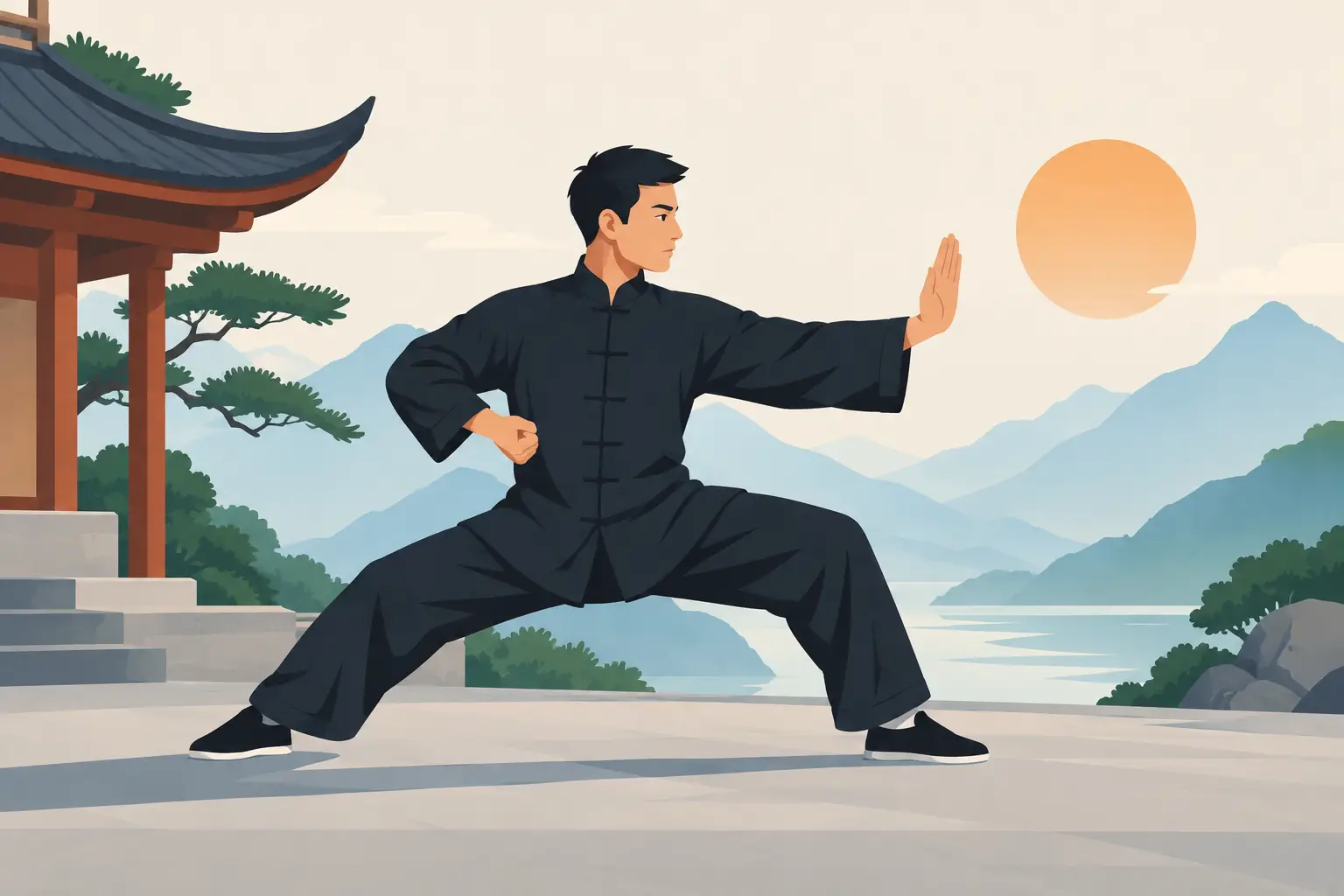
A good Shiyong Kung Fu training guide should not leave you wondering whether you are fit, flexible or experienced enough to begin. It should show you what training is for: becoming calmer under pressure, stronger in everyday life and better prepared to protect yourself if a situation cannot be avoided. That starts with practical habits, not impressive-looking moves.
Shiyong Kung Fu is built for close-range self-defence. It takes strong foundations from Wing Chun and combines them with useful ideas from other martial arts, focusing on direct movement, fast reactions and techniques that make sense in modern situations. You will not need acrobatic ability, a particular body type or years of sporting experience. You do need a willingness to turn up, listen, practise and improve one session at a time.
What Shiyong Kung Fu Training Is Designed to Build
The first thing beginners notice is that effective training is not about trying to look tough. It is about learning control. You begin to understand your balance, posture, distance and awareness of the people around you. Those skills support self-defence, but they also carry into school, work and daily life.
Close-range training matters because many real confrontations happen before there is time or space for a high kick or a wide punch. Shiyong Kung Fu teaches you to keep your hands in a useful position, protect your centreline, move efficiently and respond without relying on brute force. Strength can help, but good structure, timing and positioning help everyone.
That practical approach is especially valuable for teenagers and adults who want training with a purpose. Some people come to improve fitness after too much time sitting at a desk. Others want greater confidence travelling, socialising or dealing with difficult behaviour. Parents may want their teenager to develop discipline and anti-bullying awareness without being encouraged to seek fights. The goal is the same: become more capable, more aware and harder to intimidate.
Your Shiyong Kung Fu Training Guide: The First Weeks
Your first few weeks should be about building foundations, not rushing through techniques. A well-run class gives you time to learn the correct body position and repeat it until it begins to feel natural. Going slowly at this stage is not falling behind. It is how you build reactions you can rely on later.
Start with stance, posture and movement
A stable stance lets you move without losing balance. You will learn how to keep your weight controlled, your feet active and your body in a position that protects you rather than leaves you exposed. The aim is not to stand frozen in one shape. It is to be ready to move forwards, backwards or off-line when needed.
Posture is just as important. Keeping the hands in a sensible guard, the chin protected and the body aligned makes a major difference to both safety and power. Beginners often try to generate force by swinging harder. In reality, a direct technique delivered with proper alignment is usually faster, safer and more effective.
Learn the centreline before chasing speed
The centreline is a key principle in Wing Chun-based training. In simple terms, it means understanding the most direct line between you and the other person, and protecting your own vulnerable areas while controlling theirs. This creates economical movement. Instead of making big, complicated motions, you learn to take the shortest useful route.
Speed comes from good technique and relaxed movement, not from tensing every muscle. If you try to go fast before you understand the position, your technique becomes sloppy and your chance of injury rises. Practise accurately first. Speed will follow as your body becomes familiar with the movement.
Train awareness alongside technique
Self-defence begins long before physical contact. A responsible martial arts class teaches awareness, confidence and decision-making alongside striking and defensive skills. That includes recognising unsafe situations, keeping distance where possible, using your voice clearly and leaving early rather than trying to prove a point.
Physical skills remain important, but they are not a licence to take risks. The best outcome is always to avoid violence. Training gives you options when avoidance is no longer possible, while helping you develop the judgement to avoid unnecessary confrontation in the first place.
What a Productive Class Feels Like
A structured class should challenge you without making you feel out of place. Expect a warm-up that prepares the joints, raises your heart rate and gets you moving with control. This is followed by technical practice, where you work on stance, strikes, blocks, footwork or close-range drills.
Partner training is where many lessons become clearer. You can practise distance, timing and reactions with another person while keeping the pace safe and controlled. Good partners do not try to win every drill. They help each other learn. As confidence grows, training may become more demanding, but control and respect should stay at the centre of every session.
You may also use pads and focused impact work. This helps you understand how to deliver a technique with commitment while maintaining good body mechanics. It can be excellent for fitness and stress relief too. The trade-off is that power work only helps when it is paired with accuracy, recovery and sensible coaching. Throwing hard shots with poor form is not progress.
At Fusion Kung Fu, training is structured to help students aged 13 and over develop these skills in a welcoming, focused environment. Beginners work at a manageable pace, while experienced students continue to be challenged through more advanced drills and applications.
How Often Should You Train?
For most beginners, one class a week is enough to make a solid start, particularly if attendance is consistent. Two sessions a week can speed up progress because techniques stay fresh in your mind and body. More is not always better, however, if it leads to exhaustion or makes training difficult to sustain around school, work and family life.
A sensible routine is better than an intense burst followed by several weeks away. Give yourself time to recover, especially when you are new to physical exercise. Sore muscles are normal when you begin, but sharp pain, joint pain or persistent discomfort should not be ignored. Tell your instructor so the exercise can be adjusted.
Short practice at home can help between sessions. Spend five or ten minutes working on your stance, guard, footwork or a movement your instructor has shown you. Keep it simple. Practising an unfamiliar technique incorrectly for long periods can build bad habits, so use class time to check your form and ask questions.
Fitness, Confidence and Discipline Grow Together
People often join martial arts for self-defence and stay because of how training changes the rest of their week. Regular sessions improve coordination, mobility, cardiovascular fitness and functional strength. You may notice that you carry yourself differently, feel more energetic and handle stressful moments with greater composure.
Confidence does not come from pretending you are fearless. It comes from repeatedly doing something difficult, learning from mistakes and seeing steady progress. A student who was nervous about their first class may later be helping a newer beginner settle in. That is the kind of confidence that lasts.
Discipline develops in much the same way. Arriving on time, paying attention, treating training partners with respect and continuing when a drill feels challenging are small actions with real value. For young people, this can offer a positive counterweight to screen-heavy routines and social pressures. For adults, it can create protected time each week to focus, move and reset.
Common Beginner Mistakes to Avoid
Do not compare your first month to somebody else’s fifth year. More experienced students have already put in the repetitions that make movement look easy. Watch them, learn from them, but keep your attention on your own next improvement.
Avoid trying to memorise every detail at once. Focus on one correction from your instructor, such as keeping your hands higher or turning your hips more effectively. When that becomes natural, move on to the next detail. Martial arts progress is built through layers.
Finally, leave your ego outside the training area. Sparring, drills and pad work are opportunities to learn, not tests of your worth. If something does not work, that is useful information. Adjust, practise again and ask for guidance.
Your starting point does not define where you can get to. Turn up for a taster session, give yourself permission to be new, and let consistent training do the work.
About the Author: Keith Ratcliffe
