Here’s What We Cover
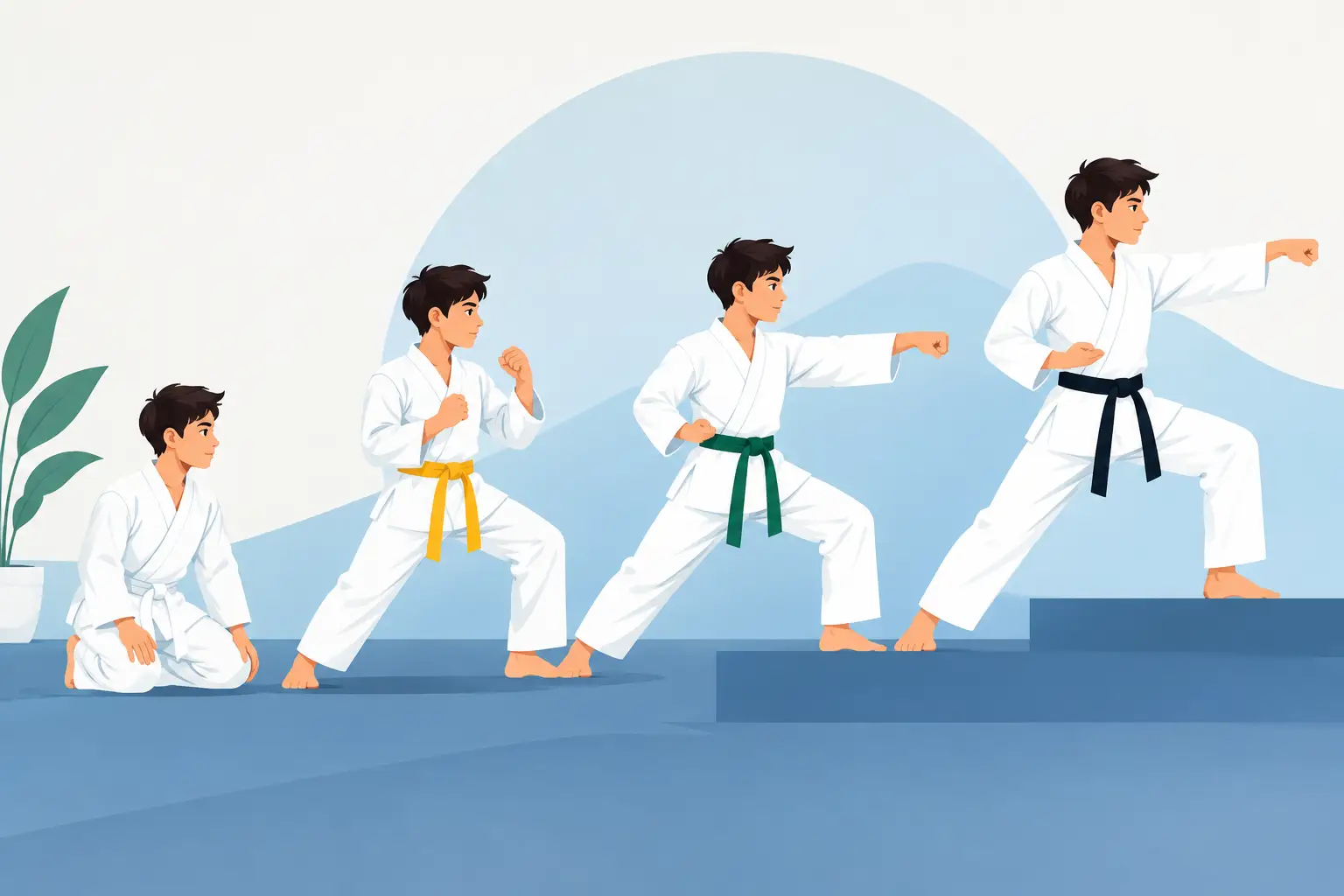
A teenager does not need to be the strongest in the room to make real progress in martial arts. They need consistent coaching, a safe place to practise and the willingness to keep showing up when a technique feels awkward. This guide to teen martial arts progression explains what parents and students can realistically expect from structured training, from the first uncertain class through to confident, capable practice.
For many families, the biggest change is not a new kick or punch. It is seeing a young person stand taller, manage pressure better and understand that confidence is built through effort rather than handed out as a compliment.
What progression should look like for teenagers
Good martial arts progression is not a race through grades or a test of who can copy a move quickest. Teenagers develop at different rates. One student may pick up coordination quickly but need time to become more assertive. Another may be naturally determined but need to slow down and improve control.
A well-run class gives both students a route forward. The aim is steady improvement in technique, fitness, awareness and attitude. At Fusion Kung Fu, training is built around practical Shiyong Kung Fu, using close-range methods and straightforward coaching rather than theatrical routines. Students learn skills they can understand, repeat and apply responsibly.
Progress also needs to be realistic. Martial arts can help a teenager become fitter, more focused and better prepared to protect themselves, but it does not make them invincible. The best training teaches avoidance, awareness and calm decision-making alongside physical skills.
The early stage: building confidence and good habits
The first few weeks can feel unfamiliar. A teen may worry about being watched, getting something wrong or not being as fit as others. This is normal. Beginners do not need previous martial arts experience, flexibility or natural athletic ability to start well.
Early training should focus on stance, balance, movement, posture and basic striking mechanics. These details can seem simple, but they create the foundation for everything that follows. Learning how to hold a stable position, move with purpose and keep hands in a sensible guard gives a student more than a collection of moves. It gives them control over their body.
This stage is also where discipline starts to become practical. Turning up on time, listening carefully, training safely with a partner and trying again after a mistake are habits that carry into school, work and everyday life. For teenagers dealing with exam pressure, social anxiety or a screen-heavy routine, that regular structure can be just as valuable as the physical exercise.
Parents should not judge early progress only by visible technique. A quieter student volunteering to work with a partner, speaking more clearly or coming home more positive after class can be a meaningful sign that training is doing its job.
The middle stage: turning techniques into usable skills
Once basic movement feels more natural, the focus shifts from remembering individual techniques to understanding when and why to use them. This is where martial arts becomes more engaging for many teenagers. Instead of copying a sequence, they begin to respond to distance, timing and pressure.
In practical self-defence training, students need to learn that a technique only works if they can deliver it with balance, awareness and good judgement. Close-range drills can teach them how to protect their space, escape grabs, use direct strikes and avoid becoming overwhelmed at short distance.
Training with partners is important here, but it must be controlled. Teenagers need enough resistance to understand that people move and react, without being thrown into hard contact before they are ready. Safe progression builds confidence. Excessive pressure too early often does the opposite, especially for students who are already nervous about starting.
This is also a useful stage for discussing bullying and conflict. Martial arts should never encourage a teenager to look for a fight or prove themselves. A confident student is more likely to use clear body language, keep distance, seek help and walk away where possible. Physical skills are there for the moment avoidance has failed, not as a first response.
The guide to teen martial arts progression: what instructors assess
A belt, grade or assessment can give students a clear goal, but it should reflect genuine development rather than attendance alone. Progress is usually assessed across several areas at once:
- Technical understanding, including stance, movement, striking and defensive skills.
- Control, especially the ability to train safely and respect a partner’s level.
- Consistency, shown through regular attendance and effort over time.
- Focus and attitude, including listening, resilience and willingness to improve.
- Practical awareness, such as recognising distance, pressure and sensible options in a situation.
No teenager will be perfect in every area. The point of assessment is to show where they are improving and what to work on next. A student who needs more time is not failing. They are learning properly instead of rushing past gaps in their foundation.
Parents can support this process by asking useful questions after class. Rather than only asking, “Did you get your next grade?”, try, “What felt better this week?” or “What are you practising at the moment?” This keeps the focus on development, not comparison.
Advanced progress is about judgement, not showing off
As students become more experienced, training becomes less about collecting techniques and more about making sensible choices under pressure. They may work on combinations, reactions, controlled sparring or more demanding self-defence scenarios. Their fitness and coordination usually improve because they are using their bodies with greater purpose.
However, advanced does not mean reckless. A mature martial artist knows when not to engage, understands the legal and personal consequences of violence, and can control their actions. This is particularly important for teenagers, who may face social pressure to react when challenged.
For some students, advanced progression leads to helping newer members feel welcome. Explaining a basic drill, holding pads properly or setting a calm example reinforces their own learning. It also gives them a form of leadership that is earned through reliability, not popularity.
One-to-one tuition can be useful at this stage, or earlier, when a student has a particular goal. They may want extra help with confidence, technique, fitness or preparing for an assessment. It is not essential for every teenager, but focused coaching can help when group training alone is not addressing a specific need.
How often should a teenager train?
For most beginners, one structured class a week is enough to build a routine and make steady progress. Two sessions can speed up development, particularly once a teenager is comfortable with the basics and enjoys the training. More is not always better if it leads to burnout, clashes with schoolwork or removes the enjoyment that keeps them committed.
Short practice at home can help, provided it is safe and simple. Repeating stance work, footwork or a set sequence for a few minutes is useful. Hard contact drills, throws or techniques requiring a partner should be left for supervised class time.
Consistency beats occasional bursts of enthusiasm. A teenager who trains regularly for six months will usually gain more confidence and skill than one who trains intensely for a fortnight and then stops.
Signs that a teen is progressing well
The clearest signs are often visible outside the training hall. They may be more comfortable meeting new people, cope better when something goes wrong or show greater patience when learning a difficult task. Physically, they may move with better balance, improve their stamina and become more aware of their posture.
There will still be difficult sessions. Everyone has days when concentration is poor or a technique refuses to work. That is not a setback. Learning to stay respectful, take feedback and return next week is part of the progression that matters most.
The right martial arts class gives teenagers a place to work hard without being judged for where they start. With patient coaching and regular effort, progress becomes something they can feel in their fitness, see in their technique and carry into the rest of their lives.
About the Author: Keith Ratcliffe
