Here’s What We Cover
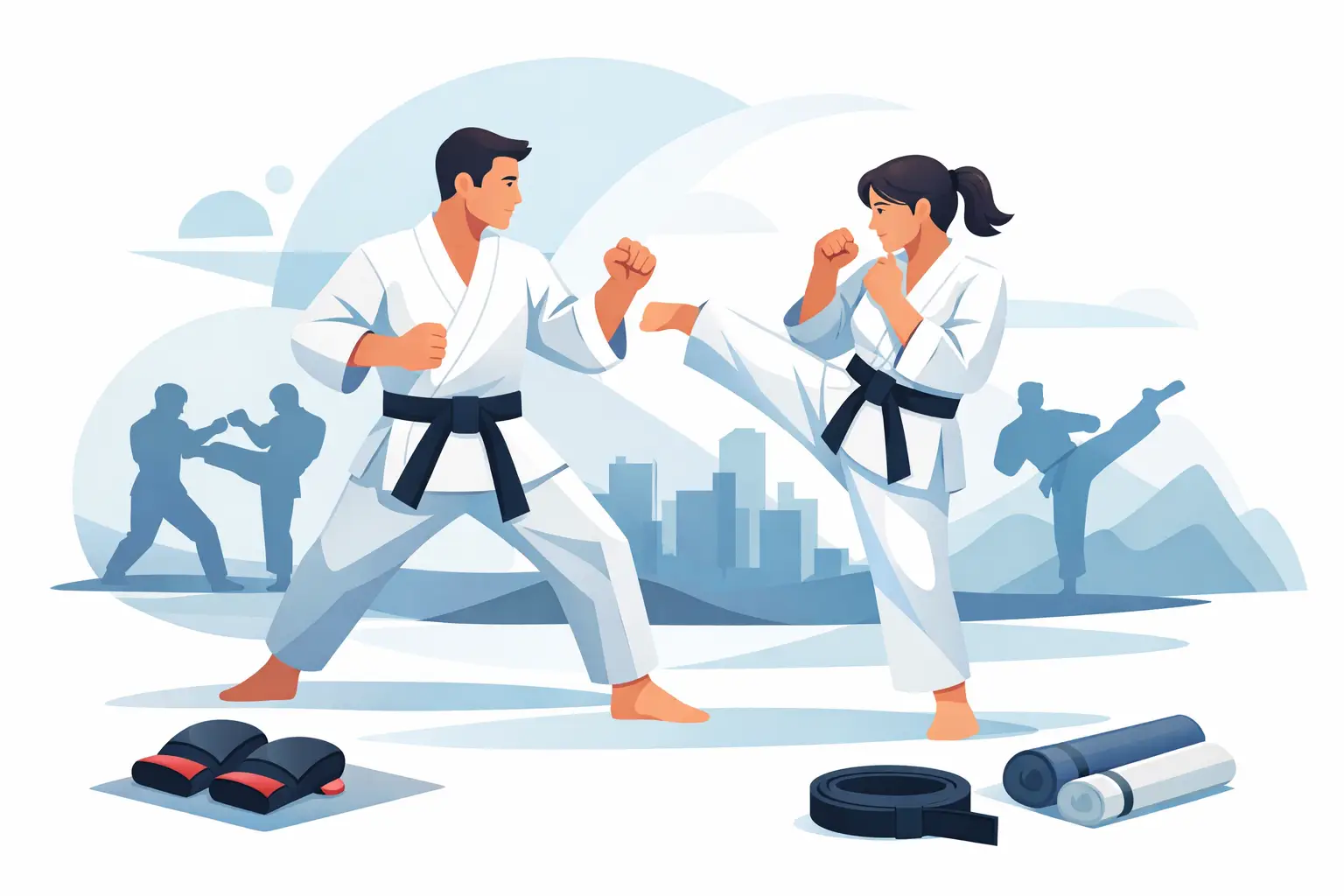
Walking into your first class can feel harder than the training itself. Most adults thinking about martial arts are not worried about hard work – they are worried about looking out of place, being too old, too unfit, too stiff, or too inexperienced. A good adult martial arts beginners guide should clear that up straight away. You do not need a background in combat sports, you do not need to be naturally athletic, and you do not need to enjoy being shouted at to get real value from training.
What you do need is the right environment. Good martial arts teaching for adults should feel structured, safe and purposeful from the first session. You should know what you are learning, why you are learning it, and how it applies outside the class.
What adults should expect from a beginner class
A proper beginner session should not throw you in at the deep end. You should not be expected to spar on day one, memorise long routines, or keep up with people who have trained for years. The best classes build you up in stages.
At the start, most adults need three things – clear instruction, manageable intensity and enough repetition to make movements feel natural. That means learning stance, balance, posture, timing and distance before trying to do anything too advanced. It also means working with partners in a controlled way, so you can practise without pressure.
There is a difference between a class that is hard and a class that is useful. Hard work is valuable, but only if the training has direction. If you finish every lesson exhausted but cannot explain what you are improving, something is off. Beginners make faster progress when training is organised and practical.
Adult martial arts beginners guide to choosing the right style
This is where many people get stuck. They know they want fitness, confidence or self-defence, but they are not sure which martial art actually suits them.
The truth is that the right choice depends on your goal. If you want competition, one type of gym may suit you better. If you want traditional forms and gradings, another may feel right. If you want practical self-defence that does not rely on size, flexibility or flashy movement, then the teaching approach matters more than the label on the door.
For many adult beginners, close-range systems make sense because they focus on timing, positioning, awareness and efficient movement rather than brute strength. That can be especially encouraging if you are returning to exercise after years away or if you have never thought of yourself as sporty.
It is also worth being honest about what motivates you. Some adults want the social side and accountability of weekly classes. Others want discipline and mental focus. Some simply want to feel less vulnerable. None of those reasons are trivial. The best school will respect them and train accordingly.
What to look for in a good martial arts school
The instructor matters more than the posters on the wall. A good coach should be able to teach beginners without ego, explain things simply, and keep standards high without making people feel stupid.
Look at how the class runs. Are beginners supported, or ignored? Are techniques explained in plain English, or hidden behind jargon? Is training controlled and safe, or chaotic for the sake of appearing tough? A serious school does not need to perform seriousness. You can usually tell within one session whether the teaching is disciplined and well organised.
You should also look for realism. That does not mean constant aggression. It means training that has a clear purpose in modern life. Practical martial arts should help you improve awareness, reactions, confidence under pressure and body mechanics that work under stress.
For adults in Norwich who want that balance of structure, practicality and encouragement, Fusion Kung Fu takes a straightforward approach. Training is designed to be effective in real situations, without relying on unnecessary tradition or theatrical movement.
Your first month – what really happens
Most beginners imagine that progress should feel dramatic. In reality, the first month is usually quieter than that, but just as important.
At first, you are learning how to stand properly, move with control, keep your hands in the right place and understand distance. You are also learning how to stay relaxed enough to think while doing something new. That mental part is often underestimated. Adults tend to overanalyse at the start, especially if they are worried about getting things wrong.
By week two or three, the movements begin to feel less foreign. You start recognising patterns, reacting a little faster and wasting less energy. You may still feel clumsy, but that is normal. Improvement in martial arts is often subtle before it becomes obvious.
By the end of the first month, most people notice changes outside the class as well. Posture improves. Confidence lifts. Stress levels drop. You may not feel like an expert, but you do start feeling more capable. That early sense of control keeps people coming back.
Fitness, confidence and self-defence – what changes first?
Adults often join for one reason and stay for another. Someone may sign up for self-defence and discover that the biggest benefit is stress relief. Another may come for fitness and realise that confidence is what changes most.
Fitness usually improves first in practical ways. You feel less sluggish, your coordination gets better and your stamina increases without endless treadmills or repetitive gym sessions. Martial arts training tends to hold attention because it gives your body a job to do.
Confidence changes differently. It does not usually arrive as boldness or swagger. It shows up as calmer body language, better awareness and less hesitation. You stop feeling like you would freeze under pressure because you have spent time practising how to respond.
Self-defence is more complex than learning a few strikes. Good training includes awareness, positioning, decision-making and staying composed. It also includes understanding that the best self-defence outcome is not always winning a physical exchange. Sometimes it is creating space, spotting trouble early or avoiding it altogether.
Common worries adults have before starting
The most common concern is fitness. Many adults assume they need to get fit before joining a class. In reality, the class is where fitness begins. If a school genuinely welcomes beginners, it should adapt the pace while still giving you a proper session.
The next worry is age. Adults in their thirties, forties and beyond often think they have missed the window. They have not. While your training may look different from a teenager’s, martial arts is not reserved for the naturally springy. In many practical systems, timing, structure and consistency matter more than raw athleticism.
Then there is the fear of embarrassment. This one stops more people than lack of time. Nobody likes feeling new. But every experienced student started in exactly the same place, trying to remember where their feet should go while hoping nobody noticed. In a healthy club, beginners are not judged for being beginners.
How to get the most from your beginner training
Turn up regularly. That sounds obvious, but consistency beats intensity nearly every time. One class a week attended properly is better than an ambitious burst followed by three weeks off.
Ask questions when you are unsure. Good instruction should welcome that. You are not expected to understand everything immediately, and pretending you do only slows you down.
Keep your expectations realistic. Progress is not linear. Some sessions will click and others will feel awkward. That does not mean you are failing. It usually means you are learning.
It also helps to focus on small wins. Better balance. Quicker reactions. Feeling less tense. These are real signs of progress, even before techniques look polished.
Why the right beginner class makes all the difference
A lot of adults do not give up on martial arts. They give up on poor introductions to martial arts. If the first experience is confusing, intimidating or built around showing off, people assume the problem is them. Usually, it is the teaching.
The right beginner class gives you a way in. It treats discipline seriously but keeps the door open. It builds skill step by step. It helps you get fitter, sharper and more confident without expecting you to be someone you are not.
If you have been putting it off, that hesitation is understandable. Starting anything new as an adult takes a bit of nerve. But the first session is not a test of whether you belong. It is simply the point where you stop wondering and start finding out what you are capable of.
About the Author: Keith Ratcliffe
