Here’s What We Cover
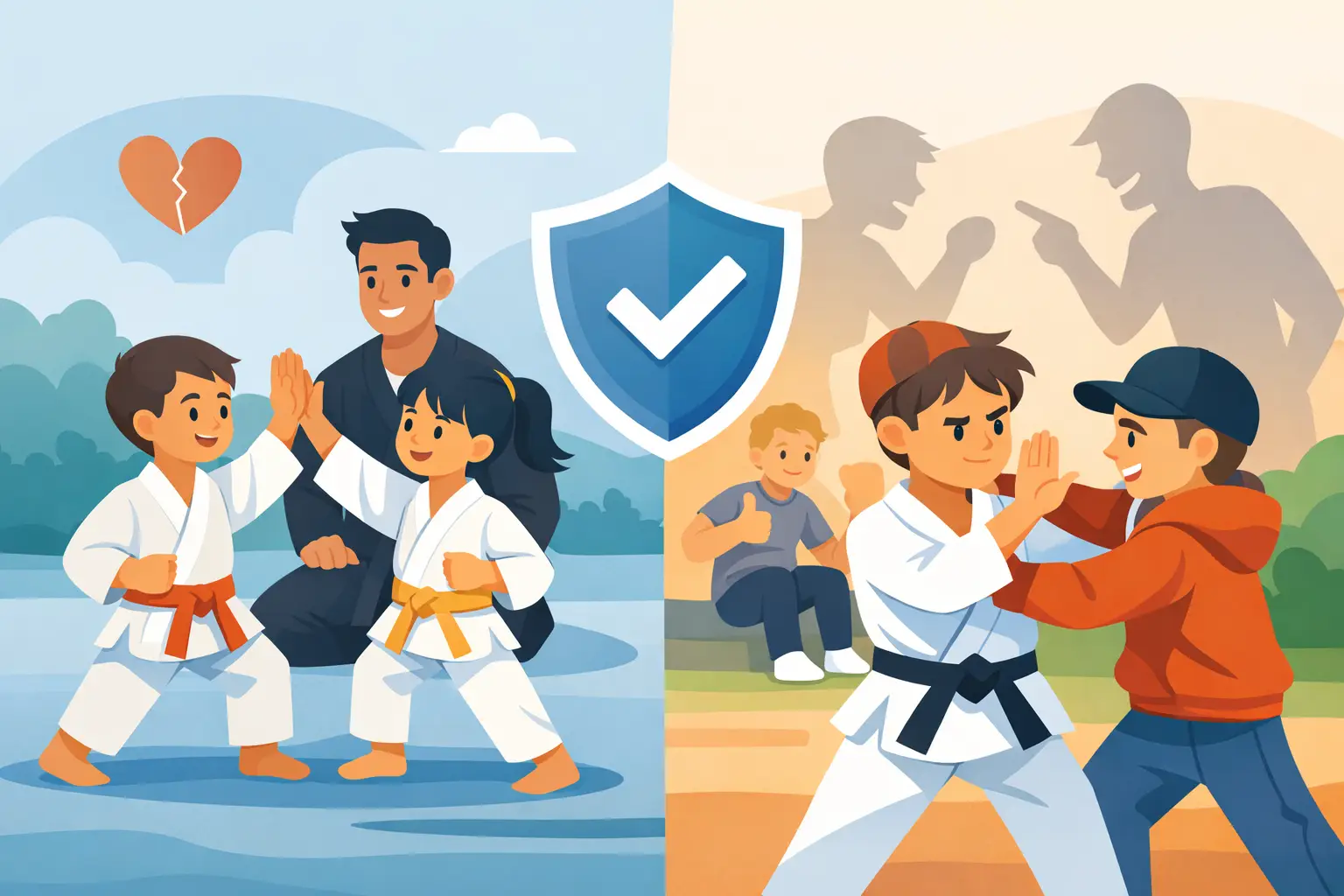
A child who is being picked on rarely needs a speech about confidence. They need a place where confidence is built properly, through repetition, progress and support. That is why anti bullying martial arts classes can make such a lasting difference. Done well, they do far more than teach punches and kicks. They help young people carry themselves differently, respond more calmly under pressure and develop the kind of self-belief that bullies tend to avoid.
For parents, that matters. You want your child to be safer, stronger and more settled in themselves. You also want reassurance that they are not being taught aggression or false bravado. Good martial arts training should reduce the chance of conflict, not increase it. It should teach awareness, control and the confidence to handle difficult situations without panic.
What anti bullying martial arts classes should really teach
The phrase gets used a lot, but not every class that claims to help with bullying approaches it in a practical way. Real anti bullying martial arts classes should focus on three areas at once: mindset, behaviour and physical skill.
Mindset comes first. A student who learns to stay composed under pressure is already in a better position than one who freezes or lashes out. Behaviour matters because posture, eye contact and clear boundaries can stop many problems from escalating. Physical skill matters too, but it needs to be taught responsibly. The goal is not to turn children into fighters. The goal is to give them useful options if they feel threatened, while reinforcing that avoidance and de-escalation come first.
That balance is where strong instruction matters. If a club focuses only on fitness, it may miss the real-world side of bullying. If it focuses only on fighting, it can send the wrong message. The best training sits in the middle. It is calm, structured and realistic.
Why martial arts can help when confidence talks have not
Parents often try all the obvious things first. They speak to school, encourage their child to ignore it, ask them to be more assertive and try to build them up at home. Those steps can help, but confidence is difficult to hand over through words alone.
Martial arts gives confidence a physical foundation. A student stands taller because they have practised standing with intent. They speak more clearly because they are used to being coached to respond with purpose. They feel less helpless because they are learning skills, improving week by week and seeing proof that they can cope with pressure.
There is also something important about routine. Training every week creates structure. Progress is earned, not guessed at. For a young person who feels uncertain at school, that consistency can be a turning point. They begin to trust themselves because they are doing hard things regularly and getting better at them.
This is especially true for teenagers, who may be less willing to talk openly about bullying but still feel its effects. A good class gives them a place to focus, train and rebuild confidence without putting them on the spot.
The difference between useful training and empty promises
Not all martial arts are taught with the same purpose. Some schools lean heavily into display, competition or tradition. There is nothing wrong with those routes in themselves, but if your main concern is bullying, you need to look at whether the training transfers to real situations.
That means techniques should be practical and taught in a way that students can actually apply under stress. It also means the culture of the club needs to be right. Respect, discipline and self-control are not side notes. They are essential.
A sensible anti-bullying programme will also recognise that not every child responds the same way. Some are naturally shy. Some are energetic but lack discipline. Some have already had upsetting experiences and need patient, steady coaching. Good instructors adapt without lowering standards.
At Fusion Kung Fu, the training approach is built around practical skill rather than performance. That matters for families looking for something grounded and useful. Students are not expected to be sporty, naturally tough or already confident. They are expected to turn up, train properly and improve over time.
Anti bullying martial arts classes and real-world self-defence
Bullying does not always look like a playground scuffle. It can be intimidation, crowding, verbal pressure, social targeting or repeated attempts to make someone feel small. Because of that, self-defence in this context has to be broader than physical technique.
A well-run class teaches awareness first. Students learn to read distance, recognise intent and avoid bad positions. They learn how to use their voice, how to stay balanced and how to respond quickly if someone gets too close. Those are practical skills, and they matter because many bullying situations develop fast.
Close-range training can be especially useful here. In real life, there is rarely time or space for flashy movements. What works is simple, direct and controlled. Training that reflects that reality tends to give students a more honest sense of what they can do and what they should avoid.
There is a trade-off, though. Practical training should still be age-appropriate and safe. A class can be realistic without being intimidating. For younger or less confident students, the best progress often comes from steady exposure, clear boundaries and an instructor who knows when to push and when to reassure.
What parents should look for in a class
If you are choosing between clubs, it helps to look past the marketing. The right class should make you feel that your child will be supported, challenged and kept safe.
Watch how the instructors speak to students. Is the tone firm but respectful? Are standards clear? Do students look engaged and focused rather than hyped up? A good environment is disciplined without feeling harsh.
It is also worth asking what the class actually teaches around bullying. Do they cover awareness, assertiveness and de-escalation, or only physical drills? Do they encourage control and judgement, or just toughness? Children need more than techniques. They need context.
Finally, look at progression. Confidence grows when students can see themselves moving forward. A structured class with clear teaching, realistic expectations and regular attendance usually produces better results than something chaotic or purely entertainment-led.
More than self-defence: discipline, fitness and resilience
One of the strongest benefits of martial arts is that it solves more than one problem at a time. A child may begin because of bullying, but stay because training improves focus, fitness and emotional control.
That matters in a world where many young people spend too much time sitting still, staring at screens and carrying stress they do not know how to manage. Martial arts gives them a physical outlet, but it also teaches restraint. They learn when to act, when to step back and how to stay composed when emotions run high.
For some families, this wider benefit becomes the real value. Bullying may have been the reason for starting, yet the long-term gain is a more resilient young person – one who listens better, moves better and feels more capable in everyday life.
Adults can benefit too. Teenagers and parents often join for similar reasons: confidence, fitness, focus and practical self-defence. The training works because it is based on steady improvement, not on being the biggest or strongest person in the room.
Why the right environment changes everything
Technique matters, but culture matters just as much. A student who feels embarrassed, overlooked or out of place is unlikely to thrive. A student who feels welcomed, coached and taken seriously is far more likely to stick with it.
That does not mean training should be soft. It should be demanding in the right way. Standards build pride. Progress builds confidence. Support keeps students going when they find something difficult.
For parents, this balance is often what makes the difference between a short-lived attempt and a long-term positive change. You are not just looking for an activity. You are looking for an environment where your child can become harder to intimidate and more comfortable in their own skin.
If that is what you want from anti bullying martial arts classes, choose a club that keeps things practical, structured and honest. The best training will not promise to solve every problem overnight. What it can do is give a young person the tools to stand taller, think clearer and face the world with more certainty – and that is a powerful place to begin.
About the Author: Keith Ratcliffe
