Here’s What We Cover
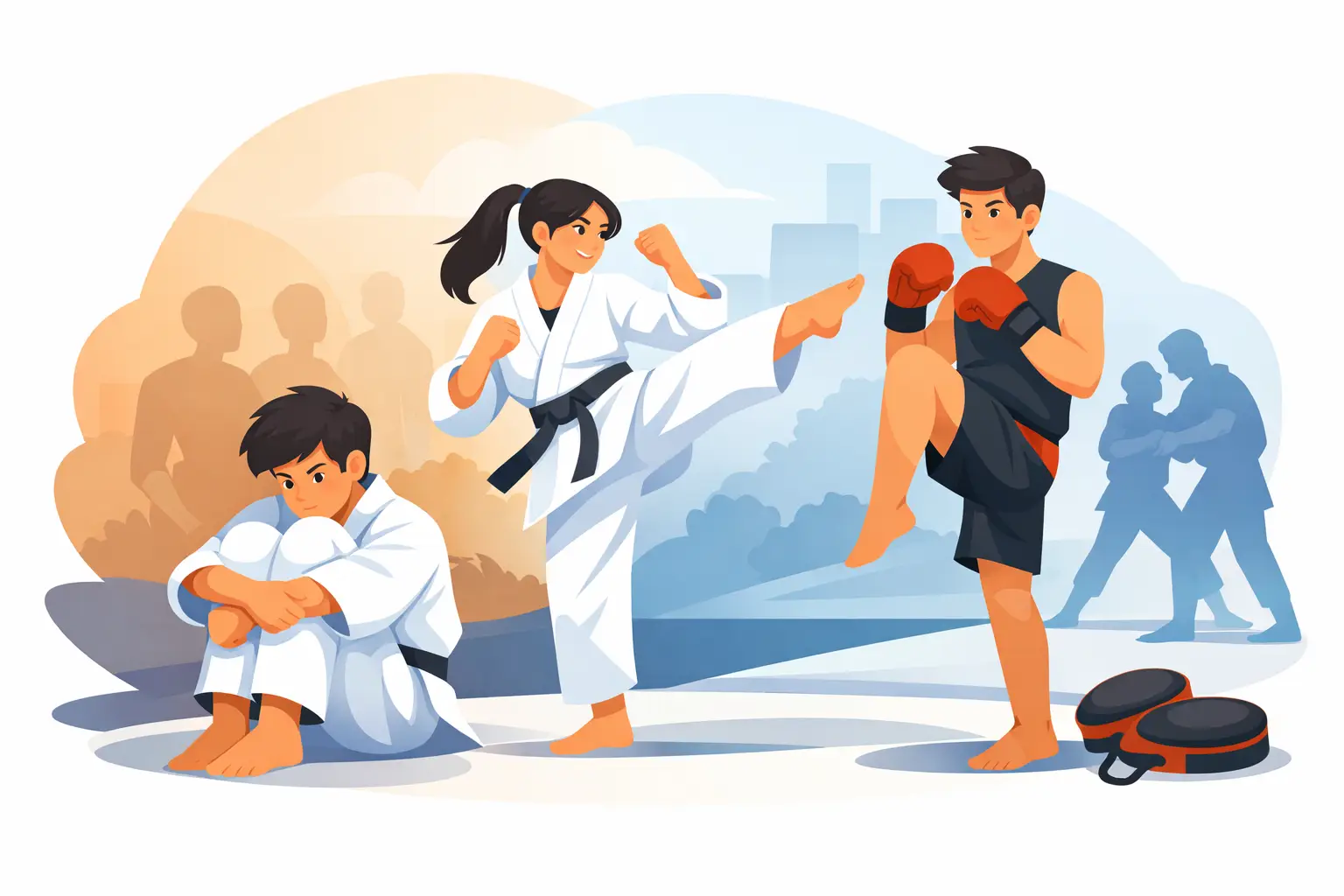
A shy teenager does not need to become the loudest person in the room to become more confident. They need a place where effort is noticed, progress is clear and they can learn to handle pressure without being pushed into the spotlight. That is why the best martial arts for shy teens are usually the ones with structured teaching, practical skills and a supportive class culture – not simply the most dramatic-looking style.
For many parents, the concern is bigger than quietness. A teen may be avoiding new activities, struggling with friendship groups, spending too much time behind a screen or worrying about bullying. Martial arts cannot change a personality overnight, nor should it try to. Good training gives young people something more useful: calm self-belief built through regular action.
What shy teenagers need from a martial arts class
The right class should feel challenging without feeling overwhelming. A beginner needs clear instruction, routines they can follow and an instructor who corrects them without making them feel singled out. They also need time. Confidence earned through small wins lasts far longer than confidence forced by a loud motivational speech.
Martial arts can work particularly well because the focus is on a task. A teen can concentrate on stance, movement, a simple defence or a pad drill rather than having to make conversation straight away. As they become more comfortable, they naturally work with different partners, communicate more clearly and take their place in the group.
Look for a club where beginners are expected, safety is taken seriously and progress matters more than showing off. A class that treats every student as though they should already be tough, outgoing or athletic is unlikely to bring out the best in a shy teen.
Best martial arts for shy teens: what to compare
There is no single perfect style for every teenager. The best choice depends on what makes them anxious, what they hope to gain and the quality of teaching available locally. A confident, well-run class in one style is often a better choice than an impressive-sounding style taught in an intimidating environment.
Kung Fu for confidence, focus and practical skills
Kung Fu can be an excellent fit for shy teens when it is taught in a practical, structured way. Training develops coordination, awareness, discipline and controlled responses under pressure. Rather than relying on size or brute strength, students learn positioning, timing and technique.
This can be reassuring for teenagers who feel physically smaller, less sporty or unsure of themselves around stronger personalities. They discover that good self-defence is not about trying to win a fight. It is about noticing risk early, staying calm, setting boundaries and having simple, effective options if they need to protect themselves.
A modern Kung Fu class should avoid filling every session with complicated forms or tradition for tradition’s sake. Forms can have value for balance and concentration, but a shy teenager also benefits from realistic drills, pad work and controlled partner practice. The goal is useful skill, delivered safely and progressively.
At Fusion Kung Fu in Norwich, Shiyong Kung Fu is taught with this practical purpose in mind. It uses close-range principles based on Wing Chun alongside techniques drawn from other martial arts, giving students a direct approach to self-defence without requiring acrobatic ability or physical dominance.
Karate for routine and clear progression
Karate often appeals to teens who like order. Classes typically have clear etiquette, repeated fundamentals and a visible grading path. For a shy student, knowing what is expected can reduce the worry of walking into an unfamiliar group.
The trade-off is that karate clubs vary greatly. Some are heavily focused on competition or traditional patterns, while others place more emphasis on practical self-defence. Neither is automatically wrong, but parents should ask what a typical beginner lesson looks like and whether the teen will practise realistic situations as well as set techniques.
Judo or Brazilian jiu-jitsu for calm under pressure
Judo and Brazilian jiu-jitsu teach control through grappling. They can help a teenager become more comfortable with close contact, balance and dealing with resistance. This is valuable for building composure, especially for those who freeze when someone gets too close.
However, the physical contact can be a big step for a very reserved beginner. Some teens enjoy it immediately; others need more personal space while they build trust. A good club will pair students sensibly, teach safe falling or controlled groundwork and never shame someone for needing time to adjust.
Boxing or kickboxing for fitness and assertiveness
Boxing and kickboxing are straightforward, energetic and excellent for fitness. Pad work gives quick feedback, which can make a teen feel capable early on. Learning to stand with good posture, keep their hands up and move with purpose can change how they carry themselves outside class.
The key question is how sparring is handled. Light, well-supervised sparring can build confidence and emotional control. Hard contact too early can do the opposite, particularly for a young person who is already nervous about being judged or hurt. Beginners should never be thrown into a frightening environment to prove themselves.
The teaching environment matters more than the badge on the door
Parents sometimes spend weeks comparing styles, then overlook the most important factor: the instructor. A shy teenager is more likely to stay with training when they feel respected from the first lesson.
Before joining, watch how the instructor speaks to beginners. Are corrections clear and constructive? Do stronger students train responsibly with newer ones? Is there a balance between discipline and encouragement? A serious class does not need to be harsh. Standards, safety and respect should sit together.
It also helps if the club has a clear anti-bullying attitude. Martial arts should never be used to encourage revenge, aggression or proving who is hardest. The useful lesson is that confidence includes restraint. Teens should learn when to walk away, when to seek help and how to use physical skills only when there is no safer option.
How martial arts builds confidence without changing who they are
Shy and lacking confidence are not the same thing. Some teenagers are naturally quiet, thoughtful and happy that way. Training should not try to turn them into somebody else. Instead, it can help them speak when it matters, hold their ground and trust their ability to cope.
Progress usually begins in small, almost unremarkable moments. They attend despite feeling nervous. They remember a sequence. They work with a new partner. They answer when asked. They complete a demanding drill without giving up. Over weeks and months, those moments become evidence that they can handle unfamiliar challenges.
The physical benefits help too. Regular training improves fitness, coordination, posture and sleep quality. For teens dealing with school pressure or screen-heavy routines, an active class provides a useful reset. They leave with a clearer head and a sense that they have done something worthwhile.
Helping your teen make a good start
A free taster session is often the best first step because it removes the pressure of making a big commitment. Let your teenager know they do not have to be brilliant, make friends immediately or decide whether martial arts is for them after one class. Their only job is to turn up and try.
Arrive a little early, wear comfortable clothing and tell the instructor if they are nervous. A good coach will quietly make the first session easier to follow. Afterwards, ask specific questions: What did you enjoy? Which part felt difficult? Would you feel comfortable going back? Avoid pressing for a dramatic reaction. A shy teen may say very little even when they have enjoyed it.
Give it a fair chance too. The first session can feel unfamiliar, and confidence rarely appears after one visit. A few weeks of regular attendance is a more realistic test, provided the class feels safe and welcoming from the start.
The right martial arts class gives a quiet teenager room to grow at their own pace, while still expecting them to show up, work hard and improve. That combination of support and standards can be exactly what helps them stand a little taller – in the training hall, at school and wherever life puts them under pressure.
About the Author: Keith Ratcliffe
