Here’s What We Cover
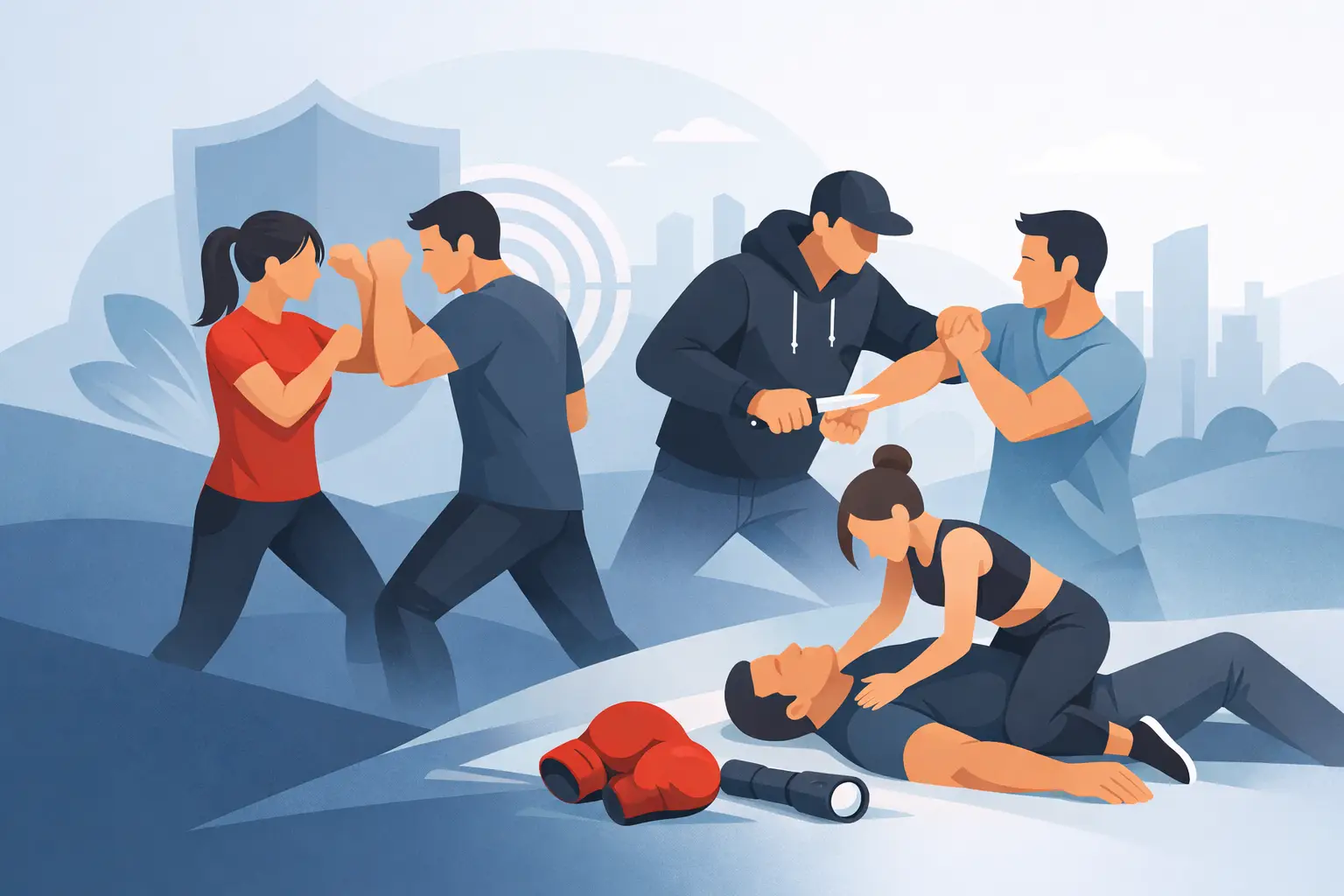
If a martial arts class looks impressive but leaves you unsure what you would actually do under pressure, it is not the best self defence training for most people. Real self-defence is not about flashy movement, complicated forms or trying to outmuscle someone stronger than you. It is about staying calm, making good decisions quickly and using simple, reliable skills that hold up in close-range situations.
That matters whether you are a parent looking for something worthwhile for your teenager, an adult beginner wanting more confidence, or someone who has simply had enough of feeling unprepared. Good training should make you sharper, fitter and more composed. More importantly, it should give you a realistic way to protect yourself without needing to be naturally aggressive, athletic or experienced.
What makes the best self defence training?
The best self defence training is practical first. That sounds obvious, but plenty of classes still focus more on tradition, performance or sport rules than on modern personal safety. There is nothing wrong with martial arts tradition or competition in itself, but if your main goal is self-defence, you need training that reflects how confrontations actually happen.
Most real incidents are fast, messy and close. They do not begin with both people squared up in a perfect stance. They often involve surprise, pressure, adrenaline and very little space. That is why effective self-defence training should include awareness, positioning, balance, timing and simple strikes or controls that can be used under stress.
It should also be taught in a structured way. Beginners do not need to be thrown in at the deep end. They need clear coaching, repetition and a safe environment where they can build skill properly. Confidence comes from competence, not from being told to just be tougher.
Why style matters less than how it is taught
People often ask which martial art is best. The honest answer is that style alone does not decide it. Teaching quality, training methods and the mindset behind the club matter just as much.
A good system for self-defence should not rely on size, strength or flexibility. It should help smaller people, older beginners and less athletic students as much as stronger, faster ones. That is one reason close-range systems are so effective. They focus on efficiency, body mechanics and direct movement rather than large, dramatic techniques that are harder to apply under pressure.
It also helps when a club is honest about trade-offs. A sport-based class may improve fitness, timing and resilience brilliantly, but it may not cover verbal conflict, surprise attacks or everyday threat awareness in enough depth. On the other hand, a class that talks a lot about street defence but rarely trains with resistance can leave students with false confidence. The best self defence training sits in the middle – realistic, pressure-aware and grounded in repetition.
The signs of training that works in the real world
A strong self-defence programme usually feels straightforward. Techniques are taught for a reason, not because they look good. Students learn how to protect their balance, create space, strike with purpose and respond when a situation gets close and chaotic.
Good training also includes judgement. Self-defence is not about fighting at every opportunity. Often the smartest option is awareness, de-escalation or getting away early. Any responsible instructor should treat those skills as part of self-defence, not as an afterthought.
You should also expect progressive pressure. That does not mean unsafe training or people trying to hurt each other. It means learning to perform under a bit of stress, against movement, timing and resistance. If every drill is static and cooperative forever, there is a gap between the class and real life.
Best self defence training for beginners
Beginners usually need three things from a class – clarity, safety and consistency. If you walk into a club and feel lost in jargon, thrown around to prove a point or ignored because you are new, that is not a strong start.
The best self defence training for beginners breaks skills down properly. You learn stance, structure, movement and distance before trying to do everything at once. You get enough repetition to understand why a technique works, not just what it looks like. Over time, simple movements become automatic, and that is where real confidence starts.
This is especially important for adults who think they have left it too late. Many people assume martial arts is only for naturally sporty people or those who started as children. In reality, a well-run class should welcome complete beginners and help them improve steadily. You do not need to arrive fit, flexible or fearless. You need to be willing to learn.
For teenagers, the right class can make an equally big difference. Practical martial arts training supports confidence, discipline and self-control. It can also help with anti-bullying by teaching awareness, boundaries and calm under pressure, rather than encouraging reckless behaviour.
Why close-range training makes sense
One of the biggest weaknesses in poor self-defence teaching is that it assumes you will have time and space to react perfectly. In reality, many confrontations happen up close. That is where close-range systems stand out.
Training that works at short distance prepares students for pressure where there is little room for big kicks or wide movements. It teaches direct responses, efficient striking and better body positioning. It also tends to suit a wider range of people because it relies less on athleticism and more on timing, structure and control.
This is why practical Kung Fu can be such a strong option when taught with a modern mindset. At Fusion Kung Fu, the emphasis is on useful training rather than unnecessary tradition – helping students build skills that are realistic, accessible and relevant to situations people may actually face.
What parents and adult learners should look for
If you are choosing a club for yourself or your child, watch how the class is run. Is the teaching clear and disciplined? Are students focused and respectful? Do instructors correct people properly, or just run through drills quickly? A good class should feel welcoming, but it should also feel purposeful.
Look at whether the club teaches self-defence as a long-term skill rather than a quick fix. A few sessions can teach useful ideas, but real progress comes from regular training. Students improve their reactions, fitness and judgement over time. That is far more valuable than gimmicky promises about becoming unbeatable in a weekend.
It is also worth considering the atmosphere. Many people need a club that takes standards seriously without making beginners feel out of place. The right environment pushes you to improve while giving you the support to keep showing up. That balance matters more than people realise.
Red flags to avoid
If a class makes extravagant claims, be careful. No training can guarantee safety in every situation. Good instructors are confident, but they are also realistic. They understand that self-defence is about improving your chances, not selling fantasy.
Be wary of clubs that rely heavily on ceremony but struggle to explain practical application. Equally, be cautious of classes that market themselves as brutally realistic but ignore safety and proper coaching. Injured students do not learn well, and intimidation is not the same as effective training.
Another warning sign is overcomplication. Under stress, people fall back on what they have practised most. The best training usually comes back to simple principles done well – posture, awareness, distance, timing and direct technique.
The best choice is the one you will stick with
There is no point choosing a style that looks good on paper if the class does not suit you. The best self defence training is training you can attend consistently, learn from confidently and apply under pressure. That means good instruction, a practical syllabus and an environment that helps you progress week after week.
For some, that starts with wanting to feel safer walking home. For others, it is about giving a teenager more confidence, discipline and focus. For many, it becomes something bigger – better fitness, sharper concentration and the reassurance that comes from knowing you are more capable than you were six months ago.
If you are comparing clubs, keep it simple. Look for training that is realistic, structured and built around what works in real life. Then give yourself permission to start as a beginner. The hardest part is often not the training itself. It is deciding that your confidence, safety and development are worth making time for.
About the Author: Keith Ratcliffe
