Here’s What We Cover
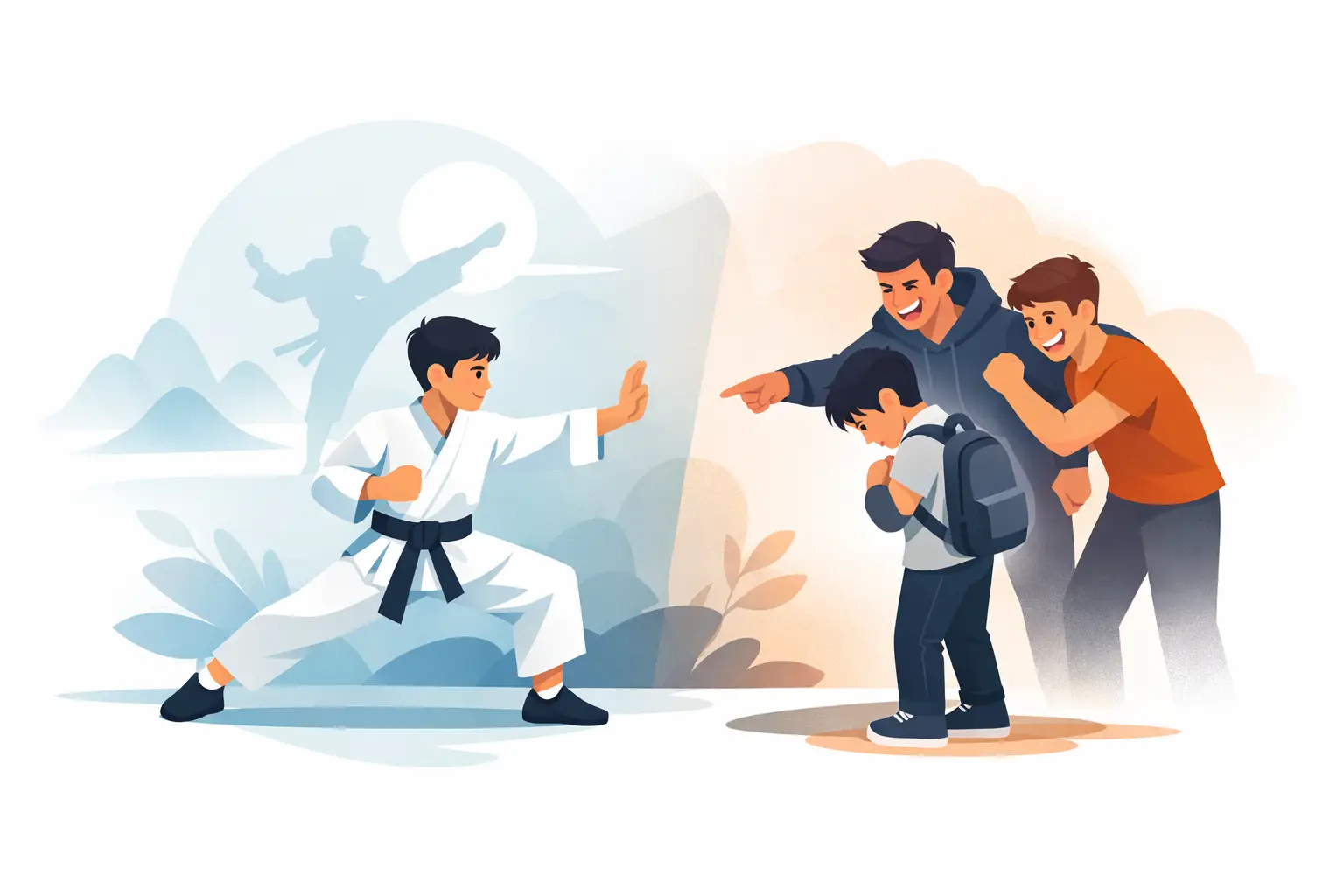
A lot of parents ask the question when something has already gone wrong. Their child is withdrawing, dreading school, or coming home angry and flat. Teenagers ask it too, usually more quietly. Does kung fu help with bullying? It can, but not in the way many people first imagine.
If you are hoping martial arts will simply teach someone to hit harder, that is the wrong goal. Good training should reduce the chances of a child or adult being targeted, improve how they carry themselves, and give them practical options if a situation becomes physical. It should also build the kind of confidence that does not need to prove itself.
Does kung fu help with bullying in real life?
Yes, it can help a great deal, but it is not a magic fix. Bullying is rarely just a physical problem. It can be verbal, social, online, or a mix of all three. That means the real value of kung fu is not only in learning how to defend yourself. It is in becoming harder to intimidate in the first place.
That change often starts with posture, eye contact and calmness under pressure. Someone who trains regularly tends to move differently, speak more clearly and react less emotionally when pushed. Bullies usually look for easy targets. They tend to test boundaries. When they meet someone who looks alert, grounded and self-assured, the dynamic often changes.
This is one of the biggest misunderstandings about martial arts. The benefit is not just what happens during a fight. The benefit is what prevents one.
Confidence matters, but real confidence looks different
There is a world of difference between confidence and bravado. Bravado is loud, defensive and easy to shake. Real confidence is quieter. It comes from repetition, discipline and knowing you can handle pressure without panicking.
That matters in bullying situations because fear shows. So does uncertainty. A person who freezes, looks down, apologises for taking up space, or reacts strongly to every comment can become an easier mark. Training helps break those patterns over time.
In a structured class, students are challenged in a controlled way. They learn to focus when they are tired, follow instructions, deal with mistakes and keep going. They work with partners, practise under pressure and improve gradually. That process builds resilience. Not fake confidence. Earned confidence.
For teenagers especially, this can be a major shift. They may not suddenly become outgoing, and that is fine. They often become steadier, more assertive and less rattled. That alone can make a real difference at school, on public transport or in other social settings.
Why body language changes the situation
Bullies often choose people they believe will not push back. That does not always mean physically weaker. It can mean someone who seems isolated, anxious or unsure of themselves.
Kung fu training improves body awareness. Students stand better, move with more balance and develop stronger presence. They are encouraged to pay attention, keep their heads up and stay switched on. These are simple things, but they change how someone is seen.
The goal is not to look threatening. It is to stop looking vulnerable.
This is especially relevant with practical systems that focus on close-range self-defence and efficient movement rather than performance or flashy routines. Training should feel useful. It should help students understand distance, reaction and control in a way that carries into everyday life.
Does kung fu help with bullying if it turns physical?
It can, and this is where proper coaching matters. If bullying crosses the line into physical intimidation or assault, self-defence skills are clearly valuable. A student who has trained realistically is more likely to stay composed, protect themselves and create a chance to get away.
That said, the best martial arts schools do not teach aggression as the first answer. They teach awareness, de-escalation and proportionate response. Avoid trouble where possible. Set boundaries early. Leave if you can. Defend yourself when you must.
This balanced approach matters because young people in particular can end up in difficult situations if they think martial arts gives them permission to fight. It does not. Good training should make students less likely to lash out, not more likely.
Practical kung fu can be useful here because it does not rely on size, strength or athleticism in the same way some other systems do. For a smaller teenager or an adult with no sporting background, that makes training more accessible and often more relevant.
The parts of bullying kung fu cannot solve on its own
This is the important trade-off. Martial arts can be a strong part of the answer, but it is not the whole answer.
If a child is being bullied at school, parents still need to speak to the school and push for proper action. If the bullying is online, boundaries around devices, reporting and evidence still matter. If a teenager is struggling emotionally, they may need more support than a class alone can provide.
Kung fu can help someone become stronger, calmer and more capable. It cannot guarantee that other people will behave well. It also cannot replace support from family, teachers and trusted adults.
That is why the best results usually happen when training sits alongside clear communication and practical support. The student gains tools. The adults around them do their job too.
What parents should look for in anti-bullying martial arts training
Not every martial arts club handles this well. Some talk about confidence but train in a way that is all ego. Others are so focused on tradition or performance that students never learn anything useful for modern situations.
If you are choosing classes for a teenager, look for a school that teaches discipline without intimidation, and self-defence without glorifying violence. The environment should be structured and supportive. Beginners should be welcomed properly. Instructors should be clear, calm and experienced enough to build confidence step by step.
It also helps if the training is realistic. That does not mean dangerous. It means students learn timing, distance, reactions and how to stay composed when someone invades their space. They should understand when to disengage, when to speak up and when physical defence is justified.
A practical coaching mindset is usually the best fit. Less theatre. More substance.
Why discipline and routine make such a difference
Bullying can leave people feeling powerless. Regular training starts to reverse that feeling. Turning up each week, improving bit by bit and earning progress through effort creates a sense of control.
That routine matters more than people think. It gives students a place where they are challenged, supported and taken seriously. They are not being judged on popularity or social status. They are learning, improving and becoming more capable.
For some students, that is the first environment where they feel genuinely strong.
Over time, this can spill into the rest of life. They speak up more. They carry themselves better. They cope with stress more effectively. None of that happens overnight, but it is often exactly what has been missing.
So, does kung fu help with bullying long term?
Yes, when it is taught properly and practised consistently. It helps by building confidence that is grounded, not performative. It helps by improving awareness and body language. It helps by giving students practical self-defence skills and better emotional control.
But the long-term benefit is even bigger than that. Training teaches people that they can become stronger than they were last month. More focused. More resilient. Less likely to be pushed around by fear, pressure or the behaviour of others.
That is a powerful lesson for any age.
At Fusion Kung Fu, this is why training is kept practical, structured and welcoming for beginners. Students are not expected to be naturally sporty, tough or experienced. They are taught step by step, in a way that builds real confidence and real ability.
If bullying is part of the reason you are considering martial arts, it is worth taking seriously – not as a quick fix, but as a solid step in the right direction. The right class will not just teach someone how to defend themselves. It will help them stand taller, think clearer and carry themselves with the kind of presence that changes situations before they escalate.
Sometimes that is exactly where things start to improve.
About the Author: Keith Ratcliffe
