Here’s What We Cover
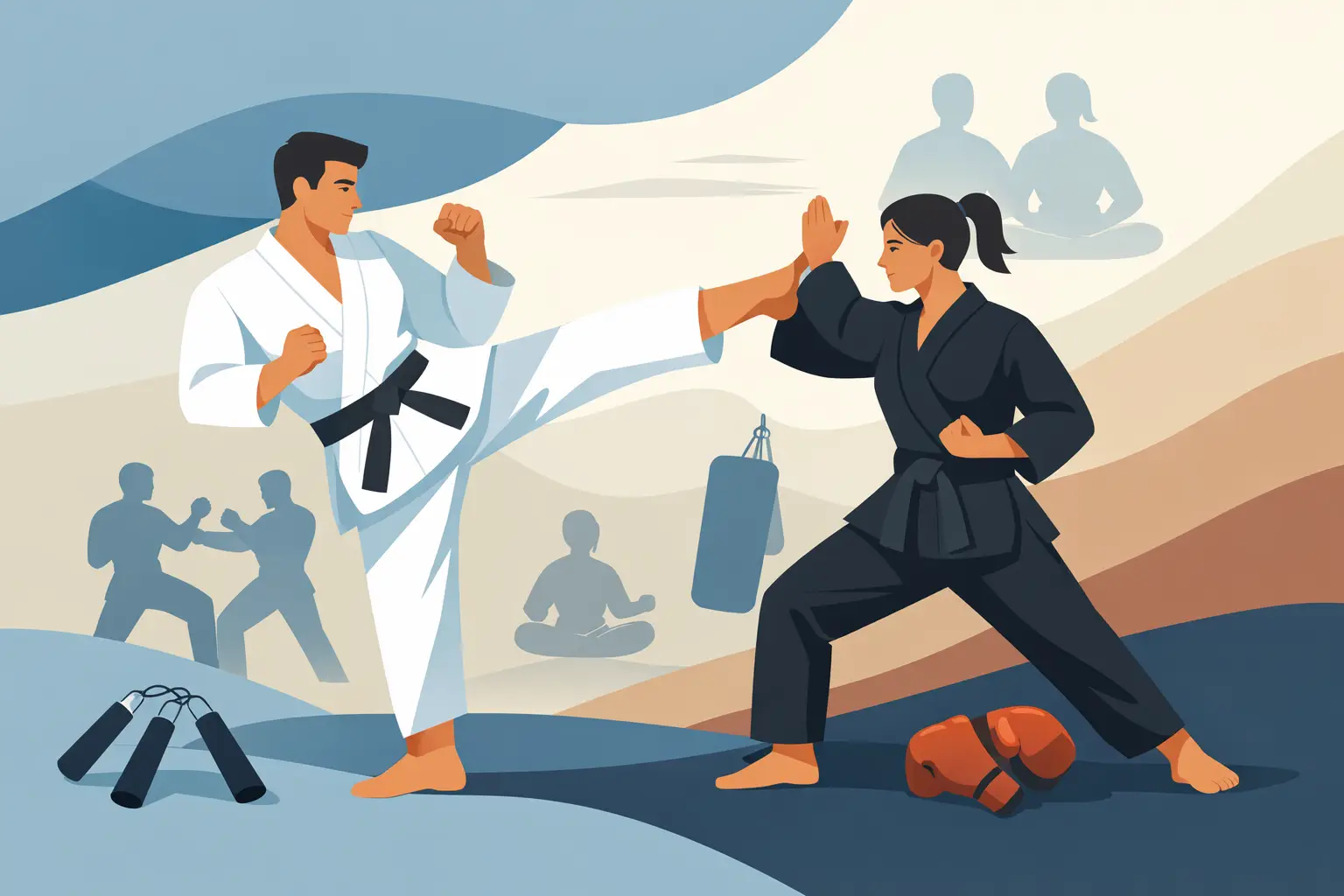
Most adults do not start martial arts because they want to become a film character. They start because they want to feel stronger, sharper and more capable in everyday life. A good guide to adult martial arts should begin there – with real reasons, real concerns and a realistic idea of what training can do.
For some people, the goal is self-defence. For others, it is fitness, stress relief or confidence. Quite often, it is a mix of all three. The key is finding training that fits your life now, not the version of you that has endless free time, perfect mobility and years of experience.
What a guide to adult martial arts should actually help you answer
If you are new to martial arts, the biggest question is usually not which style looks best. It is whether you will be able to do it, stick with it and get something worthwhile from it.
That depends less on flashy techniques and more on the quality of the teaching. Adults need structured training, clear progression and a supportive environment where beginners are taken seriously. You should not need to be naturally flexible, highly athletic or already confident to start. Good instruction builds those qualities over time.
You also want honesty. Not every martial art is designed for the same purpose. Some focus heavily on sport and competition. Some lean towards forms and tradition. Some are useful for fitness but less practical for real-world self-defence. None of that is automatically bad, but it matters if your main reason for joining is to learn skills that work under pressure.
Why adults start martial arts later than they expected
A lot of adults put it off for years. Work gets busy. Family life takes over. Fitness drops down the list until something shifts and they decide they need a better outlet.
Martial arts can be that outlet because it gives you more than a standard workout. You are not just repeating movements to burn calories. You are learning timing, awareness, control and discipline. That keeps training mentally engaging, which is one reason many adults stay with it longer than they stay with a gym membership.
There is also a confidence factor that is hard to fake. When you train consistently, you carry yourself differently. You become calmer under pressure. You start to trust your reactions. That change tends to show up outside class as much as inside it.
Choosing the right style as an adult
This is where many beginners get stuck. They assume they need to pick the perfect style before they have even stepped into a class. In reality, the best choice depends on what you want most from training.
If your priority is practical self-defence, look closely at how the system trains distance, pressure, reactions and close-range movement. Ask whether the techniques are suitable for modern situations and whether the teaching is focused on what works, not what looks impressive.
If your main aim is fitness, you still need to think about sustainability. A class can be intense without being chaotic. You want training that improves stamina, coordination and strength while being manageable enough to return to each week.
If you are drawn to tradition, there is nothing wrong with that. Many people value the structure, discipline and heritage of traditional systems. But if you want direct, practical skills, make sure that tradition is not getting in the way of useful training.
For many adults, a practical Kung Fu system is a strong fit because it can develop self-defence, fitness and focus at the same time. Styles built around close-range efficiency often suit people who want effective technique without relying on size, speed or acrobatics.
What to look for in an adult class
The atmosphere matters more than most beginners realise. A serious class should still feel welcoming. You should be challenged, but not made to feel out of place for being new.
Look for instruction that is organised and progressive. A good coach does not simply throw beginners into the deep end. They break skills down, explain why movements matter and help students build sound habits from the start.
Pay attention to how safety is handled as well. Effective training does not mean reckless training. Adults often arrive with old injuries, limited mobility or a long gap since their last regular exercise. A strong club takes that into account while still maintaining standards.
The best adult classes also avoid empty theatrics. You do not need mystical language or overcomplicated drills. You need clear coaching, consistent practice and realistic application.
Common worries adults have before starting
One of the biggest fears is being too old. In most cases, that worry is unnecessary. Adults of different ages start martial arts successfully every year. Progress may look different at 40 than it does at 18, but useful progress is still progress.
Another concern is fitness. Many beginners assume they need to get fit before attending class. Usually, the class is what helps them get fit in the first place. As long as the teaching is sensible, you can build from your current level.
Some people worry about looking foolish. That is normal, especially if you have not learned a physical skill in years. But every experienced student was a beginner once. In a healthy club, effort matters more than ego.
There is also the question of injury. Martial arts involve movement, contact and repetition, so there is always some level of risk. The answer is not to avoid training altogether. It is to choose a club that teaches properly, builds you up gradually and takes control seriously.
What progress really looks like
Adults often expect either instant results or none at all. The reality sits in the middle. In the first few weeks, you will probably notice better coordination, improved concentration and a sense that your body is waking up again.
After a few months, techniques start to feel less foreign. Your reactions become cleaner. Fitness improves. You begin to understand range, timing and posture in a practical way.
Longer term, the changes are deeper. You become more disciplined about turning up and doing the work. You handle pressure more calmly. You gain confidence because you have earned it through repetition and training, not because someone told you to believe in yourself.
That is one reason adults get so much from martial arts. The benefits are not only physical. Training gives you a framework for steady improvement, and that carries into work, family life and everyday challenges.
Why practical training matters
Not every adult wants competition. Not every adult wants performance. Many simply want training that feels relevant.
Practical martial arts teaching keeps things grounded. It focuses on movement that can be applied under stress, especially at close range where many real confrontations happen. It values structure, repetition and honest feedback over flashy routines.
This does not mean every session needs to feel grim or aggressive. Good classes are enjoyable. They build community. They give you a sense of achievement. But there should always be a clear link between what you practise and why you are practising it.
That is especially important for beginners. If you are giving up your evening to train, you want to know your effort is taking you somewhere useful.
Starting with the right mindset
The best way to start is simply and sensibly. Turn up ready to learn. Do not compare yourself to advanced students. Focus on consistency rather than perfection.
It helps to think in months, not days. One class will not transform you. Ten classes start to build a foundation. A year of proper training changes far more than most people expect.
Be honest about your goals too. If you want practical self-defence, say so. If you want fitness and confidence, that matters just as much. A good instructor can guide you better when they understand what brought you through the door.
If you are in Norwich or the surrounding area, training with a club such as Fusion Kung Fu can be a strong place to begin because the focus is on structured, practical teaching rather than tradition for its own sake. That makes a difference when you want skills that feel relevant from the start.
The best guide to adult martial arts is still experience
Reading helps. Research helps. Comparing styles and clubs helps. But at some point, the only way to know whether martial arts is right for you is to step onto the floor and train.
You do not need to arrive as the finished article. You just need to begin with an open mind and a willingness to improve. The right class will meet you there, challenge you properly and show you that strength, confidence and skill are built, not granted.
If you have been thinking about it for a while, that is usually your answer. Start where you are, train with purpose and let the results come from the work.
About the Author: Keith Ratcliffe
