Here’s What We Cover
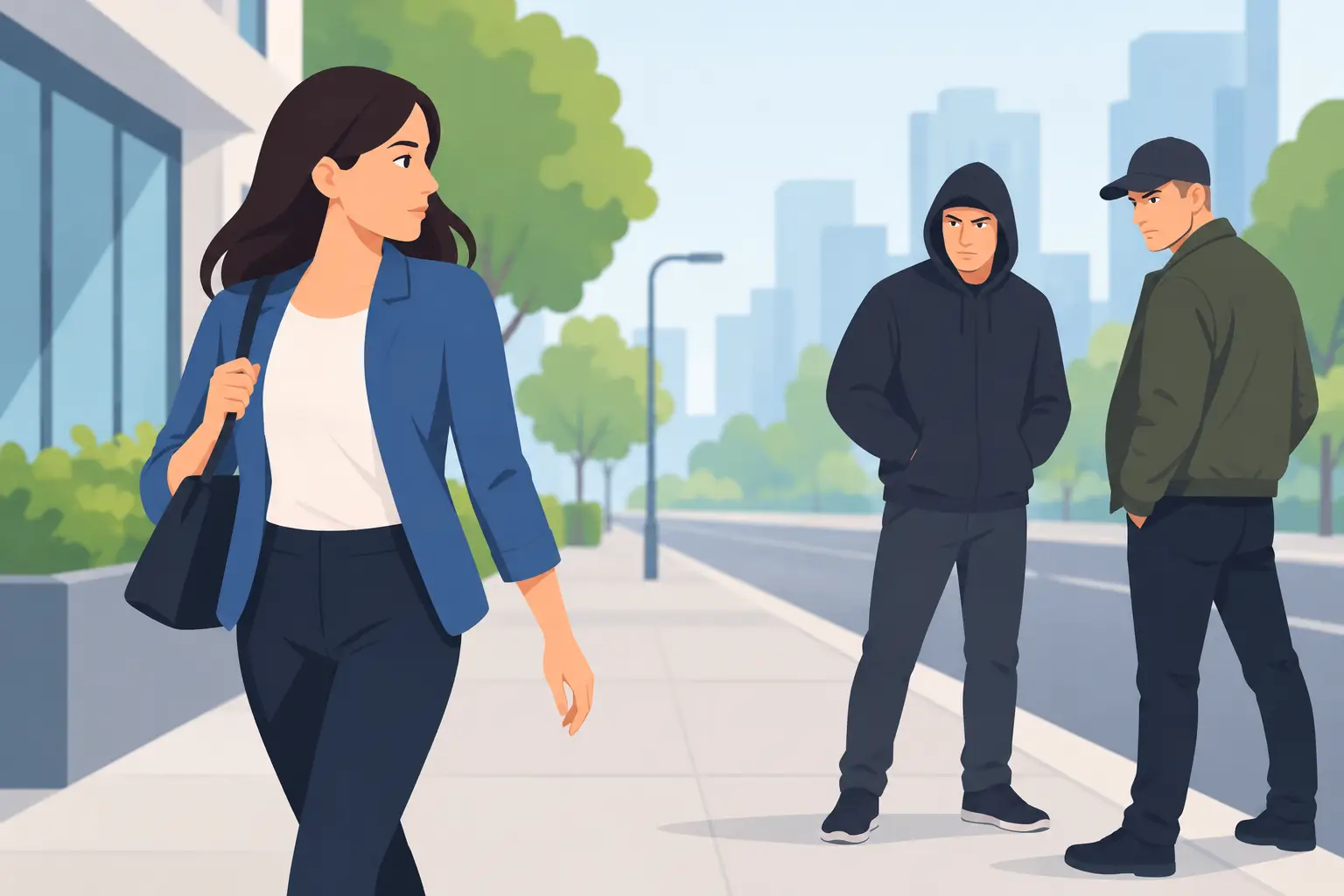
A street confrontation rarely starts with a clear warning. It may begin with someone standing too close, a careless comment, an argument outside a shop, or a person who simply wants a reaction. Knowing how to avoid street confrontations is not about looking scared or backing down from life. It is about making smart decisions early, protecting the people with you and getting home safely.
Real self-defence starts before anyone throws a punch. The best outcome is not winning an argument. It is avoiding the physical situation altogether.
How to Avoid Street Confrontations Before They Start
Awareness is one of the most useful safety habits you can build. This does not mean walking around frightened or expecting trouble from everyone. It means paying enough attention to recognise when a situation is changing.
When you are out, especially at night, keep your head up and notice who is around you. Avoid becoming completely absorbed in your phone or headphones when walking through quieter areas, car parks, public transport stops or unfamiliar streets. If something feels wrong, trust that feeling and give yourself more space.
Small choices can prevent bigger problems. Walk with purpose, stay in well-lit and busier areas where possible, and arrange transport before a night out rather than trying to solve it at the end of the evening. If you are with friends, agree to leave together. People are more vulnerable when separated from their group, tired, distracted or affected by alcohol.
Awareness is not paranoia. It is practical preparation. You do not need to assume the worst, but you should give yourself options.
Do Not Feed the Argument
Many confrontations grow because both people feel they need the last word. Someone bumps into you, stares at you, makes a comment or acts aggressively. Your instinct may be to challenge them. That reaction is understandable, but it can turn a minor moment into a dangerous one.
A calm, short response is often stronger than an emotional one. If you have accidentally caused a problem, a straightforward “Sorry, are you alright?” can take the heat out of the situation. If the other person is clearly looking for an argument, you do not owe them a performance. A brief response such as “No problem” or “I’m leaving it there” gives you a way out without adding fuel.
This is not about accepting bad behaviour. It is about recognising that a stranger’s need to prove something is not your responsibility to fix. There is a difference between confidence and confrontation. Confidence lets you walk away without needing their approval.
Keep your voice controlled, avoid insults and do not point, push or invade someone’s space. Humour can sometimes help, but it depends on the person and the mood of the situation. What sounds light-hearted to you may sound disrespectful to someone already angry. When in doubt, keep your words simple and leave.
Use Distance and Positioning
If someone is becoming hostile, distance is your friend. Step back rather than forward. Keep enough room to move away, and avoid allowing yourself to be trapped against a wall, vehicle, doorway or group of people.
Try to position yourself near other members of the public, staff, security or a well-lit entrance. If you are in a pub, shop, station or venue, speak to someone working there. Asking for help early is sensible, not embarrassing. Staff would rather deal with a tense exchange before it becomes violence.
Where possible, keep your hands visible and open around chest height in a natural, non-threatening way. This can help you look less confrontational while also keeping your balance and personal space. Avoid putting your hands in your pockets if you feel uneasy, as it can slow your movement and make it harder to react safely.
If you are with children, teenagers or less confident friends, focus on moving them away first. Do not stay behind to argue on their behalf. Your priority is getting everyone clear of the risk.
Know When to Leave Immediately
Some warning signs mean it is time to stop talking and create distance straight away. A person may be clenching their fists, repeatedly moving into your space, blocking your route, shouting threats or trying to draw attention from their friends. None of these signs guarantee an attack, but they tell you the situation is no longer a normal disagreement.
Leave as soon as you can. Go into a busy public place, approach staff or call someone for support. If you believe there is an immediate threat to you or someone else, call 999. If an incident has happened but there is no immediate danger, reporting it through the appropriate non-emergency route can still help protect others.
Your belongings are replaceable. If someone is trying to take a phone, wallet, bag or bike, handing it over may be the safest choice if resisting would put you at risk. Personal safety matters more than property.
There is no single rule that covers every situation. A loud argument in a crowded place may settle quickly once staff intervene. A quiet street with one aggressive person may require you to leave without saying another word. The key is to avoid being drawn into a test of pride.
What Practical Self-Defence Really Means
Self-defence is often misunderstood. It is not about learning flashy moves, looking for fights or believing that training makes you invincible. Effective training should make you more aware, more composed and harder to intimidate, while reinforcing that physical action is the final option when escape is not possible.
A practical martial art teaches more than techniques. It builds posture, balance, distance control and the ability to stay calm when pressure rises. These are useful skills for anyone, regardless of size, strength or previous experience. They can also improve confidence in everyday situations, from setting boundaries to speaking clearly when someone makes you uncomfortable.
At Fusion Kung Fu, training is centred on realistic close-range self-defence, fitness and personal development. Students learn in a structured, supportive environment where control and respect come before ego. For teenagers, this can be particularly valuable. Confidence does not need to mean becoming aggressive. It means having the self-belief to make a sensible choice and walk away.
Training also gives people a healthier relationship with conflict. When you understand how quickly real violence can become unpredictable, you become less likely to treat it casually. That is a lesson worth learning in the gym, not on the street.
Help Young People Handle Pressure
Parents cannot control every situation their teenager will face, but they can help them prepare. Talk openly about peer pressure, bullying, social media disputes and the urge to respond when someone tries to embarrass them in public. Many confrontations begin because a young person feels they must react in front of friends.
Encourage them to leave, find an adult, contact a parent or call for help. Make it clear that walking away is not weakness. It is judgement. The strongest decision is often the one that prevents injury, police involvement or consequences that follow someone for years.
Structured martial arts training can give young people a positive outlet for energy while teaching discipline, focus and respect. It also places them among people who are working towards progress, not trying to prove themselves through trouble.
The aim is simple: stay alert, stay calm, keep your distance and leave before a situation becomes physical. Those habits may not look dramatic, but they are the skills that protect people in real life. Build them steadily, practise them often and give yourself every chance to get home safely.
About the Author: Keith Ratcliffe
