Here’s What We Cover
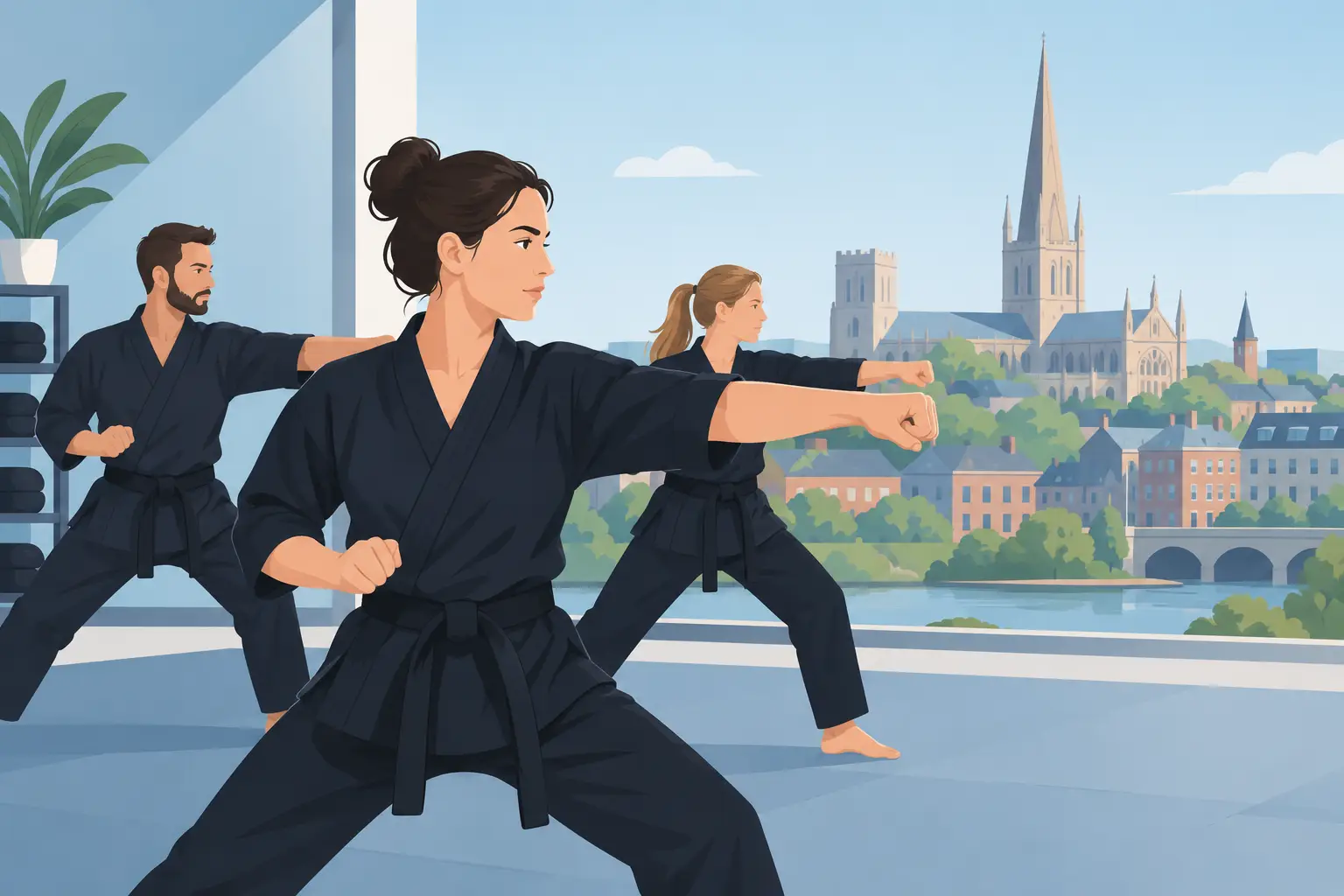
The diary is already full. Work runs late, family commitments take priority and the idea of spending every evening in a gym is unrealistic. That does not mean your fitness, confidence or personal safety have to sit at the bottom of the list. Practical martial arts for busy adults are built around making steady progress in the time you can genuinely commit.
The right class should not demand that you arrive super-fit, naturally flexible or experienced in combat sports. It should give you focused training, clear instruction and skills that make sense outside the training hall. For adults in Norwich, that means learning how to move with purpose, protect yourself under pressure and leave each session feeling stronger than when you arrived.
What makes martial arts practical for adults?
Practical training is not about collecting complicated techniques or copying moves designed for demonstrations. It is about developing useful habits: awareness, balance, positioning, timing and the confidence to act decisively if a situation becomes unsafe.
A practical system also recognises that most adults are not looking to compete every weekend. They want to improve their fitness, clear their head after a difficult day and know they have options if someone becomes aggressive. Close-range self-defence is particularly relevant because real confrontations do not usually begin from perfect distance, with plenty of room to move and a referee nearby.
Shiyong Kung Fu is designed with that reality in mind. Its Wing Chun foundations are combined with effective ideas from other martial arts, creating a direct, modern approach to self-defence. Training focuses on fast reactions, sensible movement and techniques that do not depend on being the biggest or strongest person in the room.
That does not mean there are magic answers. Self-defence is never a guarantee, and the safest outcome is always to spot trouble early, create space and leave. Good martial arts training supports that judgement rather than encouraging false confidence.
Why busy adults benefit from structured classes
When time is limited, vague exercise plans are easy to put off. A structured class gives your week an anchor. You turn up, train with a purpose and follow a programme that develops over time. There is no need to decide what to do with an hour at the gym or wonder whether you are improving.
Martial arts also use your attention in a different way from repetitive exercise. You are working on coordination, drills, technique and controlled partner practice. That concentration can be a real reset after hours spent at a desk, in meetings or dealing with everyday responsibilities.
The physical benefits are valuable, but they are not the only reason people stay. Adults often notice better posture, more energy and improved coordination. Just as importantly, they build resilience. Being a beginner again can feel uncomfortable at first, yet every class proves that progress comes from showing up, listening and practising the basics well.
For many people, this is more sustainable than chasing extreme workouts. You do not need to train for hours every day. Consistent sessions, even alongside a demanding routine, can improve fitness and capability far more than an ambitious plan you abandon after two weeks.
Practical martial arts for busy adults should respect your time
A worthwhile class does not waste half the session on empty ceremony or leave beginners confused by jargon. There is a place for discipline and respect in martial arts, but those values should strengthen the training, not distract from it.
Look for sessions that have a clear flow. A warm-up should prepare the body for the movements ahead. Technique work should explain not just what to do, but why it works and when it may not be the best option. Partner drills should be controlled and safe while still teaching you what pressure, distance and resistance feel like.
You should also be able to see a route forward. In the early weeks, the goal might be learning stance, movement, basic striking and simple defensive responses. As your confidence grows, training can include combinations, close-range drills, awareness and more demanding fitness work. A good instructor adapts the challenge without making newcomers feel left behind.
You do not need to be naturally athletic
One of the biggest barriers for adults is the belief that they are too unfit, too stiff or too old to begin. Most people who start martial arts feel at least one of those things. The point of a beginner class is not to test whether you already belong. It is to help you build the skills and conditioning to progress.
Effective self-defence is not based on acrobatics. It relies on sound body mechanics, awareness and techniques practised often enough to become more natural. Height, weight and strength can affect how situations play out, so honest training does not pretend they are irrelevant. But good coaching gives every student practical ways to use position, movement and timing to their advantage.
Training with people of different ages, builds and experience levels is part of the value. You learn to stay calm, adjust your approach and work with control. That is much more useful than only practising with someone who moves exactly as you do.
Make training fit around real life
The best routine is one you can maintain when work is busy and motivation is low. Start with a realistic commitment. One class a week is enough to establish a habit and begin learning. If your schedule allows more, add training gradually rather than burning out in the first month.
Give yourself permission to be a beginner. You will not remember every detail after your first class, and you do not need to. Focus on one or two coaching points at a time. Over weeks and months, the movements become sharper, your fitness improves and the lessons begin to connect.
It helps to prepare practically as well. Keep training clothes ready, block the session in your calendar and treat it as an appointment with yourself. If you have a family, explain why that time matters. Many parents find that investing in their own health and confidence sets a strong example for their children.
There will be weeks when work deadlines, illness or family events interrupt the routine. That is normal. Do not turn one missed class into a reason to stop. Return when you can and continue from where you are. Martial arts progress is built over the long term, not won in one perfect month.
The value of training with the right people
A class environment matters as much as the style. Adults need a place where standards are high, but nobody is trying to prove themselves at another person’s expense. Controlled training creates confidence. Reckless training creates injuries and puts beginners off before they have had the chance to learn.
At Fusion Kung Fu, students train in a supportive setting while being encouraged to take their development seriously. The aim is not to make training easy. It is to make it accessible, well coached and worthwhile for people at every starting point.
A strong class community can also make consistency easier. You get to know people who understand the effort involved in turning up after a long day. You share the small wins: a technique that finally feels right, an improvement in fitness, or the calm that comes from handling a difficult drill better than last time.
A better use of your limited free time
Many activities offer fitness. Martial arts offer fitness with a purpose. Each session can improve strength, mobility, cardiovascular health and coordination while teaching skills that support personal safety and confidence.
The trade-off is that progress asks for patience. You cannot learn reliable movement or controlled reactions from a single class. But you do not need unlimited free time either. With regular practice and sensible coaching, adults can build meaningful ability alongside work, family and the rest of life.
If you have been waiting for a quieter month before starting, do not wait for a perfect gap in the diary. Choose a class that respects your time, arrive as you are and give yourself the chance to improve one session at a time.
About the Author: Keith Ratcliffe
