Here’s What We Cover
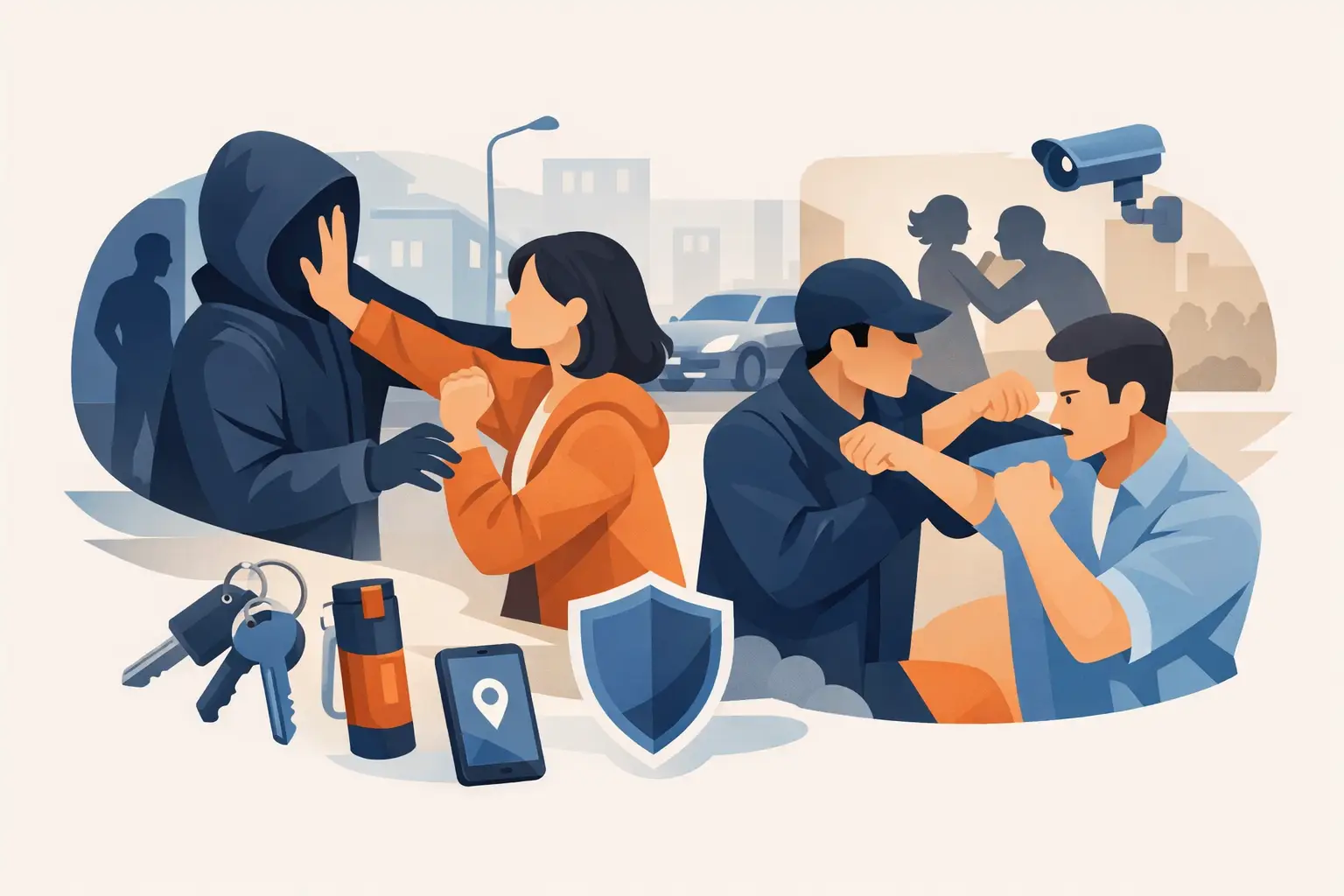
A lot of people picture self-defence as a dramatic fight. Real life is rarely like that. Most self defence in real life situations starts much earlier – with awareness, positioning, decision-making, and the ability to stay calm enough to act when pressure hits.
That matters whether you are a parent thinking about your teenager’s confidence, an adult looking for practical skills, or someone who simply wants to feel less vulnerable walking to the car at night. Good self-defence is not about looking tough. It is about recognising danger sooner, reducing risk, and responding in a way that gives you the best chance of getting home safely.
What self-defence really looks like in practice
In a real confrontation, there is usually confusion, noise, fear and very little time to think. You do not get a warm-up. You do not get a referee. The surface may be slippery, space may be tight, and the person causing the problem may be bigger, stronger or completely unpredictable.
That is why practical training matters. Fancy techniques can look impressive in a hall, but they often fall apart under stress. What works better is a small number of reliable actions that can be used at close range, under pressure, and without needing strength, flexibility or perfect timing.
The goal is also different from what many people assume. Self-defence is not about winning a fight for pride. It is about creating a chance to escape, protect yourself or someone with you, and bring the situation to an end as quickly as possible.
Self defence in real life situations starts before contact
One of the biggest myths in martial arts is that self-defence begins when somebody grabs you or throws a punch. In truth, your best decisions happen before that point.
Awareness sounds basic, but it changes everything. If you are distracted by your phone, wearing both earbuds, or not paying attention to the behaviour of people around you, you lose precious time. Spotting trouble early gives you options. You can change direction, cross the road, move closer to other people, step into a shop, or simply avoid being isolated.
Body language matters too. Predatory behaviour often targets people who seem unsure, distracted or easy to pressure. Standing upright, moving with purpose and noticing your surroundings can make you a less attractive target. It is not about blame. Anyone can be targeted. But confident presence does affect how others assess you.
For teenagers, this can be especially useful. Many difficult situations begin with intimidation, crowding, verbal pressure or bullying rather than a full assault. Being able to recognise that build-up and respond early is a real skill.
The role of verbal de-escalation
Sometimes the smartest response is not physical at all. Clear speech, calm tone and assertive boundaries can stop a situation from getting worse. A simple instruction such as “Back off” or “Stay away from me” can create space, draw attention from others and show that you are not freezing.
Of course, it depends on the situation. Some people can be talked down. Others are looking for an excuse to escalate. That is why verbal skills should sit alongside physical training, not replace it.
Why simple techniques matter most
Under stress, fine motor skills drop. Your breathing changes. Your vision narrows. Your thinking gets less tidy. This is exactly why self-defence training should be built around simple movements that can be repeated until they become natural.
Close-range striking, balance disruption, protecting the head, escaping grabs, controlling space and moving off line are all more useful than theatrical moves. The best systems do not rely on size or athleticism. They rely on structure, timing, pressure and efficient movement.
This is where practical Kung Fu training can be valuable when it is taught properly. A realistic system should prepare you for the kind of range where most real incidents happen – close, messy and sudden. It should also teach you to respond without overcommitting, because in reality there may be more than one person involved or hazards around you.
At Fusion Kung Fu, that practical focus is central. Training is designed around what can work in modern situations, not around performance or tradition for its own sake.
The truth about confidence
People often say they want self-defence because they want more confidence. That makes sense, but real confidence is not a mindset trick. It comes from experience.
When you train regularly, you get used to pressure in a controlled environment. You learn what it feels like to be rushed, crowded or put off balance. You learn that panic can be managed. You learn that you do not need to be the biggest person in the room to respond effectively.
That kind of confidence is quieter than bravado. It does not seek confrontation. It reduces it. You carry yourself differently, make better decisions and are less likely to freeze if something goes wrong.
For parents, this is often one of the biggest benefits for children and teens. Self-defence training is not just about physical protection. It can improve posture, focus, resilience and etc the ability to handle conflict without being overwhelmed by it.
Self defence in real life situations for different people
Not every student needs the same thing. A 14-year-old dealing with bullying at school has different concerns from an adult walking home after late shifts. A parent may be more focused on awareness, confidence and boundary-setting for their child, while an older beginner may want practical skills without high-impact training.
That is why good instruction matters so much. Self-defence should be taught in a way that fits the student in front of you. Some people need a gentler entry point. Some need fitness and coordination first. Others are ready for more pressure-based training. Practical does not mean reckless. It means appropriate, progressive and honest.
There is also a difference between training for general confidence and training for genuine self-protection. Both are useful, but they are not identical. If a class only focuses on forms, point-scoring or choreography, it may improve movement without preparing students for the unpredictability of a real encounter.
What to look for in self-defence training
If your aim is real-world usefulness, look closely at how a class trains. Do students practise awareness and avoidance, or only techniques? Are they learning at close range, where most incidents happen? Is the teaching clear enough for beginners? Is there controlled pressure, so people learn to function when things are not perfect?
You should also look for a club that builds people up rather than trying to intimidate them. Serious training does not need an ego problem. The right environment is disciplined, supportive and structured. Students should feel challenged, but also safe enough to learn.
This matters for adults starting later in life and for parents choosing classes for teenagers. A welcoming class is not a soft class. In many cases, it is the sign of an instructor who knows how to get lasting results.
Fitness helps, but judgement matters more
Being fitter is always an advantage. Better balance, stronger legs, improved reactions and good cardiovascular health all help when stress rises. But self-defence is not a fitness contest.
A very fit person with poor awareness can still walk into trouble. A smaller person with good judgement, strong boundaries and well-trained basics can often avoid or disrupt an attack more effectively than someone who only relies on strength.
That is one reason practical martial arts appeal to such a wide range of people. You do not need to be naturally sporty to begin. You need a willingness to learn, train consistently and improve step by step.
The legal and personal side of defending yourself
Real self-defence also comes with responsibility. The aim is reasonable action to protect yourself, not unnecessary retaliation. Once you can escape, that should be your priority.
There is also the emotional side. Even a brief confrontation can leave people shaken. Good training helps by reducing panic and giving you a framework to follow, but it should never pretend violence is tidy or glamorous. Honest instruction respects that reality.
For many people, that honesty is reassuring. It means training is grounded in real outcomes: staying safer, thinking more clearly and building skills that support everyday life.
If you are considering martial arts for yourself or your child 13 years & over, remember this: the best self-defence training does not promise invincibility. It gives you practical habits, dependable skills and the confidence that comes from doing the work. And that can make a very real difference when life does not go to plan.
About the Author: Keith Ratcliffe
