Here’s What We Cover
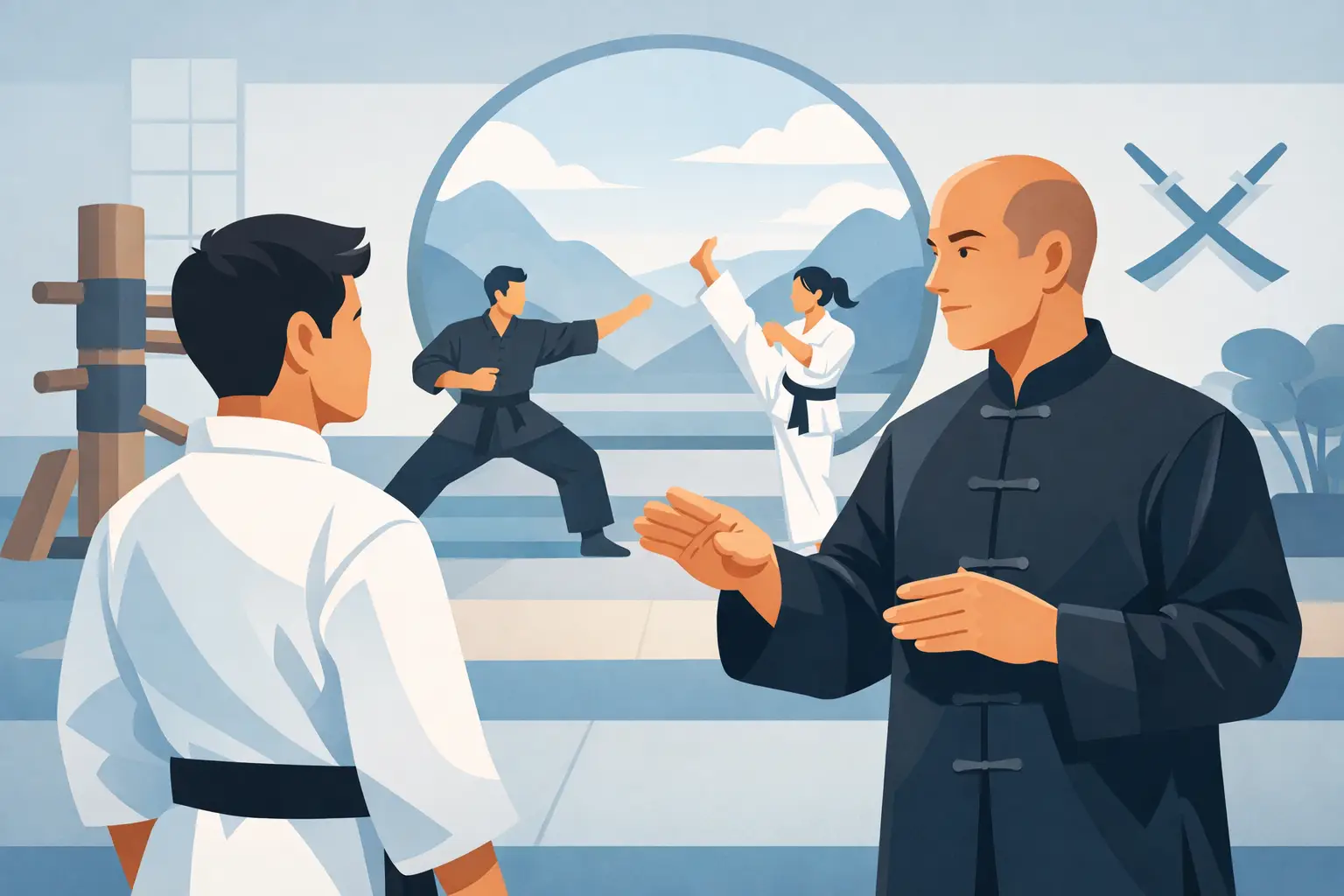
Most people asking what should I expect at kung fu class are not worried about the name of a stance or the history of a style. They want to know whether they will feel out of place, whether they need to be fit already, and whether they are about to walk into a room full of experts. Those are fair concerns. A good class should put them to rest quickly.
If you are starting for the first time, expect structure, guidance and a steady pace. You should not expect to be thrown in at the deep end, shouted at, or judged because you are new. A well-run kung fu class is there to build you up, not catch you out.
What should I expect at kung fu class as a beginner?
Your first session will usually begin simply. You arrive, meet the instructor, and get shown where to stand and what the class will cover. If you are nervous, that is normal. Most beginners are. The difference is that once training starts, nerves tend to settle because you are focused on doing one thing at a time.
In a practical class, the goal is not to impress anyone. The goal is to help you learn useful movement, better awareness and solid fundamentals. That means you can expect clear instruction, repetition and correction. You will probably make mistakes. Everyone does. That is part of training, not a sign that you are behind.
If you are a parent bringing a teenager, or an adult returning to exercise after years away, this matters. A good beginner session should feel challenging without being chaotic. You should leave knowing more than when you arrived, even if you only learned a few basic positions, strikes or defensive movements.
How a typical class usually runs
Most kung fu classes follow a clear structure. That structure is one of the reasons people stay with training. It creates routine, and routine builds progress.
Warm-up and movement preparation
Classes often start with a warm-up designed to prepare the body for training. This is not there to exhaust you before the real work starts. It is there to raise your heart rate, loosen the joints and get you moving properly. You may do light cardio, mobility work, footwork drills and simple conditioning exercises.
If you have not trained in a while, this part may feel harder than expected. That is normal. Fitness improves with consistency, and beginners are not expected to arrive in peak condition.
Technique practice
Once warmed up, you will usually move into technical training. This could include stance work, guard position, striking mechanics, short-range defence, movement drills and partner exercises. In a practical system, the focus is less on flashy movement and more on efficiency, balance, timing and control.
This is where beginners often relax. You realise very quickly that training is broken down into manageable pieces. You are not expected to perform a perfect sequence straight away. You are shown the movement, given time to practise it, and corrected so it becomes sharper over time.
Partner drills
Many people worry about this part before they start. They imagine hard sparring or getting hit on day one. In a responsible class, that is not how beginners are introduced.
Partner work is usually controlled and supervised. You may practise distance, reaction, simple attacks and responses, or close-range drills that help you understand timing and pressure. The point is to train realistically without losing safety. Good instruction matters here, because practical martial arts should be effective, but also measured.
Conditioning and cool down
Some classes finish with conditioning. That might include core work, bodyweight exercises, impact training on pads, or short rounds designed to build stamina. Then comes a cool down or final regroup before the class ends.
You may feel tired, but you should also feel that your effort had a purpose. That is very different from leaving a session that was all intensity and no direction.
Will I need to be fit, flexible or experienced?
No, but you do need to be willing to learn.
One of the biggest myths around martial arts is that beginners need to arrive already fit, flexible or naturally coordinated. They do not. Training is what develops those qualities. Some people start because they want self-defence skills. Others want confidence, discipline, stress relief or a better way to stay active. All of those are valid starting points.
It is true that your experience will vary depending on your current fitness. If you are active already, the warm-up may feel easier. If you are not, you may need a few weeks to adjust. That does not mean the class is not for you. It means you are at the start of the process.
The same goes for age and build. Effective kung fu training should not depend on being the biggest or strongest person in the room. Good coaching helps students use structure, positioning and timing properly rather than relying on brute force.
What should I wear and bring?
For your first class, plain training clothes are usually enough. A T-shirt, tracksuit bottoms or shorts, and clean trainers are often suitable unless the club tells you otherwise. Bring water and arrive a few minutes early so you are not rushed.
You do not need expensive kit to get started. That is one reason martial arts can be more accessible than people think. If you join a club such as Fusion Kung Fu, you may also receive a club T-shirt and uniform, which makes it even easier to get going without overthinking what you need.
The more useful thing to bring is the right attitude. Be ready to listen, ask questions and work steadily. That will take you further than trying to look experienced.
What the atmosphere should feel like
A serious class does not need to feel intimidating.
That balance matters, especially for beginners and parents choosing a class for a teenager. You want a club that takes standards seriously, keeps sessions safe and teaches with purpose. But you also want an environment where new students are welcomed, not made to feel like outsiders.
The best atmosphere is focused, respectful and encouraging. People train hard, but they also help each other improve. Instructors correct mistakes because standards matter, not because they are trying to embarrass anyone. You should come away feeling supported and challenged in equal measure.
If a class is all ceremony and no substance, that can be frustrating. If it is all aggression and no control, that is a problem. Good training sits in the middle. It respects martial arts discipline while staying grounded in what actually helps students improve.
What you will learn over time
In the early weeks, progress often shows up in small ways. You stand better. You move with more balance. You stop panicking when asked to react under pressure. You start understanding distance and timing rather than just copying shapes.
Later, the benefits become broader. You may notice improved fitness, sharper focus and better self-control. Teenagers often gain confidence without becoming reckless. Adults often find that training gives them a strong mental reset after work. Parents often look for anti-bullying benefits, and that usually starts with awareness, posture and assertiveness rather than aggression.
This is where realistic kung fu training stands apart from performance-based martial arts. The point is not to collect fancy movements for show. The point is to become calmer, more capable and more resilient in real life.
A few things that may surprise you
Beginners are often surprised by how technical kung fu can be. It is not just about hitting hard. It is about position, reaction, control and using the body efficiently at close range. That can be mentally engaging as well as physically demanding.
People are also surprised by how quickly confidence starts to grow. Not because they suddenly become experts, but because doing difficult things in a structured environment changes how they carry themselves. You begin to trust your body more. You become less hesitant. That carries over into school, work and everyday situations.
You may also be surprised by how much you enjoy the discipline of it. In a world full of distractions, there is something valuable about turning up, focusing properly and improving bit by bit.
Your first class is only the starting point
If you are wondering whether you will be good enough, you are asking the wrong question. The better question is whether the class will help you improve from where you are now. That is what matters.
A good kung fu class should give you realistic training, clear coaching and a sense that progress is earned step by step. You do not need to be fearless before you start. You just need to start. Often, confidence comes after the first session, not before it.
About the Author: Keith Ratcliffe
