Here’s What We Cover
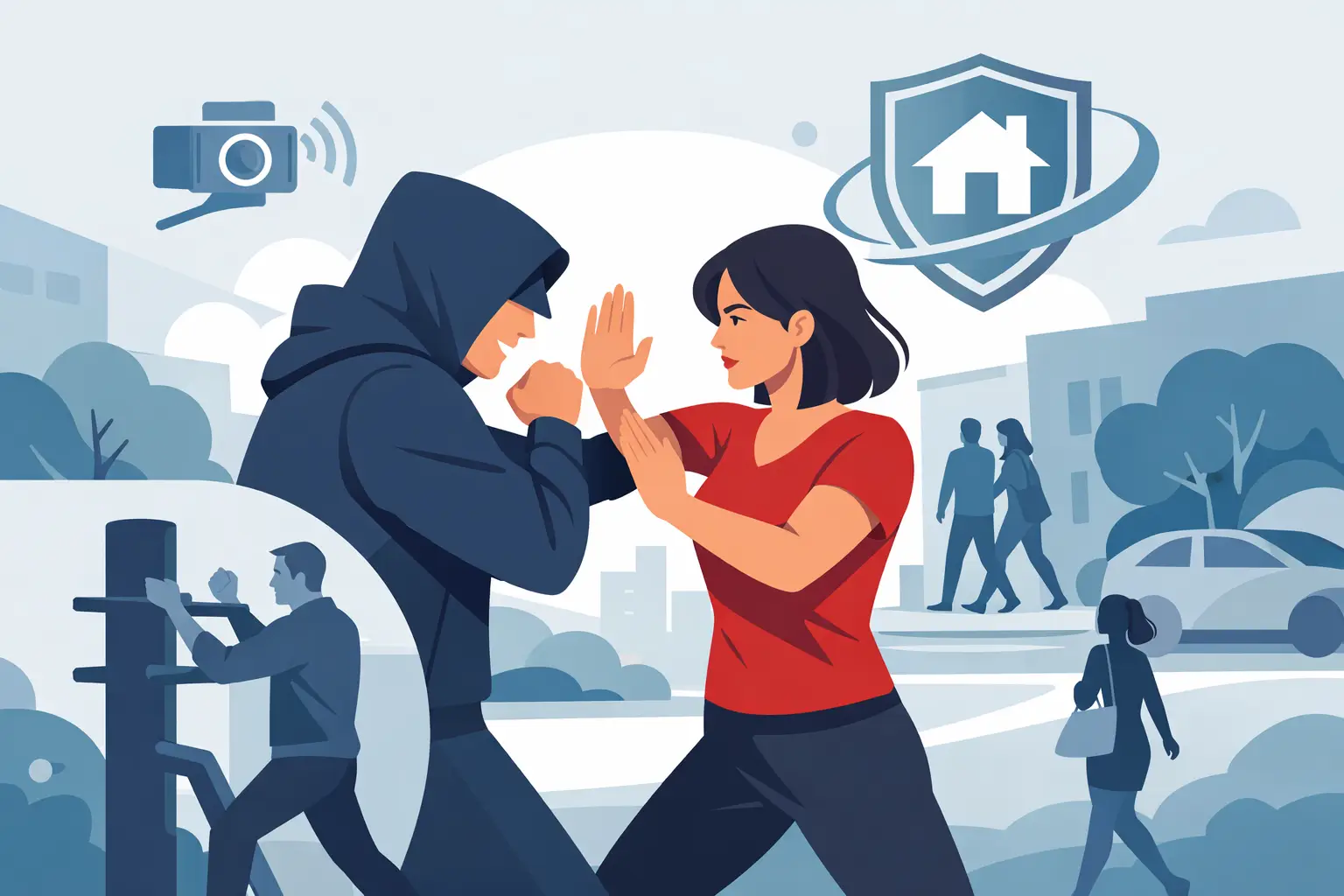
A confrontation rarely starts at a convenient distance, on clear ground, with time to prepare. It may begin with someone crowding your space, grabbing clothing, blocking your way or using aggressive language to make you freeze. That is why wing chun based self defence appeals to so many teenagers and adults: it focuses on staying balanced, protecting yourself at close range and responding with purpose rather than panic.
At Fusion Kung Fu, training is built around practical skills for real life. The aim is not to look impressive for an audience. It is to help students become calmer, fitter, more aware and better prepared to avoid trouble or get themselves to safety if a situation becomes physical.
What Wing Chun Based Self Defence Is Designed For
Wing Chun is well known for direct movement, close-range striking and the ability to control an opponent’s arms while maintaining your own structure. Rather than relying on big, wide movements or high kicks, it teaches students to keep their hands in a useful position, protect the centre of the body and use short, efficient actions.
That matters because close-range situations are often messy. There may be little room to move. You may be carrying a bag, wearing everyday clothing or dealing with someone larger and stronger. A practical approach needs to work without perfect timing, flexibility or athletic ability.
Wing Chun principles encourage students to use positioning, balance and body mechanics instead of trying to win through strength alone. This does not mean size never matters – it can. A heavier, stronger person presents a genuine challenge. But good training gives a smaller person more useful options than simply pushing harder or hoping an attack misses.
The most valuable principle is efficiency. If your movement is simple and direct, you are more likely to remember it when adrenaline is high. That is a far better foundation for self-defence than collecting complicated techniques that only work in a controlled demonstration.
Why Close-Range Training Makes Sense
Many people picture self-defence as a dramatic fight from several steps away. In reality, personal space is often lost before a person recognises the danger. An aggressor may stand too close, grab an arm, shove, pin someone against a wall or throw uncontrolled punches.
Close-range training helps students understand how to remain stable when space disappears. They learn to protect their head and body, manage contact with another person’s arms and create a route away from the threat. The goal is not to trade blows. The goal is to make a quick, sensible decision under pressure and leave safely when possible.
This is especially useful for young people. Teenagers can face difficult moments at school, on public transport or when out with friends. They need confidence, but they also need judgement. Effective self-defence includes knowing when to use a clear voice, move towards other people, contact a trusted adult or walk away before a confrontation develops.
Training should never encourage students to seek fights or prove themselves. Real confidence is quiet. It comes from knowing you can stay composed, set boundaries and avoid being pulled into someone else’s behaviour.
Practical Skills Need More Than Techniques
A useful self-defence class does not simply teach a sequence and move on. Students need repetition, feedback and progressive pressure so the movements become more natural over time. They also need to understand why a technique is being used, when it may be appropriate and when it is better to disengage.
At first, beginners work at a manageable pace. They build stance, posture, coordination and awareness of distance. As confidence grows, training can include controlled partner drills that make students react rather than simply copy a pattern. This is where a practical system begins to feel different from memorising a routine.
There is a balance to strike. Training should be challenging enough to develop realistic reactions, but safe enough for people to learn without unnecessary injury or intimidation. Good coaching creates that balance. Students can make mistakes, ask questions and improve, while still understanding that self-defence is a serious subject.
Fitness plays a part too. You do not need to arrive in peak condition, but better stamina, stronger legs, improved coordination and quicker reactions all support your ability to move under stress. Regular martial arts training can also offer a welcome break from desk work, screens and the pressure of everyday routines.
Wing Chun Foundations With a Modern Approach
Traditional Wing Chun offers valuable foundations, particularly its emphasis on centreline control, simultaneous defence and attack, and working effectively at close quarters. However, self-defence should not be treated as a museum piece. A method must be tested against the situations people may actually face now.
That is why Shiyong Kung Fu blends Wing Chun foundations with useful elements from other martial arts. The focus is on adaptable, practical movement rather than rigidly following tradition for its own sake. Students learn principles they can apply when a situation does not look exactly like a class drill.
There are trade-offs in every approach. A sport-focused martial art can build excellent timing, fitness and resilience, but competition rules may not reflect a self-protection situation. Highly traditional training can build discipline and technical depth, but some schools spend more time on formality than practical application. The best fit depends on your goals.
For someone who wants confidence, fitness and sensible self-defence skills, a modern close-range system offers a strong starting point. It gives you clear physical training while keeping the wider aim in sight: staying safe, making good decisions and returning home.
What Self-Defence Training Cannot Promise
No martial art can guarantee safety. An attacker may have friends nearby, a weapon, be intoxicated or behave unpredictably. Uneven ground, confined spaces and surprise all change the situation. Anyone who promises that a handful of moves will make you unbeatable is not being honest.
The safest outcome is always to avoid violence. Awareness, distance, de-escalation and leaving early are self-defence skills, not signs of weakness. If physical action becomes unavoidable, it should be about creating enough opportunity to escape, not standing your ground to win an argument.
This honest approach is particularly important for parents. Training can help a teenager develop confidence and body awareness, but it should sit alongside sensible conversations about bullying, peer pressure, online behaviour and who to contact when something feels wrong. Martial arts can support a young person’s development, but it is not a substitute for support at home, school or in the community.
Who Can Benefit From This Training?
Wing Chun based self defence is accessible to complete beginners, including people who have never considered themselves sporty. You do not need to be naturally strong, flexible or outgoing. You need a willingness to practise, listen and improve step by step.
For teenagers aged 13 and above, structured training can provide a positive outlet for energy and stress. It rewards focus, respect and consistency, while helping students become more comfortable in their own body. For adults, it can be a practical way to improve fitness after work, meet like-minded people and build confidence without the pressure of a competitive gym environment.
Progress is personal. One student may value greater fitness, another may want to feel less anxious walking home, and another may enjoy the discipline of developing a skill over years. A good class makes room for each of those goals while still holding everyone to high standards.
Start With the Right Environment
The right martial arts club should feel welcoming, but never careless. Look for clear coaching, a structured path for beginners and an atmosphere where students train with control and respect. You should be able to ask questions, work at an appropriate level and feel challenged without being thrown in at the deep end.
A free taster session is a useful way to see whether the training suits you. Pay attention to how instructors speak to beginners, how students work with each other and whether the class has a clear practical purpose. The best first step is not finding the flashiest technique. It is finding a place where you can train consistently, learn safely and grow in confidence week by week.
The confidence that matters most is built long before a difficult moment arrives – one focused class, one better decision and one steady improvement at a time.
About the Author: Keith Ratcliffe
