Here’s What We Cover
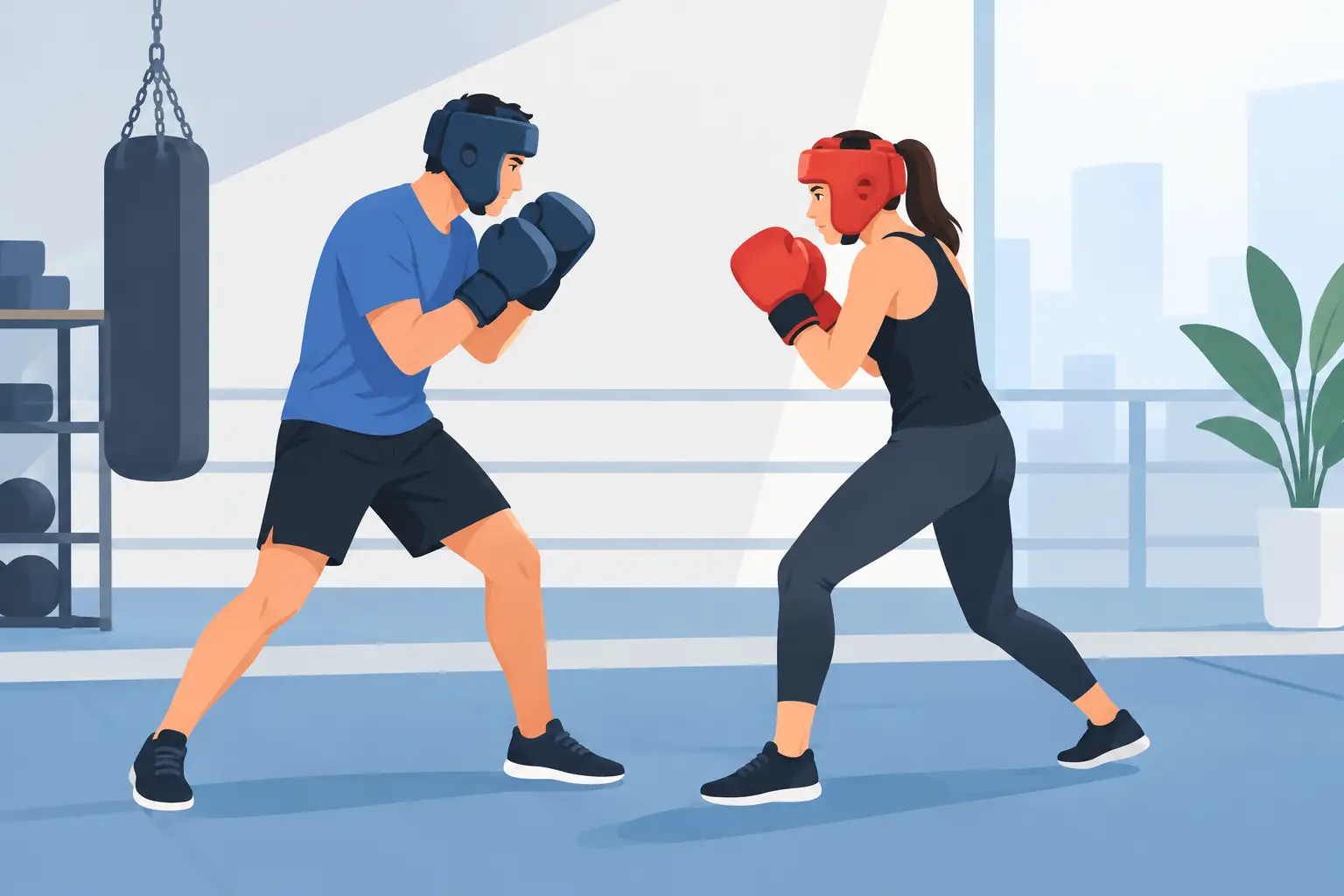
A controlled sparring round should not look like a fight outside a pub. It should look like learning: partners listening, techniques held back, pauses when needed and an instructor watching closely. So, is sparring safe? It can be – when it is taught progressively, supervised properly and treated as a training tool rather than a contest to win.
For teenagers and adults learning practical martial arts, sparring has real value. It tests timing, distance, composure and decision-making in a way that solo drills cannot. But it also carries risk if people rush into it, train with the wrong attitude or work without clear rules. The aim is not to pretend there is no risk. The aim is to manage it intelligently.
Is Sparring Safe for Beginners?
Beginners do not need to be thrown into hard, free sparring on their first lesson. In fact, that is one of the quickest ways to make someone anxious, injured or convinced martial arts are not for them.
Good training starts with foundations. Students learn how to stand, move, guard themselves, control their strikes and react calmly under pressure. They practise set drills with a cooperative partner before the level of resistance increases. This lets them build skill without being overwhelmed.
Safe sparring is a progression, not a single activity. One session may involve practising a simple entry and response at low speed. Another may involve light, limited sparring where only certain targets or techniques are allowed. As confidence and control improve, the exercise can become more open. Students earn more intensity through good habits, not bravado.
For a complete beginner, this approach matters more than fitness, size or previous experience. A smaller person can train safely with a larger partner when both understand the rules and the larger partner has the discipline to adjust their power. That is a sign of good martial arts, not weakness.
What Makes Sparring Safer?
No physical activity is completely risk-free. Football, rugby, running and even everyday exercise can cause knocks and strains. Sparring adds contact and pressure, so it requires sensible standards. The safest clubs make those standards part of every class, not an afterthought.
Control comes before power
The most useful sparring skill is control. Students need to be able to stop, redirect or soften a technique as soon as they see their partner is off-balance, uncomfortable or unable to defend themselves.
Harder contact has a place for experienced students in the right setting, but it is not the default measure of ability. Repeated heavy shots to the head do not prove toughness or create better judgement. They increase the chance of injury and encourage people to panic, flinch or hit back recklessly.
At Fusion Kung Fu, practical training is built around what works in real situations, but realism does not mean turning every lesson into a brawl. It means developing awareness, timing, positioning and the ability to make sensible decisions when pressure rises.
The right equipment helps
Protective equipment reduces the impact of accidental contact. Depending on the exercise, this may include gloves, a gum shield, shin guards, groin protection and head protection. Equipment is useful, but it is not permission to hit harder or ignore technique.
A gum shield should fit properly, and gloves should be appropriate for the type of sparring being done. Students should also remove jewellery, keep nails short and tell the instructor about injuries before training. Small details prevent avoidable problems.
Clear rules protect everyone
Rules should match the purpose of the session. If students are working on close-range reactions, there is no reason for wild swinging or trying to score points at any cost. If contact to a particular area is not allowed, it is not allowed – even accidentally repeated mistakes need addressing.
A good instructor sets the pace, pairs people sensibly and steps in early when control slips. They should also make it easy for a student to say, “Can we slow this down?” There is no benefit in feeling pressured to continue at an intensity that is beyond your current level.
Respect is not optional
The safest training partners are not necessarily the most experienced. They are the people who listen, stay calm and care about their partner’s progress. A student who constantly tries to dominate the round, ignores agreed limits or reacts badly to feedback creates an unsafe environment for everyone.
Sparring works when both people understand the shared goal: helping each other improve. You may challenge your partner, but you do not try to punish them.
The Difference Between Useful Pressure and Unnecessary Risk
Some discomfort is part of learning. A beginner may feel nervous the first time someone moves towards them quickly. They may find it difficult to breathe steadily, keep their hands up and think clearly at the same time. Controlled sparring lets students meet that pressure gradually and learn not to freeze.
That is very different from being scared, battered or embarrassed. Training should stretch a student without breaking their confidence. If a teenager comes away dreading the next class, regularly nursing heavy bruises or feeling unable to speak up, the intensity is wrong.
Parents often ask whether sparring makes young people aggressive. Properly coached sparring should do the opposite. It gives teenagers a structured place to manage adrenaline, practise restraint and understand the consequences of poor decisions. They learn that confidence is not loudness, and strength includes knowing when to disengage.
For adults, sparring can be an effective antidote to the stress of daily life. It demands focus. You cannot worry about emails or household jobs while you are concentrating on your footwork and your partner’s movement. Yet it should leave you feeling sharper and more capable, not physically wrecked after every class.
When Should You Not Spar?
There are times when sitting out is the sensible choice. If you have a suspected concussion, dizziness, headache after a head knock, blurred vision, nausea or unusual confusion, stop training and seek medical advice. Do not return to contact training because you feel embarrassed or do not want to miss out.
The same applies to significant joint pain, illness, fever or an injury that changes how you move. Tell your instructor early. Most training can be adapted, whether that means working on footwork, practising non-contact drills or observing a round and learning from it.
It is also reasonable to decline a particular partner or exercise if you do not feel safe. A well-run class will take that concern seriously. Being responsible for your own wellbeing is part of being a mature martial artist.
A Simple Safety Check Before a Round
Before sparring, take a moment to check that both people are ready. This is especially useful for new students who may not yet know what questions to ask.
- Agree the level of contact and the techniques being used.
- Check that gloves, gum shields and any required protection are in place.
- Mention any injury, fatigue or area that needs protecting.
- Choose a partner whose size and experience are suitable for the drill.
- Know the signal for stopping, and stop immediately when it is called.
These checks take less than a minute. They set the standard for the whole round.
Sparring Should Build Confidence, Not Ego
The best sparring sessions teach honest lessons. You will occasionally get caught with a clean technique. You will discover that a move works easily on pads but needs better timing against a moving person. You may need to slow down, simplify and try again. That is progress.
Nobody needs to “win” in class. The student who learns to stay composed after making a mistake often gains more than the person who lands the most shots. Over time, this develops practical self-defence skills: awareness of distance, the ability to create space, calm communication and the confidence to leave trouble where possible.
Sparring is safest when it is earned through sound basics, guided by experienced coaching and approached with respect for the person in front of you. Start at the level you can control, ask questions when you are unsure and let steady progress – not pressure to prove yourself – set the pace.
About the Author: Keith Ratcliffe
