Here’s What We Cover
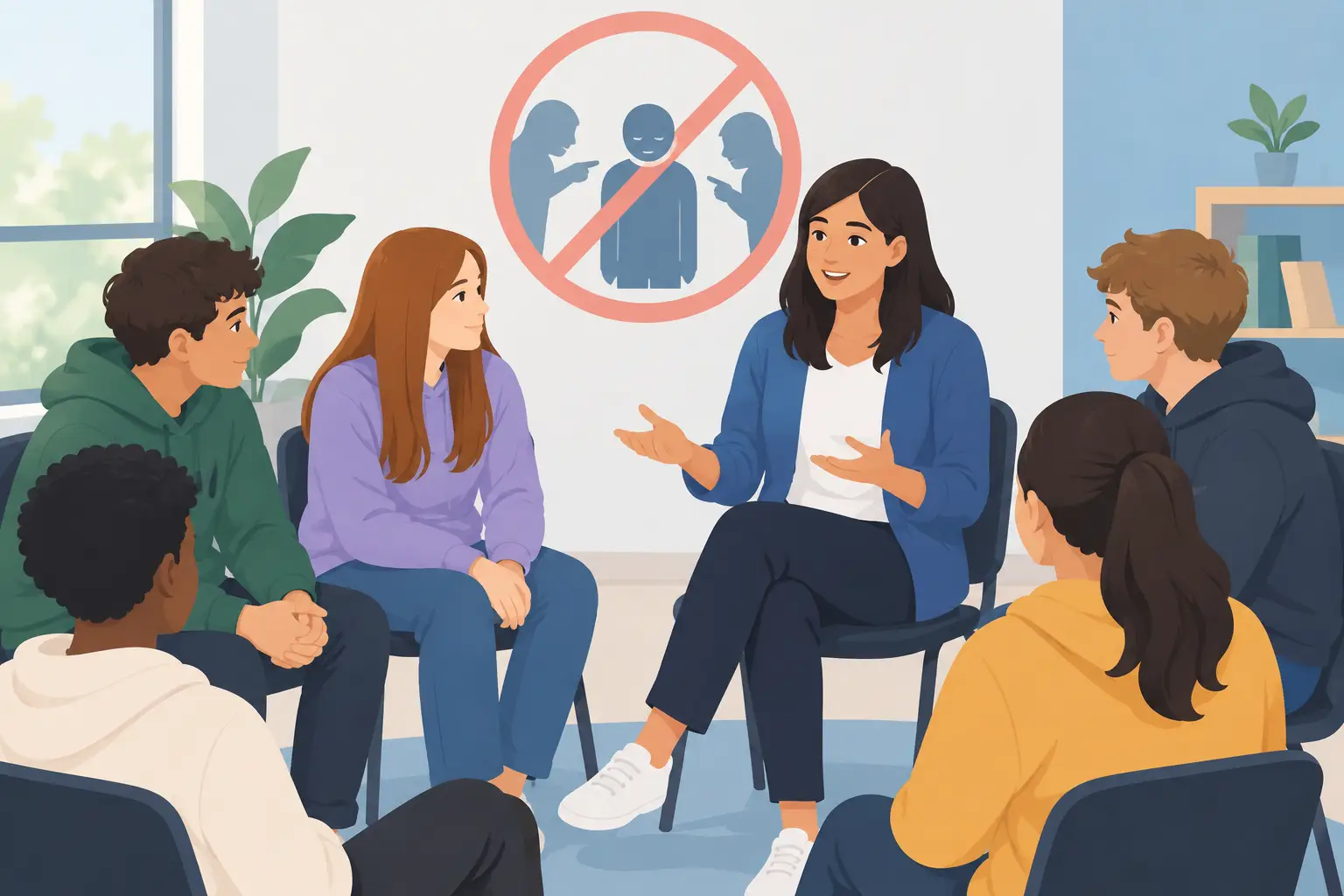
A good anti bullying workshop example does not tell young people to simply “ignore it” or “stand up for yourself” and leave them to work out what that means. It gives them practical words, safer choices and the confidence to use them under pressure. For teenagers, that matters. Bullying can happen in a corridor, on the bus, in a group chat or outside school – and each situation needs a calm, realistic response.
This 90-minute workshop is designed for young people aged 13 and above. It can work in a school, youth club or martial arts setting, with enough flexibility to suit the group. The aim is not to turn pupils into fighters. The aim is to help them recognise bullying early, set boundaries, get away safely and seek the right support.
What a worthwhile workshop should achieve
Young people often know that bullying is wrong. What they may not know is how to respond when they are worried about looking weak, being laughed at, losing friends or making things worse. A useful workshop gives them options rather than a single scripted answer.
By the end, participants should be able to identify the difference between conflict, banter and bullying; recognise when online behaviour crosses a line; use clear verbal boundaries; make safer decisions around personal space; and understand when and how to report concerns. Confidence is part of the outcome, but confidence without judgement can create problems. The best training builds both.
At Fusion Kung Fu, we believe confidence should be calm and controlled. Real self-defence is not about proving yourself. It is about recognising risk, protecting yourself and others, and avoiding unnecessary harm.
Anti bullying workshop example: a 90-minute plan
Start with the reality, not a lecture
Begin by setting a clear standard for the room: no one has to share a personal experience, nobody is put on the spot, and respect applies throughout. Ask the group to consider a few short scenarios, such as a student repeatedly being mocked about their appearance, a friend being excluded from a group chat, or someone being shoved every day in the same corridor.
Then ask: what makes this different from a one-off disagreement? A conflict is usually a disagreement where both people have some ability to respond. Bullying is repeated or targeted behaviour that causes distress, often with a power imbalance. It may be physical, verbal, social or online. The label matters less than taking harmful behaviour seriously, but recognising patterns helps young people explain what is happening when they ask for help.
Avoid asking pupils to name individuals or replay incidents in detail in front of others. The workshop should feel safe, not like a public investigation.
Practise a boundary that sounds natural
For the next activity, put students into pairs or small groups and practise short, firm responses. The language must be believable. A teenager is unlikely to use a speech they would never say in real life.
Useful examples include: “Stop. Don’t speak to me like that.” “Give me some space.” “I’m not doing this.” “That message is not alright. I’m saving it and reporting it.” The focus is on a steady voice, clear words and leaving room to move away. Shouting, insults and threats can raise the temperature quickly, especially when there is an audience.
Let participants try the same phrase in a quiet, confident voice and then discuss which felt strongest. The answer is often not the loudest version. A direct statement, eye contact where safe, and a decision to leave can communicate far more than an argument.
It is worth making the trade-off clear. Speaking up may stop low-level behaviour early, but it is not always the safest option. If someone is aggressive, intoxicated, part of a larger group or blocking an exit, the priority is to create distance and get help rather than win an exchange of words.
Teach safe positioning and exit choices
This section should be practical but responsible. Ask students to notice their surroundings: where are the exits, who is nearby, and where could they move to find staff, friends or other adults? Explain that standing squarely in front of someone at close range can feel confrontational. A more balanced stance, hands held naturally in front of the body, and a little space can help a person stay aware and move away if needed.
This is not a lesson in fighting. There should be no encouragement to trade blows, restrain another person or use techniques as punishment. Physical self-protection is a last resort when a person cannot safely leave and faces immediate harm. In that situation, the objective is simple: protect yourself, break free if possible, get to safety and tell an adult or the police where appropriate.
A simple movement exercise can bring this to life. Mark a safe exit point in the room. One student plays the role of someone making an uncomfortable comment from a sensible distance, while the other practises saying a boundary, stepping away and moving towards the exit or a designated adult. Keep it controlled, light and voluntary. The lesson is that movement and awareness can prevent a situation becoming physical.
Deal with online bullying properly
Online bullying follows young people home. A comment can be shared, screenshotted and repeated long after the original post. Telling someone to “just come off social media” may be well meant, but it can feel like asking them to leave their friends behind.
Instead, teach a practical sequence: do not retaliate in anger, save evidence, block or restrict where appropriate, report the account or content, and tell a trusted adult. If there are threats, sexual images, stalking, blackmail or immediate concerns for safety, it needs urgent adult and professional support.
Discuss the role of bystanders too. Young people do not have to challenge a bully publicly if that puts them at risk. They can avoid sharing harmful content, check in privately with the person affected, save evidence and report it. Quiet support is still support.
Make reporting feel achievable
Many teenagers stay silent because they believe reporting will make things worse. Others have reported once and felt nothing changed. A good workshop acknowledges that frustration rather than pretending every adult response is perfect.
Give participants a simple way to report clearly. They should say what happened, when and where it happened, who was involved, whether it has happened before, and whether there is evidence or a witness. Writing down dates, times and screenshots can make repeated behaviour easier to address.
Also talk through who they can approach. This might be a parent or carer, form tutor, safeguarding lead, youth worker, coach or another adult they trust. If the first person does not respond properly, they should tell another. Asking for help is not weakness or grassing. It is a sensible step when someone’s safety or wellbeing is being affected.
How to make the workshop land
A workshop can be well planned and still miss the mark if it becomes a long talk from the front of the room. Teenagers need space to rehearse decisions, ask anonymous questions and challenge unhelpful myths. Keep explanations short, then use realistic scenarios and guided discussion.
The facilitator should never promise confidentiality they cannot keep. If a participant discloses that they are at risk or that someone else is being harmed, safeguarding procedures must be followed. Make this clear at the start in straightforward language: private concerns will be treated respectfully, but adults may need to share information to keep someone safe.
It also helps to avoid presenting one response as right for everyone. A confident student may be able to use a verbal boundary and walk away. Someone facing a group, a threat, repeated harassment or an unsafe journey home may need adult support straight away. The message is not “be brave on your own”. It is “make the safest choice and get backup”.
A stronger message to take away
Finish by asking each participant to write down one person they could speak to, one phrase they could use to set a boundary, and one action they could take if bullying happens online. This turns a general discussion into a personal plan without forcing anyone to reveal their experiences.
The most effective anti-bullying work gives young people more than a warning about bad behaviour. It gives them composure, practical choices and permission to ask for help. Being strong does not mean handling everything alone. It means knowing when to speak, when to move away and when to bring the right people in.
About the Author: Keith Ratcliffe
