Here’s What We Cover
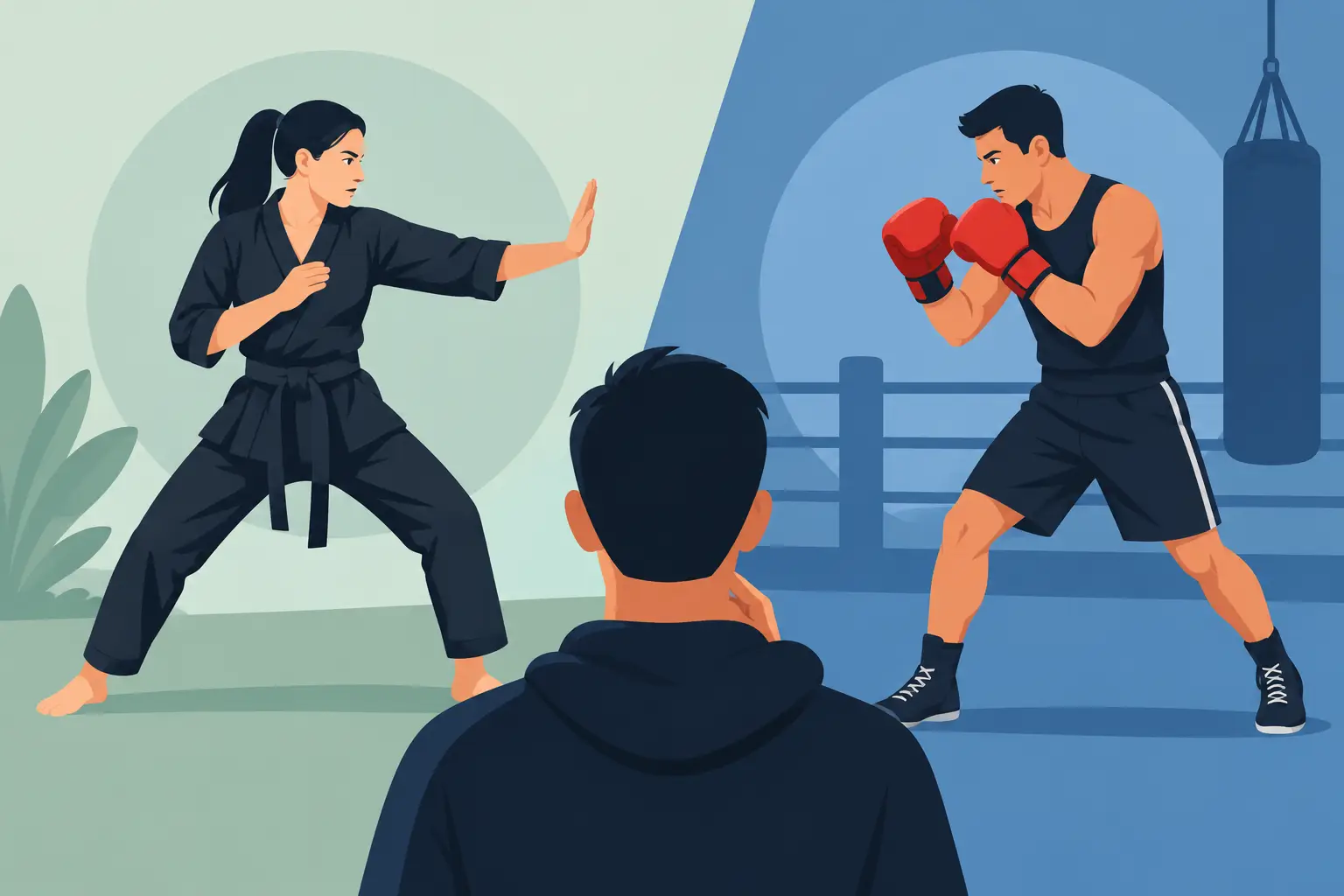
A heavy bag does not argue back, grab your clothing or close the space when you are surprised. That is the key question behind choosing self defence classes or boxing: are you training mainly to compete and get fit, or to handle pressure safely in real-life situations? Both can build confidence and fitness. The better choice depends on what you want your training to prepare you for.
For teenagers and adults in Norwich, the answer is rarely as simple as one style being ‘better’ than another. Boxing is an excellent combat sport with clear strengths. Practical self-defence training has a different job. Understanding that difference helps you choose a class you will stick with and benefit from.
Self Defence Classes or Boxing: Start With Your Goal
Boxing is built around striking. You learn footwork, timing, distance, defensive movement and how to throw punches with accuracy and power. Training can be demanding, focused and hugely rewarding. If you want a sporting challenge, enjoy pad work and want to test yourself through controlled sparring, boxing may be a strong fit.
Self-defence classes should begin from a different starting point: avoiding trouble where possible, recognising danger early and creating a safe chance to get away if avoidance fails. The aim is not to win a round, impress a crowd or trade blows. It is to protect yourself, break contact and leave the situation.
That matters because real confrontations are untidy. They may happen at close range, in poor light, with little warning and no room to adopt a textbook stance. There may be pushing, grabbing, shouting or more than one person involved. A useful self-defence system trains awareness, positioning and simple responses that can work while your adrenaline is high.
What Boxing Does Extremely Well
Boxing deserves its reputation. Regular training improves cardio, coordination, balance and toughness. It also teaches a valuable lesson: being hit, missing a shot or facing someone who is moving towards you can feel uncomfortable. Learning to stay composed under controlled pressure is a real benefit.
Good boxing coaching develops discipline too. Students turn up, work on the basics repeatedly and learn that progress comes from consistent effort. For a teenager with excess energy or an adult looking for a serious fitness routine, that structure can be transformative.
Boxing also gives you strong striking skills. A well-trained boxer understands range better than most untrained people and can generate effective punches without relying on size alone. That is not something to dismiss.
However, boxing has rules for good reasons. You normally face one opponent, wear gloves, work within a defined space and use an agreed range of techniques. Clinching is managed by a referee. Biting, grabbing, low attacks and weapons are outside the sport. Those rules make boxing safer and fairer, but they are not the conditions of an unexpected confrontation.
What Practical Self-Defence Adds
A practical martial arts class can include striking, but it should not stop there. It should teach students how to manage the moments that often happen before a punch is thrown: someone invading personal space, holding an arm, grabbing clothing, blocking a path or trying to intimidate them.
At Fusion Kung Fu, Shiyong Kung Fu is taught as a close-range, modern system. It takes foundations from Wing Chun and combines them with techniques selected for practical use. The focus is not on elaborate forms or looking impressive. It is on developing direct, functional movement that can be learnt by ordinary people and used under pressure.
This approach is particularly relevant for people who do not see themselves as natural fighters. You do not need exceptional speed, great strength or an athletic background to begin. Good self-defence training uses posture, positioning, timing and simple body mechanics to help make up for differences in size and power.
It should also make clear that physical techniques are the last resort. The best outcome is always to spot a problem early, use calm communication where appropriate and get away. Training gives you options. It should never encourage students to seek confrontation.
Close range changes the problem
Many people imagine self-defence as standing several steps away and throwing a clean punch. In reality, an aggressor may already be close enough to push, grab or strike before you have time to think. That is why close-range awareness is so useful.
Training at this distance teaches you not to freeze when space disappears. You learn to protect your balance, cover vulnerable areas, create room and move towards an exit. It is less glamorous than a high kick, but far more relevant to the situations most people worry about.
Confidence without false confidence
The right class builds quiet confidence, not bravado. Students become more aware of their surroundings, more comfortable setting boundaries and less likely to panic when someone behaves aggressively. Parents often notice this change in teenagers: better posture, greater self-control and a calmer response to everyday pressure.
That confidence is earned through regular practice. No responsible instructor can promise that a few lessons make someone invincible. Real progress comes from learning sound basics, training consistently and accepting that avoidance remains the safest choice.
Which Is Better for Fitness?
If your main goal is fitness, either route can work. Boxing sessions are often intense, with skipping, bag work, pads, conditioning and sparring drills. They can be an excellent way to improve stamina and burn off stress.
Practical martial arts training can be just as demanding, although the fitness benefit is built through varied drills rather than only rounds of striking. You may work on footwork, partner reactions, controlled close-range techniques, mobility and conditioning. Because the training has a wider technical focus, many students enjoy it even if they are not drawn to sport competition.
The best fitness class is the one you attend week after week. If you dislike being hit or have no interest in sparring as a sport, forcing yourself into a boxing environment may not be sustainable. If you love the pace and pure striking focus of boxing, a broader martial arts syllabus may feel less direct. Be honest about what motivates you.
Safety, Sparring and Pressure Testing
Some people assume self-defence training is automatically safer than boxing. That depends entirely on the club and how it is taught. Quality coaching means clear boundaries, progressive drills, respect between training partners and techniques matched to a student’s experience.
Boxing commonly includes sparring, from light technical work to harder rounds depending on the gym and level. Sparring teaches timing and composure, but it carries a risk of knocks and injury. Ask how beginners are introduced, whether contact is controlled and what protective equipment is expected.
A well-run self-defence class should pressure-test skills without turning every session into a fight. Students need to practise against realistic movement and resistance, but they also need to learn safely. Drills can gradually increase speed, uncertainty and pressure while keeping training constructive. The aim is to develop reliable reactions, not to prove who is toughest in the room.
For younger students and nervous beginners, this balance matters. A supportive class should challenge people while still giving them time to learn. Nobody needs to arrive fit, fearless or experienced.
Questions to Ask Before You Join
Before choosing a club, watch a class or take a taster session. Look beyond the name above the door. Are instructors paying attention to beginners? Do students train with control? Is the atmosphere focused and welcoming rather than intimidating?
Ask what the class is designed to achieve. If self-defence is the claim, ask whether training covers awareness, verbal boundaries, escapes and close-range situations as well as striking. If you are considering boxing, ask how sparring works and whether there is a route for people who want fitness and skill without competing.
It is also worth considering the people around you. A teenager may benefit from the confidence, anti-bullying awareness and discipline of a structured martial arts class. An adult who works long hours may need a session that relieves stress while building useful skills. Someone hoping to compete may be better served by dedicated boxing coaching. There is no wrong answer when the class matches the purpose.
Choose Training You Can Use and Enjoy
Boxing can make you fitter, sharper and more resilient. Practical self-defence training can teach you how to avoid danger, manage close-range pressure and create an opportunity to get home safely. For many people, especially those seeking confidence alongside real-world skills, a modern self-defence-focused martial art offers the broader foundation.
The most useful next step is simple: try a class, ask sensible questions and judge the coaching for yourself. Find a place where you are challenged, treated with respect and given skills that make you feel more capable each time you train.
About the Author: Keith Ratcliffe
