Here’s What We Cover
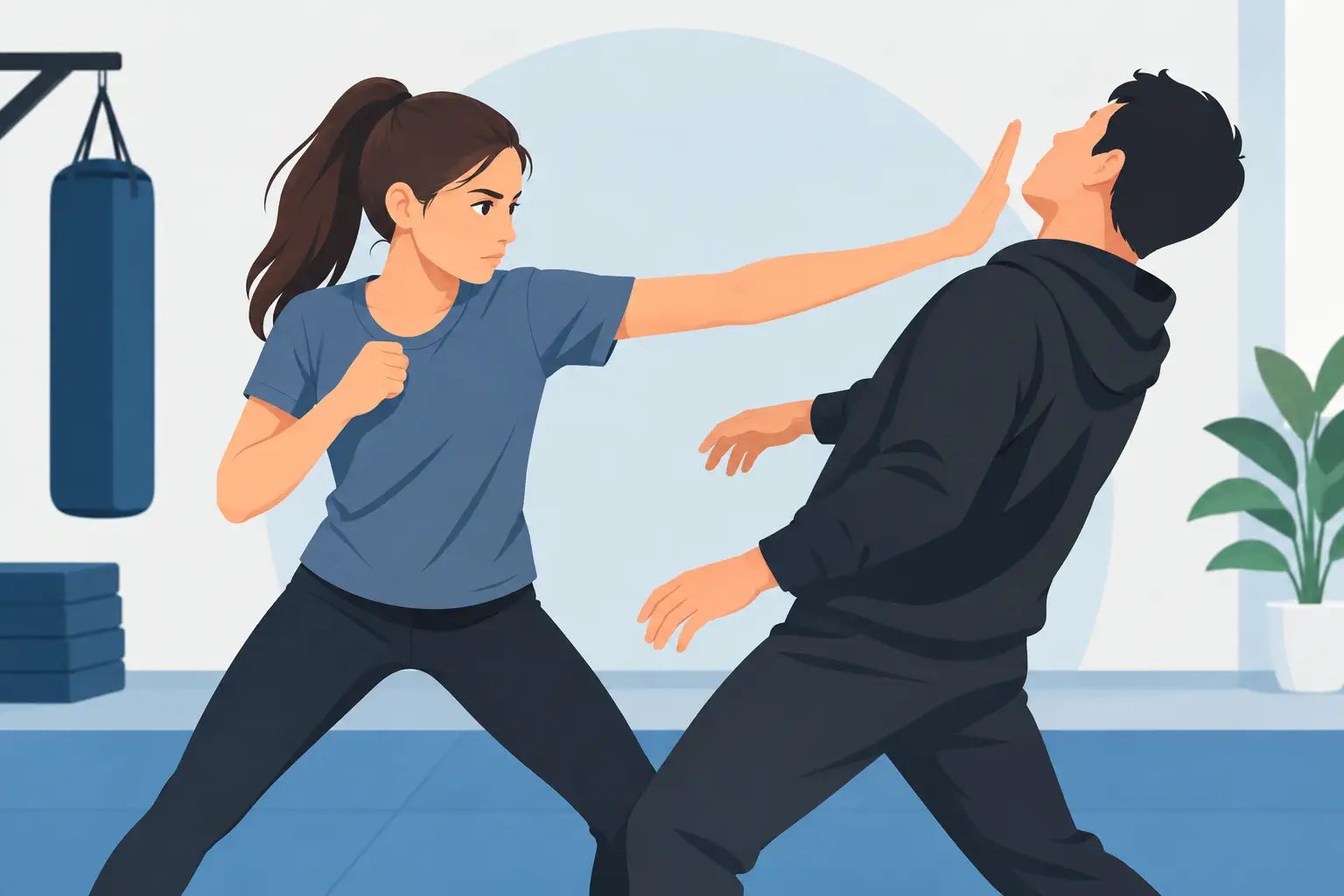
A crowded school corridor, an argument outside the gates, pressure to join in when something feels wrong – these are the moments parents often have in mind when they ask, can teens learn self-defence? The answer is yes, but good training is about far more than teaching a young person how to throw a strike. It teaches them how to spot trouble early, stay composed under pressure and make sensible choices when emotions are high.
For teenagers, self-defence should never mean looking for confrontation or trying to prove something. It should build the confidence to avoid conflict where possible and the practical ability to protect themselves if walking away is no longer an option.
Can Teens Learn Self Defence Safely?
Teenagers can learn self-defence safely when the training is structured, supervised and matched to their stage of development. They do not need to be naturally athletic, big, strong or experienced. In fact, the right class is designed to help students understand that relying on strength alone is not a reliable plan.
A good instructor starts with posture, balance, awareness and control. Teens learn how to move with purpose, create space, use their voice and keep their hands in a protective position without escalating a situation. Physical techniques are introduced progressively, with clear safety rules and realistic practice rather than uncontrolled sparring.
This matters because self-defence is not a collection of flashy moves. A complicated technique may look impressive, but it is unlikely to be remembered in a stressful moment. Practical training focuses on simple actions that can be repeated, understood and adapted by different body types.
It also gives teenagers a healthy place to test themselves. They learn that being calm is not the same as being passive, and that confidence does not need to be loud. That lesson can carry into school, friendships, work and family life.
What Real Self-Defence Training Gives Teenagers
The most useful benefit is often not physical. A teen who trains regularly tends to become more aware of their surroundings and more assured in the way they carry themselves. They may be less likely to freeze when someone behaves aggressively, but also less likely to react impulsively and make a difficult situation worse.
Training develops judgement. Students practise recognising the difference between a disagreement, bullying, intimidation and an immediate threat. They learn that the best outcome is usually to leave early, seek help and avoid becoming trapped in someone else’s bad decision.
There is a strong fitness benefit too. Regular Kung Fu training improves coordination, mobility, stamina and general body awareness. For teenagers who spend long periods at a desk, on a phone or gaming, a disciplined class provides a positive physical outlet without the pressure of needing to be the best at a team sport.
Just as importantly, progress is earned. Learning a stance, improving a drill or staying focused through a challenging class gives young people proof that steady effort works. That is valuable for teenagers navigating exams, changing friendships and the daily pressures of growing up.
Why Practical Training Matters More Than Performance
Not all martial arts classes have the same purpose. Some focus mainly on competition, forms, displays or tradition. Those can be rewarding in their own way, but parents looking for self-defence should ask whether the class also prepares students for close-range pressure, awkward positions and the uncertainty of real life.
Practical self-defence training should account for the fact that confrontations are rarely neat or predictable. There may be limited space, poor footing, a school bag, a wall nearby or more than one person involved. The aim is not to win a fight. It is to create an opportunity to get away safely.
At Fusion Kung Fu, Shiyong Kung Fu is taught as a close-range system with Wing Chun foundations and practical elements from other martial arts. The approach is direct and modern, without unnecessary tradition or techniques chosen simply because they look impressive. Students work on skills that make sense for everyday personal safety, alongside discipline and respect.
That said, no class can guarantee that a young person will never face danger. Self-defence training reduces risk and improves readiness; it does not make anyone invincible. Honest instruction makes this clear from the start.
Self-Defence and Bullying Are Not the Same Thing
Parents are right to take bullying seriously, but physical techniques are only one small part of the response. Bullying often involves repeated behaviour, social pressure, online abuse or a power imbalance that cannot be solved by telling a teenager to fight back.
Martial arts can help because it builds confidence, assertiveness and emotional control. A teen who is less visibly anxious and more able to set boundaries may be less appealing to someone looking for an easy reaction. However, schools, parents and trusted adults must still be involved where bullying is taking place.
A responsible self-defence class should reinforce this message: use your voice, get to safety, report what happened and ask for support. Physical action is for immediate protection when there is no safe alternative, not for retaliation later.
This distinction is essential. Young people need permission to stand up for themselves, but they also need the maturity to understand consequences. Good training supports both.
What Parents Should Look For in a Teen Class
The atmosphere of the club matters as much as the syllabus. Teenagers need challenge, but they also need to know they can make mistakes without being mocked or pushed beyond safe limits. A well-run class is focused and disciplined, yet welcoming to complete beginners.
Look for instructors who explain why a technique is used, not just what to copy. They should be able to adapt drills for different confidence levels and physical abilities, and they should make safety, control and mutual respect non-negotiable.
It is worth asking how students practise contact. There should be a clear progression, appropriate supervision and an emphasis on control. Training with partners is valuable because it teaches distance, timing and pressure, but it must never become an excuse for reckless behaviour.
Parents should also consider whether the class develops the whole person. The strongest programmes do not promise instant toughness. They encourage attendance, effort, patience and a positive attitude over time. Those habits are what make the benefits last.
Starting Self-Defence Training as a Teen
The first session can feel daunting, particularly for teenagers who are shy, worried about fitness or concerned that everyone else will be more experienced. In reality, every capable martial artist began by learning where to stand, how to move and how to listen.
A beginner does not need special ability before joining. Comfortable training clothes, an open mind and a willingness to practise are enough for a first class. Once they settle in, students can expect to work on fitness, movement, simple self-defence drills and techniques that become more refined through repetition.
Consistency matters more than intensity. One hard session followed by several missed weeks will not build much confidence. Attending regularly allows techniques to become familiar and gives a teenager time to form supportive connections with instructors and training partners.
There may be days when progress feels slow. That is normal. Martial arts training teaches young people to keep showing up, take feedback and improve one small detail at a time. Those are useful skills long after the class has ended.
The Right Goal Is Confidence With Control
The best self-defence training does not turn teenagers into aggressive people. It helps them become harder to intimidate, more aware of their choices and more capable of protecting themselves if necessary. They learn that real confidence is quiet, controlled and backed by practice.
For a teenager, joining a structured class can be a positive step towards feeling stronger in body and mind. Give them a place where effort is respected, safety is taken seriously and progress is built one session at a time.
About the Author: Keith Ratcliffe
