Here’s What We Cover
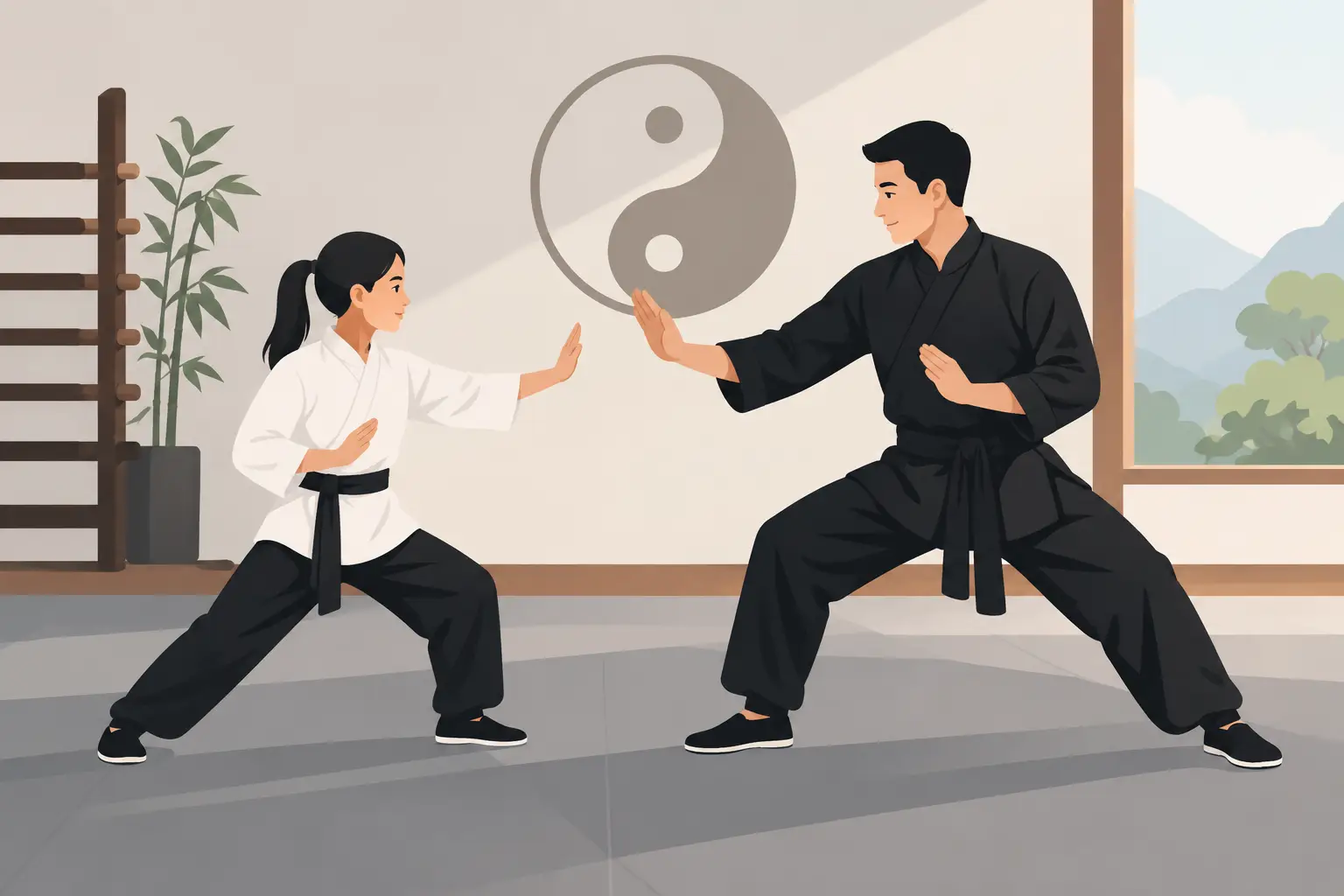
Walking into your first martial arts class can feel like being the only person who has missed the first chapter. You may picture confident students who already know how to punch, block and move correctly. The honest answer to “do classes require experience” is no. A well-run beginner class is built for people who are starting from scratch – including those who have not exercised regularly for years.
At 13 and above, you do not need a martial arts background, a high fitness level or natural athletic ability to begin Kung Fu. You need a willingness to listen, practise and give yourself time to improve. Skill is developed in the class, not demanded at the door.
Do Classes Require Experience for Beginners?
No. Beginner martial arts classes should teach the foundations in a clear order, rather than expecting new students to copy advanced movements or keep up with the longest-serving members. Your first sessions are about learning how to stand safely, move with balance, use your hands correctly and understand distance.
That matters because practical self-defence is not about performing complicated routines. It is about building reliable habits under pressure. A beginner needs sound positioning, awareness, controlled technique and the confidence to act decisively when necessary. These are taught step by step.
Shiyong Kung Fu is particularly suited to people beginning later in life or returning to exercise because it focuses on close-range, effective techniques. The aim is not to make training look impressive from across a hall. The aim is to develop movements that make sense in real situations, while improving fitness, coordination and mental focus along the way.
Experience can help someone progress faster at first, but it is not a requirement. In fact, beginners often have an advantage: they can learn the method properly from the beginning without having to unlearn habits that do not fit the system.
What Your First Kung Fu Class Is Really Like
A first class should feel structured, challenging and manageable. You will not be thrown into hard sparring or asked to prove yourself. Good coaching creates a safe environment where students can work at an appropriate pace while still being encouraged to make progress.
Training usually begins with a warm-up to prepare the body, followed by core stance, footwork and hand techniques. You may work with pads or practise controlled drills with a partner. Instructors will explain what you are doing, why it works and where it fits into self-defence. There is no need to remember everything immediately. Repetition is how martial arts training becomes natural.
You should expect to work, sweat a little and feel mentally engaged. You should not expect to be perfect. Nobody is judging whether you know the terminology or whether your first punch looks like that of someone who has trained for years. Everyone in the room began somewhere.
For parents considering classes for a teenager, this structure is especially valuable. Teenagers need an environment where standards are clear but mistakes are treated as part of learning. Martial arts can provide that balance: discipline without humiliation, challenge without being left behind.
You Do Not Need to Be Strong, Flexible or Naturally Sporty
One of the most common reasons people delay starting is the belief that they need to get fitter before attending. This gets things backwards. Training is where you build fitness.
Kung Fu develops stamina, mobility, coordination and strength through regular practice. You will gradually become more comfortable moving your body, holding your stance and sustaining effort. Progress is personal. A student who starts with limited fitness may make just as meaningful progress as someone already used to the gym.
Size and strength are not the whole story in practical self-defence either. Good technique uses timing, position, structure and intelligent movement. These are qualities that can be developed by people of different builds and fitness levels. Training does not pretend that physical differences never matter, but it gives students useful ways to improve their chances rather than relying on brute force alone.
Flexibility is similar. You do not need to arrive able to kick above your head. High kicks and acrobatics are not the measure of effective training. What matters more is moving with control, protecting your balance and choosing techniques that are realistic for you.
What Experience Can Help With – and What It Cannot Replace
Previous experience in boxing, football, rugby, dance, gym training or another martial art can give you a useful starting point. You may already have cardiovascular fitness, body awareness or confidence working with others. Those are positives.
However, previous experience does not automatically make someone skilled in a different martial art or in self-defence. Each system has its own principles, ranges and methods. A powerful punch is useful, but timing and distance still need to be learned. Being fit is useful, but fitness alone does not teach you how to respond when someone is close, grabbing or making you feel unsafe.
The right mindset matters more than your history. Students who attend consistently, ask sensible questions and practise the basics usually progress well. Those habits are available to every beginner.
Starting as a Teenager or Adult
Beginning at 13, 18, 35 or beyond is not “too late”. Adults often bring focus and patience to training, while teenagers can benefit from having a positive routine outside school and screens. Both groups can build confidence through visible, steady improvement.
For teenagers, martial arts can support anti-bullying awareness by teaching posture, boundaries, calm communication and the importance of avoiding unnecessary conflict. Training should never encourage students to seek fights. The strongest outcome is having the judgement and confidence to avoid one where possible, while knowing how to protect yourself if there is no safe alternative.
For adults, the benefits often extend beyond self-defence. Training creates regular time away from work pressures and daily distractions. It gives you a physical challenge with a clear purpose, as well as a supportive group of people working towards their own goals. Some want to feel safer walking home. Others want to regain fitness or prove to themselves that they can learn something difficult. All are valid reasons to start.
How to Get the Most From Your First Month
Your first month is not about earning a high grade or comparing yourself with experienced students. It is about building a routine. Attend regularly, arrive a few minutes early and focus on one correction at a time. Small improvements in stance, guard or footwork add up quickly when you repeat them properly.
Wear comfortable training clothes for your first session unless you are told otherwise. Bring water, keep an open mind and let the instructor know about any injuries or medical limitations. Training can be adjusted when coaches know what support you need. Being honest early is sensible, not a sign of weakness.
It also helps to accept that some sessions will feel easier than others. You may understand a technique one week and feel clumsy with it the next. That is normal. Martial arts are learned through thousands of purposeful repetitions, not one perfect lesson. Stay consistent and the movements begin to feel more natural.
Choosing a Class That Welcomes Beginners
Not every class is equally suitable for a newcomer. Look for clear coaching, controlled partner work and an instructor who can explain techniques without hiding behind jargon. You should see students being challenged, but also treated with respect.
Ask whether the training has a genuine beginner pathway and whether students can progress at a sensible pace. A class should be serious about standards without making beginners feel like they have to earn the right to be there. The first session should give you a realistic sense of the atmosphere, the coaching and whether the approach suits your goals.
Fusion Kung Fu in Norwich offers a free taster session for people aged 13 and above, so you can see how structured practical training feels before making a commitment. It is a chance to ask questions, meet the instructors and start without pretending to know anything already.
Experience is something you gain by turning up. If you want better fitness, stronger confidence and practical skills that are built for real life, the first class is exactly where that experience begins.
About the Author: Keith Ratcliffe
