Here’s What We Cover
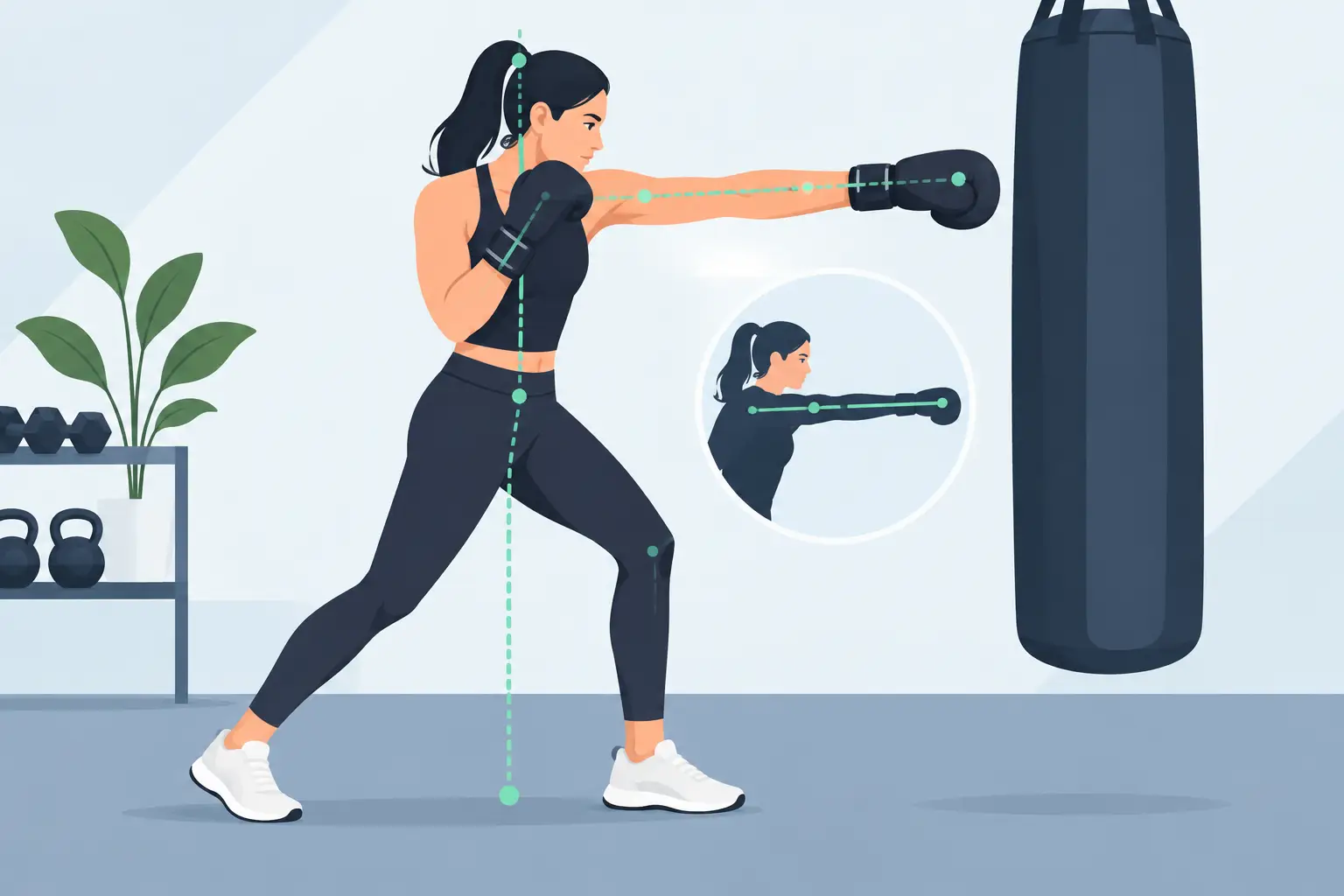
A punch can feel powerful on a pad yet still put strain through the wrist, elbow or shoulder. The difference is usually not brute force. Learning how to strengthen punching alignment means teaching the hand, wrist, elbow and body to work as one connected structure – so your strikes are safer, sharper and more dependable under pressure.
For beginners, this is one of the most valuable habits to build early. For experienced students, it is often the detail that turns a fast arm movement into a controlled, effective strike. Good alignment is not about looking rigid or copying a pose. It is about placing your body in a position where force can travel through it without weak links.
What good punching alignment looks like
A well-aligned punch begins before the fist leaves the guard. Your stance should be balanced, with your feet supporting the movement rather than being planted so heavily that you cannot adjust. The shoulder stays relaxed, the elbow travels behind the fist, and the wrist remains straight at the point of contact.
Think of the fist as the end of a line, not an isolated weapon. When the knuckles, wrist and forearm are in line, impact is shared through the stronger bones and muscles of the arm. If the wrist bends, the elbow flares far out, or the shoulder rises towards the ear, the force leaks away. More importantly, the chance of discomfort or injury increases.
For a straight punch, the first two knuckles are commonly used as the main contact point. Your hand should be closed firmly but not squeezed so hard that the whole arm becomes tense. The thumb stays outside the fingers, never tucked inside the fist. A tucked thumb can be injured very easily on impact.
Alignment also runs beyond the arm. Your hip, torso and rear foot help send the strike forwards. In close-range Kung Fu, this connection matters because there is often little space to wind up. Efficient body structure creates power without large movements.
Why stronger alignment beats trying to hit harder
Many people try to improve their punch by tensing their arm or swinging it faster. That can create a loud impact on pads, but sound is not the same as useful power. A hard strike with poor structure can hurt the person throwing it as much as the target.
Stronger alignment helps in three practical ways. First, it protects the small joints of the hand and wrist. Second, it allows force from the floor and body to transfer into the strike rather than stopping at a bent wrist or unstable shoulder. Third, it makes recovery quicker. A punch that returns cleanly to guard leaves you less exposed and ready to move again.
This is particularly relevant for self-defence training. Real situations are unpredictable, and nobody should rely on landing one perfect, dramatic blow. A sensible approach is to use controlled, direct techniques, create space where possible and get to safety. Training good alignment supports that approach because it gives you a more reliable structure without needing to be bigger, stronger or naturally athletic.
How to strengthen punching alignment through practice
Alignment improves through careful repetition. Start slowly enough that you can feel what your body is doing. Speed and power come later, once the position stays consistent.
Build the fist and wrist position first
Stand in a comfortable guard with your hands relaxed. Make a fist by curling the fingers in, then place the thumb across the outside of the fingers. Straighten the wrist so the back of the hand continues the line of the forearm.
Extend a light straight punch into the air and pause just before full extension. Check that your wrist has not dropped or folded sideways. Your elbow should sit behind the fist rather than pointing far out to the side. Keep a slight bend at the end of the movement. Locking the elbow hard is not stronger and can irritate the joint over time.
Do several slow repetitions on each side. If the position changes as you extend, reduce the range and rebuild it. There is no benefit in throwing a long punch that loses its shape halfway through.
Use a wall-line drill without striking the wall
Stand close enough to a wall that your extended fist would almost touch it. Slowly extend a straight punch alongside the wall, leaving a small gap. The wall gives you a simple reference point: if your elbow swings outward or your shoulder rolls too far, you will notice it immediately.
Do not punch the wall, even lightly. Hard surfaces do not teach good impact mechanics and can damage the knuckles or wrist. This drill is about awareness, not toughness.
Keep the shoulder down, the neck loose and the chin naturally tucked. Return the hand to guard after every repetition. Ten careful punches with clean structure are more useful than fifty rushed ones.
Train on pads with controlled contact
Pads give useful feedback, but only when both partners work with control. Start at a level where you can maintain a straight wrist on every strike. The pad holder should present a stable target at a sensible distance, rather than chasing the punch or forcing the striker to overreach.
Land the punch, feel the line through the fist and forearm, then return to guard. If your wrist bends on contact, reduce the force and check the distance. Often the issue is not weakness. You may simply be standing too close, too far away or reaching with the shoulder.
As your technique improves, add movement. Step, strike and recover. Then work from a realistic close range where your elbows stay protected and your body remains balanced. This is where practical coaching makes a real difference, because an instructor can spot small errors that are difficult to feel yourself.
Strengthen the support muscles, not just the knuckles
Your wrists and forearms need sensible conditioning, but alignment also depends on the shoulder, upper back and core. Press-ups can be useful when done with good form, although they are not compulsory and they do not need to be performed on the knuckles. Standard press-ups from the hands, incline press-ups against a bench, rows and controlled plank variations all help develop the support needed to hold a stable position.
For younger students and complete beginners, bodyweight work should be gradual. The aim is better control, not exhaustion. If an exercise causes sharp pain in the wrist, elbow or shoulder, stop and seek guidance before continuing.
Common mistakes that weaken a punch
The most common error is chasing the target with the shoulder. When the shoulder reaches forward before the body is set, the arm becomes overextended and the wrist often collapses. Instead, let the body support the strike and keep the shoulder connected rather than lifted.
Another mistake is flaring the elbow. A slight natural angle is normal, but an elbow that opens dramatically breaks the line between the fist and body. Practise slow punches in front of a mirror or with a coach watching from the side. You are looking for consistency, not a perfectly identical shape for every body type.
Some students also clench too early. A fist that is tight from the start can slow the arm and create tension in the shoulder. Stay reasonably relaxed as the punch travels, then tighten the fist briefly at the moment of controlled contact. This takes practice, which is why pad work is so useful.
Finally, avoid treating pain as proof of progress. Sore muscles after training are one thing; joint pain, tingling, swelling or reduced grip strength are warning signs. Rest, review your technique and get appropriate advice. Training through an injury rarely makes anyone tougher. It usually delays improvement.
Alignment changes with range and technique
There is no single frozen punching position that works at every distance. A longer straight punch may use more hip rotation and weight transfer. A close-range vertical punch may travel on a tighter line with less visible movement. The principles remain the same: stable wrist, supported elbow, relaxed shoulder, balanced stance and a clean route back to guard.
That is why drilling only in the air is not enough. You need to practise against pads, while moving and at different ranges. You also need a training partner who works safely and understands that good technique comes before trying to impress anyone with power.
At Fusion Kung Fu, students build these details through structured training rather than being expected to hit hard from day one. The goal is practical skill: controlled strikes, sound body mechanics, confidence under pressure and the discipline to use force responsibly.
The best next step is simple. Slow your punches down, check the line from knuckles to shoulder, and make every repetition worth doing. Strong alignment is built one clean strike at a time.
About the Author: Keith Ratcliffe
