Here’s What We Cover
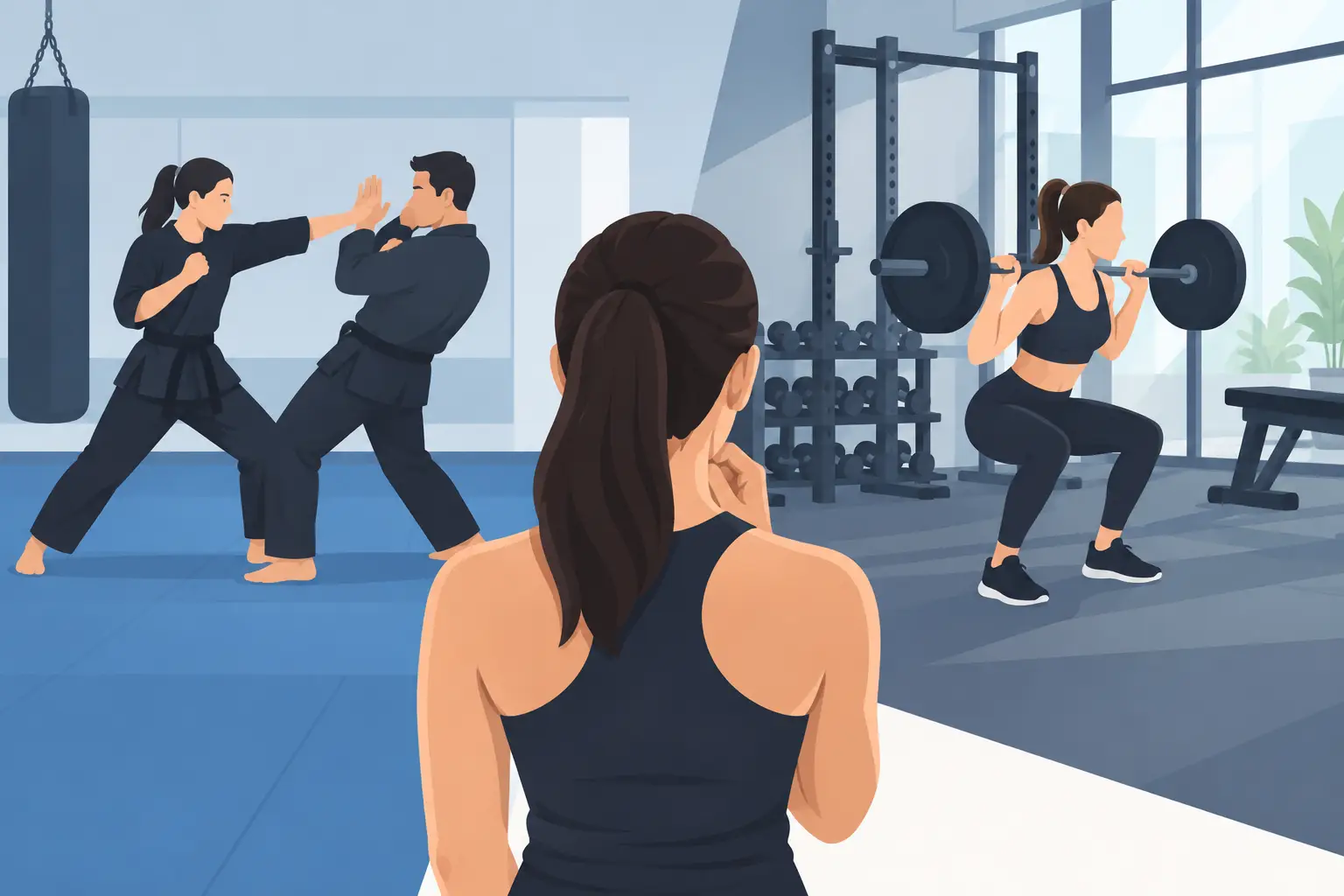
A gym can make you fitter. A self-defence class can make you fitter while teaching you what to do when distance closes, pressure rises and simply being strong is not enough. That is the real difference in the self-defence class versus gym decision.
For many people in Norwich, the question is not whether exercise is worthwhile. It is which type of training will keep them motivated, improve their health and give them something useful beyond the workout. The right answer depends on your goals, personality and routine, but the two experiences are not interchangeable.
What a Gym Does Well
A gym is a strong choice if your main aim is flexible, independent fitness. You can train before work, after the school run or late in the evening. You can focus on weights, cardio, classes or a mixture of all three, usually without needing to follow a set programme with other people.
Regular resistance training builds strength, supports joint health and can help with body composition. Cardio work improves stamina. For someone who already knows how to train, enjoys their own company and has a clear plan, that freedom can be valuable.
Gyms also let you target specific outcomes. If you want to improve your deadlift, run a faster 5K or rebuild fitness after time away from exercise, the equipment is there. A good instructor or personal trainer can add guidance when you need it.
The challenge is consistency. Many memberships begin with good intentions and end with a few familiar machines, the same routine and long gaps between visits. A gym gives you access to training, but it cannot always provide the structure, accountability or purpose that keeps people coming back.
What a Self-Defence Class Adds
A practical martial arts class trains the body, but it also trains awareness, reactions, decision-making and composure. You are not just counting repetitions. You are learning how to move, manage space, protect yourself and respond sensibly under pressure.
That does not mean every session is about fighting. Good self-defence training should begin long before physical contact. It should build awareness of your surroundings, confidence in your posture and voice, and the judgement to avoid unnecessary confrontation. The best outcome is always getting home safely, not proving a point.
When physical skills are needed, technique matters. A smaller person may not be able to rely on size or strength against someone larger. Close-range training teaches positioning, balance, control and straightforward responses that can work when there is little room to move. Repetition with a partner helps turn those ideas into habits.
At Fusion Kung Fu, Shiyong Kung Fu is taught with this practical purpose in mind. It is based on close-range combat, with Wing Chun foundations and useful elements drawn from other martial arts. The focus is not on theatrical forms or chasing trophies. It is on building skills that make sense for real life, alongside fitness, discipline and confidence.
Self-Defence Class Versus Gym: Fitness Results
People sometimes assume martial arts is less demanding than a gym workout because it does not involve rows of machines. Spend an hour practising footwork, pad drills, bodyweight conditioning, partner work and controlled combinations, and that assumption disappears quickly.
A self-defence class can improve cardiovascular fitness, coordination, mobility, balance and functional strength. It asks your body to work in different directions, react to changing situations and maintain control when tired. For teenagers who spend too much time sitting at a screen, or adults bored by the treadmill, that variety can make exercise feel more engaging.
A gym may still be the better fit if your priority is maximum strength, muscle gain or a highly specific conditioning target. There is no need to pretend otherwise. Barbell training and progressive resistance are excellent tools. Some martial artists use a gym alongside their classes because the two can complement each other well.
The more useful question is: what will you do consistently? Training twice a week in a class you enjoy will usually bring more progress than paying for unlimited gym access that you rarely use.
Confidence Is Built Differently
Gym confidence often comes from visible progress. You lift more, run further, feel stronger and notice changes in the mirror. Those are meaningful wins, especially for adults rebuilding their health or young people learning to take pride in steady effort.
Martial arts confidence tends to reach further. You learn that you can stay calm when a drill feels unfamiliar. You get used to working with different people. You discover that progress comes through practice, not natural athletic ability or bravado. That carries into school, work and everyday situations.
For parents, this matters. Teenagers do not need to become aggressive to be safer or more confident. They need clear boundaries, self-control and the ability to carry themselves with assurance. Training in a supportive class gives them a constructive outlet while reinforcing respect for others.
No responsible instructor should promise that a class makes someone invincible. Real-world situations are unpredictable, and avoidance remains the first choice. But learning to recognise risk, use your voice, create space and apply simple physical skills can reduce panic and improve the chance of making a good decision.
Structure, Coaching and Community
A gym can be social, particularly if you attend group sessions or train with friends. Yet many members train alone, using headphones and leaving without speaking to anyone. For some people, that is exactly what they want.
A martial arts class is built around shared progress. You train with people at different levels, learn to be a good partner and receive direct feedback from an instructor. That creates accountability without turning training into a competition. You are expected to work hard, but you are not expected to arrive already fit, flexible or experienced.
This structured approach is particularly helpful for beginners. Rather than wondering what to do for an hour, you arrive and follow a session designed to build skills safely. Over time, the challenge increases. You can see where you started, what you have improved and what to work on next.
For people aged 13 and over, this can be a welcome alternative to exercise that feels isolating or repetitive. It also gives families a positive environment where effort, respect and resilience are noticed.
Cost and Practical Commitment
A low-cost gym membership may look like the obvious bargain, especially if you only want basic equipment and flexible opening hours. Compare the full value, though, rather than the monthly price alone. Are you getting coaching, a progressive curriculum, a regular training group and practical skills, or simply access to a building?
A self-defence class usually takes place at fixed times, which can be less convenient for shift workers or people with unpredictable schedules. That commitment is also one of its strengths. A class in the diary is harder to skip than a vague plan to train at some point this week.
Before choosing, be honest about your routine. If you need to exercise at 6am or 10pm, a gym may be essential. If you are free for scheduled evening training and want instruction that keeps developing, a martial arts class may offer far more than a workout.
Choose Based on the Outcome You Want
Choose a gym if you want independent training, flexible hours and access to equipment for personal fitness goals. It is a practical route for people who enjoy setting their own programme and can stay consistent without much external support.
Choose a self-defence class if you want fitness with a purpose. You will develop conditioning, but also awareness, coordination, practical personal safety skills and confidence under pressure. You will train alongside others rather than trying to work it all out alone.
You do not have to choose permanently. Some people begin with martial arts because they want motivation and real-world skills, then add gym sessions later. Others start at the gym and realise they miss the focus, coaching and community of a class. The best training plan is the one that suits your life and gives you a reason to keep turning up.
If you are unsure, do not make the decision from the sofa. Try a class, ask questions, notice how the coaching feels and see whether you leave wanting to improve. A useful training environment should challenge you, welcome you and give every session a clear purpose.
About the Author: Keith Ratcliffe
