Here’s What We Cover
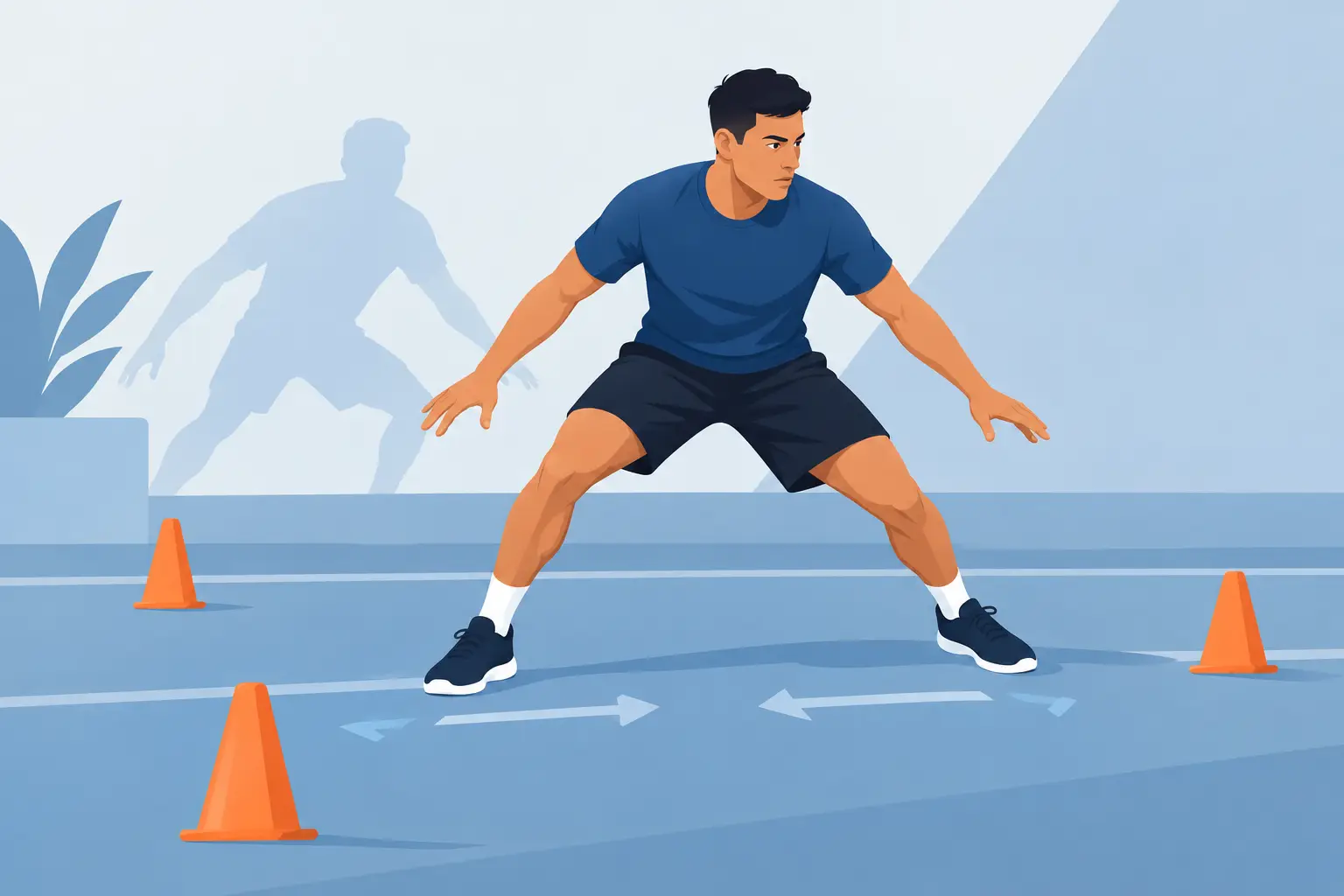
A defensive technique is only useful if you can put yourself in the right place to use it. That is why learning how to train defensive footwork matters from your first class onwards. Good footwork helps you manage distance, stay balanced, protect yourself without panicking and create a safe route away from trouble.
For beginners, footwork can look less exciting than striking or blocking. In reality, it is what allows those skills to work. You do not need to be fast, flexible or naturally athletic to improve it. You need a clear stance, controlled repetition and training that gradually adds realistic pressure.
Start with a stance you can move from
Defensive footwork begins with posture. Stand upright but not rigid, with your feet around shoulder-width apart and one foot slightly forward. Keep your knees soft, your weight balanced and your hands in a sensible protective position. Your chin should be slightly lowered, but your eyes must remain up so you can see what is happening.
The aim is not to sit in an exaggerated low stance or bounce constantly on your toes. Both can make you slower to react and easier to push off balance. A practical stance lets you move in any direction without crossing your feet or needing to reset before you act.
Think of your feet as the base for everything else. If you lean too far forwards, a step backwards will feel heavy. If your weight is all on your back foot, you will struggle to move forward or change angle. A stable, neutral base gives you choices.
Keep your base when you move
The simplest rule is this: move the foot closest to the direction you are travelling first, then bring the other foot with it. Step forwards with the front foot, then let the rear foot follow. Step backwards with the rear foot, then recover your stance by moving the front foot. When moving left or right, lead with the foot on that side.
This prevents crossing your legs, narrowing your base or over-reaching. It also means you are able to stop at any moment, defend yourself or move again. Small steps are normally more useful than large ones. A huge retreating step may feel safe, but it can leave you stretched out, off balance or trapped against a wall.
Train defensive footwork for distance, not performance
In practical self-defence, footwork is not about looking stylish. It is about making sensible decisions with space. If someone is too close, you may need to create room. If they are moving into you, stepping slightly off line can make a direct attack less effective. If a clear route is available, the best movement may be to leave rather than stay and exchange techniques.
This is especially relevant for teenagers and adults. Real confrontations do not happen on a clear training floor with a referee waiting to stop the action. You may be in a corridor, at a bus stop, beside furniture or with other people nearby. Your movement has to be compact, aware and controlled.
That does not mean you should always move backwards. Repeatedly retreating in a straight line can put obstacles behind you and allow an aggressive person to keep driving forwards. Sometimes the safer answer is a small angle step, keeping your hands up and your balance underneath you. The right option depends on the space, the threat and your route out.
Practise forward, back and angle steps
Start slowly. Mark out a small square on the floor with four objects, or simply use the lines of a floor surface. Move forwards and backwards while maintaining your stance. Then add steps to either side and shallow diagonal steps.
Keep each repetition honest. Do not let your feet cross, click together or become too wide apart. Try to finish every movement in a position where you could immediately protect your head, move again or turn and leave.
Once the pattern feels natural, add a simple cue. A training partner can point forwards, backwards, left or right, and you respond with the appropriate step. They do not need to touch you at this stage. The point is to make your movement responsive rather than rehearsed.
Build balance before you add speed
Many people rush their footwork because they believe fast movement is automatically good movement. But speed without balance creates problems. You may stumble, overstep or leave your hands behind as your body moves away. Under pressure, those habits become more obvious.
A better approach is to move quietly and stop cleanly. If you can take a small step, hold your position for two seconds and still feel stable, your base is doing its job. If you wobble, lean or have to shuffle your feet to recover, slow down and shorten the step.
Try this simple balance check during practice. Take one step in any direction, freeze, then lightly lift your lead heel and put it down again. If that feels impossible without tipping or tightening your whole body, you are probably putting too much weight in the wrong place. Adjust your stance and repeat.
Strength and fitness help, but footwork is not dependent on size or power. A lighter person can move efficiently without bouncing. A bigger person can be difficult to knock off line when their stance is organised. Good training adapts the movement to the individual rather than forcing everyone into the same shape.
Add your hands, awareness and breathing
Footwork should not be trained in isolation forever. Once you can move with control, keep your hands in a protective position as you step. This is where beginners often discover a common mistake: their feet move, but their hands drop or swing behind them.
Use relaxed shoulders and keep your guard where it can protect you. There is no need to clench your fists or tense your neck. Breathe normally. Holding your breath makes you tire quickly and can make your reactions stiff.
Awareness matters too. Look ahead rather than staring at the floor. In a class drill, notice your partner’s body position, hands and direction of travel. In everyday life, awareness is often the first layer of self-protection: recognise discomfort, keep distance and avoid getting boxed into a poor position where possible.
Use partner drills safely
Partner training turns basic steps into usable defensive movement. Begin with one person walking forwards at a controlled pace while the other maintains distance through small steps and angle changes. The defender’s job is not to win or show off. It is to remain balanced, avoid being crowded and keep a clear path.
Next, add a light visual cue such as a slow straight-hand touch towards the shoulder or upper chest. The defender moves off line while protecting themselves, then resets. Keep the contact light and agreed in advance. Control is not optional, particularly when people are learning.
As skill improves, drills can become less predictable. Your partner may change direction, pause, or use verbal pressure such as asking you to move away in a firm voice. This helps connect footwork with boundaries, confidence and decision-making. It should still be supervised, respectful and appropriate to the experience of everyone involved.
Avoid the footwork mistakes that cause problems
The most common error is crossing the feet while moving sideways or backwards. It may happen when people try to cover too much ground at once. Crossing makes it easier to trip and harder to change direction. Keep your steps shorter and preserve the gap between your feet.
Another mistake is retreating with your upper body first. When your head and shoulders lean backwards, your feet must race to catch up. Instead, let the rear foot move first and keep your body stacked over your base.
Do not confuse constant movement with effective movement either. Bouncing wastes energy and makes your timing less settled. There are moments when you should stay still, observe and choose the safest route. Good footwork gives you the ability to move when needed, not the habit of moving for its own sake.
Finally, do not train only on a smooth, empty floor. As your instructor allows, practise moving around pads, near a wall or through a narrow space. You are not trying to make training dangerous. You are learning how space changes your options.
Make footwork part of every class
The fastest progress comes from regular, purposeful practice. Spend five to ten minutes working on stance and stepping before technique training, then notice whether your foot position holds up during partner drills. If it disappears as soon as pressure rises, return to the basics rather than forcing more speed.
At Fusion Kung Fu, practical movement is trained as part of a wider self-defence approach. Students learn that distance, balance and positioning are not separate from confidence or discipline. They are the habits that help you stay calm enough to make better choices.
The goal is not to become difficult to catch in a game. It is to stand and move with control, maintain your space and give yourself the best possible chance to get home safely. Start small, practise consistently and let every step have a reason.
About the Author: Keith Ratcliffe
