Here’s What We Cover
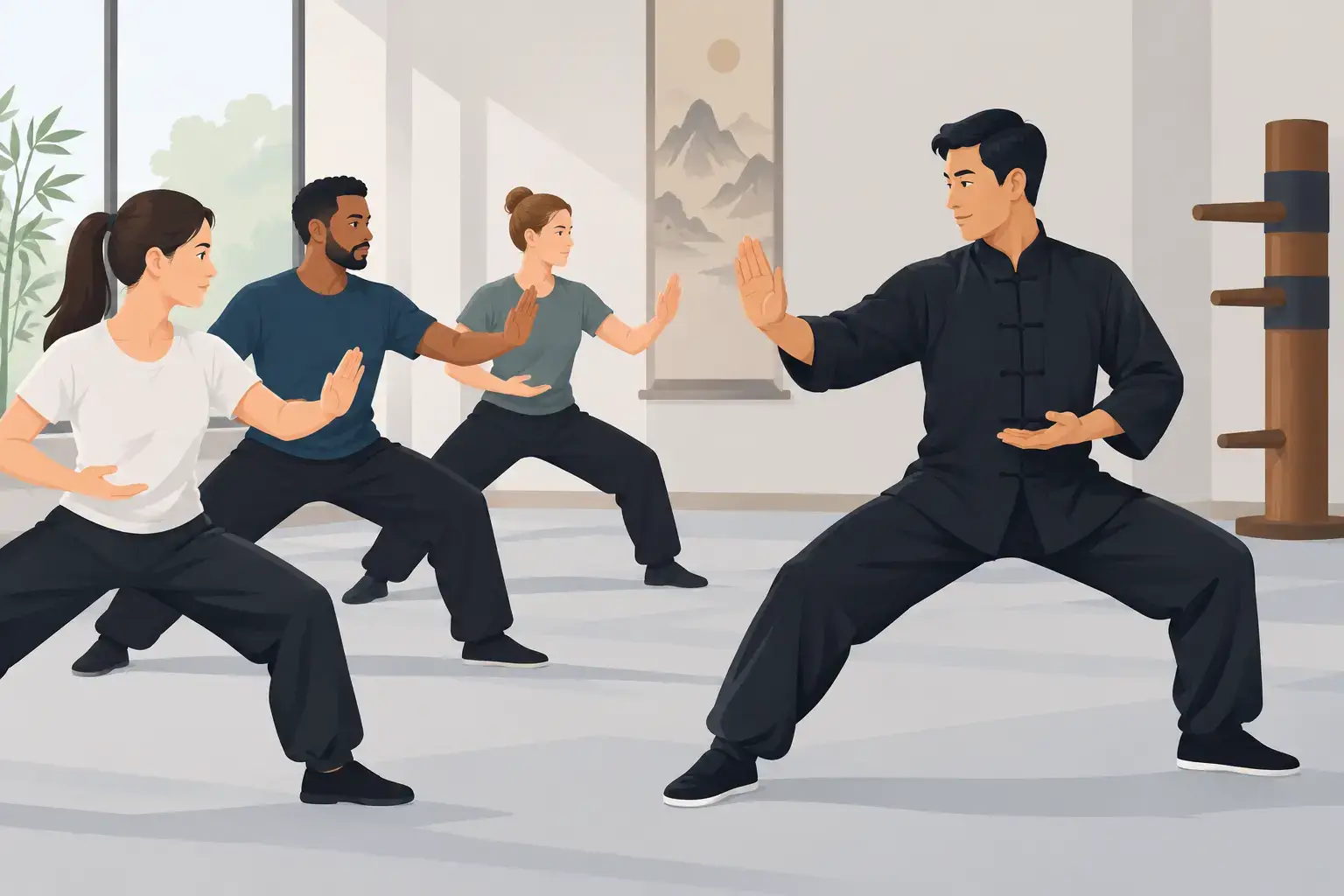
Walking into a new martial arts class can feel like the hardest part. A Kung Fu taster removes that pressure. It gives you the chance to step onto the training floor, meet the instructor and experience practical training before deciding whether regular classes are right for you.
For teenagers and adults, a taster session is not about proving how fit, strong or flexible you are. It is about finding out how training feels, how the class is taught and whether you can see yourself building useful skills week by week. At Fusion Kung Fu, the focus is on a welcoming first step with clear instruction, controlled practice and techniques designed for real-life self-defence.
What is a Kung Fu taster?
A Kung Fu taster is an introductory class for people who are new to the club or new to martial arts altogether. You take part in a normal-style session at a level that is suitable for beginners, rather than sitting at the side and watching.
That matters because martial arts are best understood through experience. You can read about confidence, fitness and self-defence, but a first session lets you feel the difference between simply exercising and learning how to move with purpose. You will start to see how stance, balance, awareness and calm decision-making fit together.
A taster is also useful if you have tried another martial art before and want something more practical. Shiyong Kung Fu is built around close-range combat, taking Wing Chun foundations and combining them with effective elements from other martial arts. The aim is not to perform for an audience or collect complicated routines. It is to develop skills that make sense in modern situations.
Your first session: what usually happens
Arrive a few minutes early so you can introduce yourself, ask any questions and settle in without rushing. Wear comfortable sports clothing that allows you to move freely. You do not need specialist equipment, previous training or an impressive level of fitness to attend.
The session will normally begin with a warm-up to prepare the body. This is not about exhausting you before training starts. It helps improve mobility, raises your heart rate and gets you used to moving with control. You may practise footwork, basic stances, simple striking movements and positioning.
From there, the instructor will introduce fundamental techniques in manageable stages. Expect clear demonstrations, time to practise and feedback to help you improve. Beginners are not expected to copy everything perfectly on the first attempt. Good progress comes from paying attention, asking questions and repeating the basics properly.
You may work with a partner during controlled drills. This is where practical training becomes especially valuable. Learning distance, timing and reactions with another person gives techniques context. Training is supervised and respectful, with safety always taking priority over trying to hit hard or look tough.
By the end of the class, you should have a realistic sense of the atmosphere, the physical challenge and the standard of coaching. You may leave pleasantly tired, but you should also leave clearer about what you have learned and what you could achieve with consistent training.
A Kung Fu taster is for beginners, not experts
Many people delay booking because they think everyone else will be experienced. In a structured class, that is not a problem. Every capable martial artist began by learning where to put their feet, how to hold their hands and how to stay relaxed under pressure.
You do not need to be naturally athletic. Practical Kung Fu should not depend on being the biggest, strongest or quickest person in the room. Good technique uses body position, balance, movement and timing intelligently. Fitness will improve as a result of training, but it does not have to be in place before you start.
For young people aged 13 and above, the first session can be particularly valuable. Teenagers face pressure at school, online and in social situations. Martial arts do not offer a magic solution, but regular training can provide a constructive outlet, clearer boundaries and the confidence to carry themselves differently. The emphasis should always be on awareness, avoiding trouble where possible and responding sensibly when a situation cannot be avoided.
Adults often come for similar reasons, even if they describe them differently. Some want to get active after years away from exercise. Some want practical self-defence skills. Others need an hour each week away from work, screens and daily demands. A class that asks for focus can be demanding, but it can also be a powerful way to clear your head.
What practical self-defence training means
There is a difference between practising movements in the air and understanding how to use principles under pressure. A good beginner class starts with the foundations, because there is no shortcut around them. You need balance before speed, control before power and awareness before any physical response.
Practical training also means being honest about real life. Most people do not need acrobatics, high kicks or competition tactics. They need to understand personal space, posture, escape routes and how to react decisively if someone gets too close. Close-range skills are valuable because many confrontations happen before there is room to move freely.
That does not mean every session is serious or intimidating. Training should be enjoyable and challenging, with a sense of community. But it should have a purpose. You are there to build a stronger, more capable version of yourself through repetition and disciplined effort.
Questions to ask before and after your taster
A taster class is your opportunity to decide whether the club matches what you want from martial arts. Pay attention to how the instructor speaks to beginners, how students train together and whether safety is treated seriously. A supportive class does not lower standards. It gives people the structure to meet them.
Ask how beginner progression works and what you will focus on in your first few months. It is also sensible to ask about class times, age groups and what happens when you are ready to join. Clear answers are a good sign that the club has a proper pathway rather than expecting new students to work things out alone.
If self-defence is your main reason for attending, ask how the training stays relevant to everyday situations. If fitness is your priority, ask how training develops over time. The right answer depends on your goals, but the best classes do not force you to choose only one benefit. Consistent martial arts training can improve fitness, focus, confidence and practical skill together.
How to get the most from your first class
Come with an open mind and give yourself permission to be new. Trying to memorise every detail or compare yourself with more experienced students will only get in the way. Focus on listening, moving carefully and enjoying the process of learning something unfamiliar.
Tell the instructor about any injuries, medical concerns or worries before the session begins. This helps them guide you appropriately. You should work hard, but training is personal. Pushing beyond what your body can manage is not a sign of commitment.
Most of all, notice how you feel afterwards. Did the class make you feel more focused? Did the coaching make sense? Could you imagine returning next week and improving one small area at a time? Those questions matter more than whether every technique felt natural on day one.
A first class will not turn anyone into an expert, and it should not pretend to. What it can do is give you a solid starting point: a place to train, a method worth learning and the confidence to take the next step when you are ready.
About the Author: Keith Ratcliffe
